
Vandaag of morgen in huis

Kwaliteit gegarandeerd

Welkomstaanbiedingen ontgrendelen: GRATIS bezorging | Tot 80% korting | Gratis 30 dagen JoyPlus-proefperiode
Download de app
A toaster might seem like a simple kitchen appliance, but differences between models can make themselves felt every day. A slot that’s too narrow can trap thick bread, unclear browning controls can produce uneven results, and a crumb tray that’s awkward to empty can make cleaning unnecessarily frustrating. So whether you’re a student, part of a family or a keen cook, choosing the right toaster is about more than just wattage or looks.
In this buying guide, you’ll find out what to look for, which features are practical and what type of toaster best suits your needs.
The term toaster with wide slots doesn’t always tell you enough. Check whether the manufacturer gives a specific width and whether there’s room for the bread you like. Standard sliced bread fits in many models, but thick slices of sourdough, bagels and English muffins need more space. A slot measuring around 3.8 cm, as found on some KitchenAid models, offers more flexibility than a standard opening.
Pay attention to the length, too. A model with two long slots can toast two large slices at once, while a compact model with short slots is mainly suited to standard slices of bread.
A toaster with adjustable browning settings is more useful than one with a fixed timer. However, more settings don’t automatically mean the same results with every type of bread. The thickness, moisture content and starting temperature of the bread all play a part.
A control with 5 to 9 settings gives you room to tailor the result to your preference. A stop button, automatic shut-off and high-lift function are just as important. These let you stop toasting and remove smaller slices more safely.
A toaster with a defrost function, reheat function, bagel setting or bun warmer can be useful, but only if you’ll actually use them. The defrost setting is suitable for bread straight from the freezer. According to the product description, the reheat function warms already-toasted bread without browning it further. A bun warmer is designed to warm buns on top of the appliance, not to toast them in the slots.
Also consider the controls. Mechanical dials are simple to use; a digital display or touchscreen can give you more information, but involves more electronics and sometimes takes up more space.
A 2-slice toaster is usually a good fit for a student room, flat or smaller kitchen. For several people, a model with two long slots may be more practical, as some can warm four standard slices at once according to the product specifications. Always check the overall dimensions and the length of the cord. As well as fitting on your worktop, the appliance needs enough clearance from cupboards, curtains and other flammable materials.
Self-centring slots help warm bread more evenly on both sides. This is particularly useful if you use different sizes of bread. If you’re looking for a toaster for bagels, wide slots and a separate bagel setting are useful features. According to KitchenAid’s product information, the bagel function warms the outside and toasts the inside. Treat this as a brand specification, not a universal guarantee for every type of bagel.
A toaster with a crumb tray is easier to keep clean than a model where crumbs collect at the bottom of the casing. Empty the tray regularly and let the appliance cool down completely first. Never immerse a toaster in water.
A stainless steel toaster can have a sturdy, modern look and is generally easy to wipe clean. However, stainless steel doesn’t automatically make an appliance scratch-proof, indestructible or cool to the touch on the outside. Also look for non-slip feet, cool-touch sides and automatic shut-off. These are features you can check that support safe, everyday use.
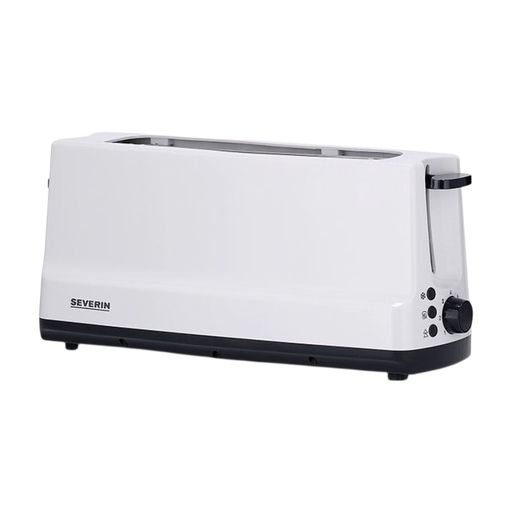
Why it suits this profile: This model is designed for everyday use, with capacity for two slices, electronic browning control and straightforward operation. The long slots accommodate a range of standard sizes.
According to the product information, this model has a crumb tray, bread-centering function, defrost function and reheat function. That means you don’t have to rely on a fixed browning time.
800 W, suitable for two slices, warming rack, cool-touch sides and a high-lift function for smaller pieces.
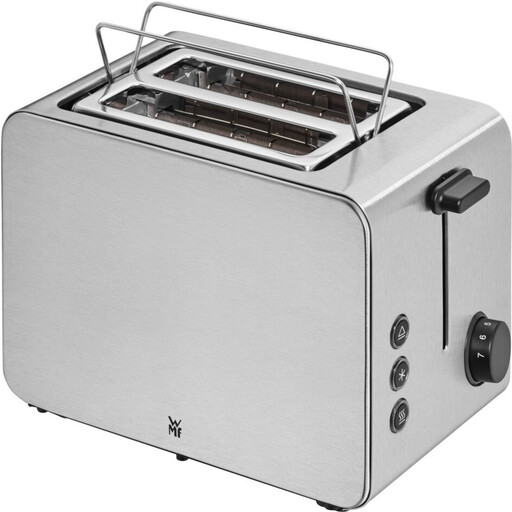
Why it suits this profile: The stainless steel Cromargan casing, seven browning settings and integrated cord storage make it a good fit for anyone who values design and adjustability.
The product information lists seven settings, bread centring, a removable crumb tray and 14 cm-long slots. Check that this length suits the size of bread you use.
900 W, seven browning levels, bun warmer, defrost, reheat and cord storage.
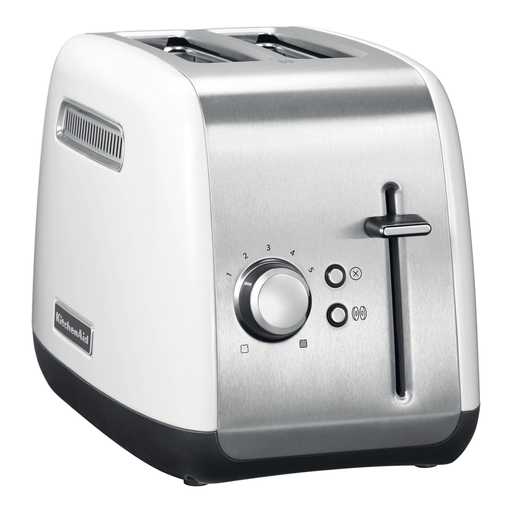
Why it suits this profile: If you often toast thick slices, bagels or sourdough, extra-wide slots are more useful than an appliance that’s as compact as possible.
The product description lists two extra-wide slots, five browning settings and separate bagel and reheat functions. This makes it better suited to thicker bread.
Extra-wide slots, high-lift lever, five browning settings and a bagel setting.
We’ve put together a full, up-to-date list of products that meet these strict selection criteria and current European safety regulations.
According to the product information provided and European consumer rules, many of the products mentioned come with a statutory guarantee of at least two years. Always check the seller’s current guarantee terms when you buy.
Many models in this selection range from 700 to 1,150 watts. Higher wattage can help with heating, but on its own it doesn’t indicate how evenly bread will brown. Also consider slot width, browning controls and bread centring.
Wide slots give you more room for thick slices, bagels and muffins. Check the maximum dimensions in the product description, though. A wide opening doesn’t automatically mean that every size or shape will fit safely.
Its lifespan depends on how often you use it, how well you clean it and its build quality. Empty the crumb tray regularly, avoid letting food get stuck and use the appliance according to the instructions. If you notice smoke, damage or unusual operation, stop using it immediately and contact the seller or manufacturer.
