Who is this comparison for?

If you’re watching your sugar intake

You’re looking for toast with a low total sugar value and don’t want to confuse ‘no added sugars’ with ‘reduced sugar’. Voedingscentrum recommends comparing nutritional values per 100 g and checking the ingredients list as well.

If you’re choosing toast to serve with toppings

Salt and ingredients may influence your choice for a get-together or lunch. If you have an allergy, check the information on the current packaging; wheat, barley, soya and sesame vary from product to product.

If you want to compare fibre too

You’re looking for a crisp snack and checking the fibre per 100 g. Include sugars and salt in the same comparison: the fibre value doesn’t tell you how the other values compare.

What should you look for when choosing?

First compare similar toast products per 100 g, then decide which feature matters most for how you plan to use them.

What to consider What to check when buying Who it matters to
Total sugars Compare ‘of which sugars’ per 100 g across similar products. For ‘reduced sugar’, check which similar product is used as the reference. If I’m looking for toast with less sugar, I don’t want to rely on the wording on the front of the pack alone. Sugar content is the top priority for around 50% of consumers.
Salt and ingredients Check the salt per 100 g and, if you have an allergy, read the current ingredients and allergen information. When choosing toast to serve with toppings, I want to know how much salt the product itself contains and whether its ingredients suit me. For around 30% of consumers, salt or the ingredients come first.
Fibre and pack size Compare the fibre per 100 g and check whether the pack size suits how you plan to use it. If I’m taking toast with me or having it as a snack, fibre and a practical pack size both matter. For around 20% of consumers, these are the first things they consider.

Common mistakes

  • Taking ‘no added sugars’ to mean ‘sugar-free’

    According to Albert Heijn, AH Melba toast naturel has 0 g of added sugars, but 3.2 g of total sugars per 100 g. These are different figures.

    Compare total sugars per 100 g. Only use a comparative claim such as ‘reduced sugar’ when it’s supported by a comparison with a similar product; the European Commission specifies a reduction of at least 30%.

  • Looking only at the sugar value

    Salt levels can vary considerably: Albert Heijn lists 0.01 g of salt per 100 g for Hollandia 100% natural toast and 2.1 g per 100 g for LU Mini crackers.

    Check salt per 100 g as well as sugars, especially if you’re serving the toast with savoury toppings.

  • Assuming all toast is made with iodised baker’s salt

    According to brood.net, using iodised baker’s salt isn’t a legal requirement. An agreement for Dutch bakeries doesn’t mean that every toast product is made with it.

    If the type of salt used matters to you, read the ingredients list or ask the manufacturer.

  • Relying on a product page you viewed earlier

    Ingredients and allergen information can change. An earlier online listing is no substitute for checking the packaging of the product you buy.

    Read the current packaging, especially if you need to avoid an ingredient.

Brands to consider

Hollandia

Hollandia 100% natural toast is made with wheat flour and water and comes in a 100 g pack.

  • Albert Heijn lists 0.4 g of sugars and 0.01 g of salt per 100 g for this variety.
  • The low sugar value doesn’t prove a comparative sugar reduction; the toast contains wheat.

LU

LU Mini crackers, made with wheat flour and wholemeal flour, come in ten individual packs for sharing or snacking.

  • Albert Heijn lists 1.5 g of sugars and 7 g of fibre per 100 g for this variety.
  • The same variety contains 2.1 g of salt per 100 g and includes wheat, barley and sesame; it may also contain soya.

Albert Heijn

AH Melba toast naturel is a classic melba toast for toppings, available in a 240 g pack.

  • According to Albert Heijn, this variety contains 0 g of added sugars.
  • The total sugar value is 3.2 g per 100 g. The variety also contains 1.93 g of salt per 100 g and includes wheat, barley and soya, among other ingredients.

Van der Meulen

Van der Meulen Melba toast naturel is a classic melba toast for toppings.

  • Albert Heijn lists 3.2 g of sugars, 1.3 g of salt and 3.9 g of fibre per 100 g for the naturel variety.
  • The variety contains wheat, barley and soya; it may also contain sesame. Check the packaging of the variety you choose.

Toast products on Joybuy

This selection includes rice toast and classic melba toast. Compare their nutritional information per 100 g before deciding which toast best suits your needs.
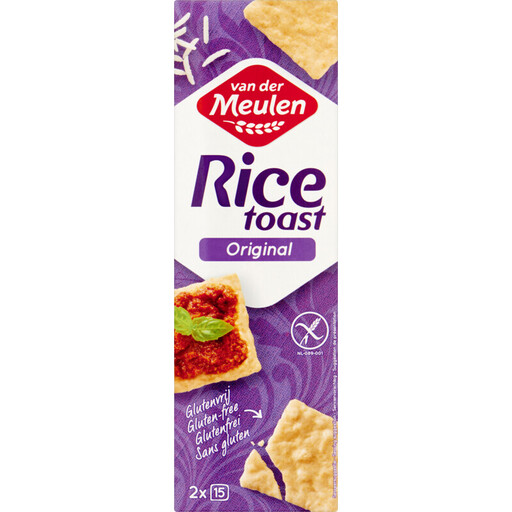
Van Der Meulen Rice Toast Natural, 65 g

Van Der Meulen Rice Toast Natural, 65 g

Rice toast to compare with classic melba toast if you’re checking sugars per 100 g.

65 g pack. If you have an allergy, check the current allergen information on the packaging.

View on Joybuy
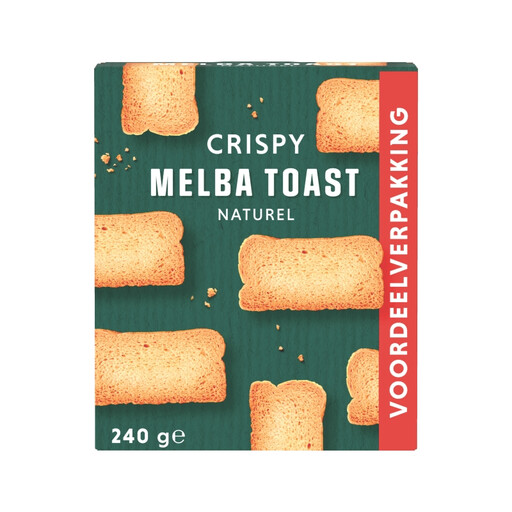
Crispy Melba Toast, 240 g

Crispy Melba Toast, 240 g

A classic melba toast for anyone looking for a base for toppings.

240 g pack. According to Joybuy, this product contains 3.1 g of sugars and 1.9 g of salt per 100 g. Assess any ‘reduced sugar’ claim only against a substantiated comparison with a similar product.

View on Joybuy

Frequently asked questions

Does toast with a low sugar value automatically count as ‘reduced sugar’?

No. A low total sugar value per 100 g doesn’t in itself demonstrate a reduction. According to the European Commission, a comparative claim requires at least 30% less sugar than a similar product, so check what the comparison is based on too.

Does Dutch toast always contain iodised baker’s salt?

No. According to brood.net, its use isn’t a legal requirement, although there is an agreement for Dutch bakeries. Check the ingredients list if the type of salt used matters to you; imported products and some organic products may differ.

What should I check if I have a food allergy?

Read the allergen information and ingredients list on the current packaging. Depending on the toast product, wheat, barley, soya or sesame may be relevant; don’t assume it has the same ingredients as another product or a pack you looked at earlier.

How can I keep melba toast crisp after opening?

Follow the storage instructions on the packaging and protect the toast from moisture. Albert Heijn recommends storing AH Melba toast naturel in a sealed tin after opening; Van der Meulen Melba toast naturel should be kept in a cool, dry place.
