When choosing toast to go with coffee in your hotel room, compare the sugar content per 100 g of similar products first, rather than relying on a phrase such as ‘less sugar’. Then check whether the packaging is practical for a short stay, and always check the exact variant if you have an allergy.
Who is this toast guide for?
If you want to keep an eye on sugar
You’re looking for toast to go with your coffee and want to compare similar products by their sugar content per 100 g. Information about added sugars can be useful too, but it doesn’t replace the figure for total sugars.
Hotel guests with an allergy or dietary requirement
You need to know which ingredients and allergens the exact toast variant contains before choosing it. If the toast is served unpackaged, ask the hotel for the relevant information. According to the Netherlands Food and Consumer Product Safety Authority, allergen information must also be available for products served this way.
If you want a small portion in your room
You want toast you can eat with your coffee without preparing it, and keep dry after opening. The pack size and any individual portions are just as worth checking as the nutritional information.
What should you look for in toast to go with your hotel coffee?
Start by comparing the nutritional information per 100 g for similar toast products. Then consider the packaging and check the allergens for the exact variant you’ll be eating or serving.
| What to consider |
What to check when buying |
Who it matters to |
| Comparing sugars |
Compare total sugars per 100 g for similar toast products, and check separately what the packaging says about added sugars. The Netherlands Nutrition Centre recommends comparing labels per 100 g. |
When I choose toast to go with coffee, I want to be able to rely on the sugar figure rather than just the front of the pack. For around 33% of consumers, checking sugar is the top priority. |
| Serving and storage |
Check the pack size, whether it has individual portions, and the storage instructions after opening. |
For a single stay, I want a manageable portion that I can reseal after opening. Convenience is the top priority for around 20% of consumers. |
| Allergens and dietary requirements |
Read the label for the exact variant, including information about possible traces. If the toast is served unpackaged, ask for allergen information. |
If I have an allergy, I need to know what toast is being served before I eat it; the word ‘plain’ doesn’t tell me that. Around 27% of consumers put this check first. |
| Nutritional values beyond sugars |
For similar products, also compare salt, fibre and protein per 100 g, depending on what matters to you. |
If salt or other nutritional values also influence my choice, I don’t want to stop at the sugar figure. This broader nutritional profile matters most to around 20% of consumers. |
Common mistakes when choosing
-
Taking a low sugar figure as a ‘reduced sugar’ claim
A lower sugar figure than another product’s doesn’t automatically mean the toast carries a substantiated ‘less sugar’ claim. For such a claim, it matters which comparable product it is being compared with, according to the Netherlands Nutrition Centre.
Compare products using their sugar values per 100 g, and treat any claim on the packaging as separate information.
-
Comparing portions of different sizes
A smaller portion may contain less sugar without the toast having a lower sugar content per 100 g. So a per-portion comparison doesn’t always tell you what you want to know about the products.
First compare similar toast products per 100 g; then consider how much you actually want to serve.
-
Assuming ‘plain’ means allergen-free
Plain toast can contain allergens. For example, the product information for AH Melba toast naturel lists cereals containing gluten and soya. And if toast is served unpackaged, it may not be immediately clear which label applies to it.
If you have an allergy, check the packaging for the exact variant or ask the hotel for allergen information before choosing.
-
Looking only at sugars
Salt can also make a difference to your choice: Albert Heijn lists 1.93 g of salt per 100 g for AH Melba toast naturel.
If it matters to you, include salt per 100 g in your comparison. Don’t use the sugar figure alone to judge the overall nutritional value.
Toast brands to compare
Albert Heijn
AH Melba toast naturel is a specific melba toast variant you can assess by checking its label and packaging.
- For this variant, Albert Heijn lists 0 g of added sugars and 3.2 g of total sugars per 100 g. The pack contains twelve packets, each with six pieces of toast.
- The product information lists cereals containing gluten and soya, and states that it contains 1.93 g of salt per 100 g. If you have an allergy or dietary requirement, check the current label.
Jumbo
Jumbo’s toast range includes Van der Meulen Melba Toast Naturel, Melba Volkoren Toast and other types of crispbread.
- The different products give you options for comparing the size and type of toast.
- Check the product information and packaging for sugars and allergens for the exact variant; the range listing alone doesn’t tell you enough.
Bolletje
Bolletje Proteïne Knäckebröd is an alternative to consider if you’re not specifically looking for small pieces of melba toast.
- It’s crispbread, so it’s a different type of product from melba toast.
- Bolletje lists sugar in the ingredients information. Don’t assume from the product name that this crispbread is a lower-sugar alternative to toast; check the nutritional information and allergens on the exact pack.
Toast to go with coffee in your hotel room
These rice toast and melba toast products are options to consider with coffee in your hotel room. Compare the nutritional information and pack size with what you need; the product name alone doesn’t tell you whether the toast contains less sugar.
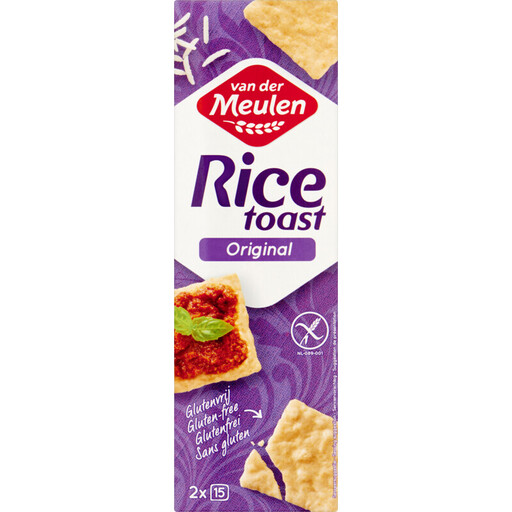 Image unavailable
Van Der Meulen Rice Toast Natural 65 g
Rice toast to consider if you’d like a 65 g pack to go with your coffee. Compare the sugars per 100 g on the current label, and carefully check the information about soya and sesame if you have an allergy.
View on Joybuy
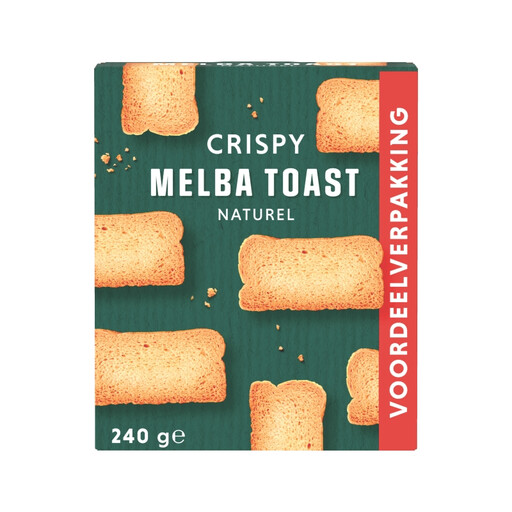 Image unavailable
Crispy Melba Toast 240 g
Melba toast to consider if you’d like to serve toast from a 240 g pack with your coffee. Check the sugars, added sugars and allergens on the exact pack before choosing.
View on Joybuy
Frequently asked questions
Does ‘no added sugars’ mean the same as ‘less sugar’?
No. A product with no added sugars may still contain sugars, while ‘less sugar’ implies a comparison with a similar product. So check both the information about added sugars and the total sugars per 100 g.
Where can I find allergen information for toast at a hotel buffet?
If the toast is served unpackaged, ask the hotel for allergen information before choosing. The Netherlands Food and Consumer Product Safety Authority says consumers must also be given allergen information for unpackaged food, such as food served in the hospitality industry. For prepacked toast, check the label for the exact variant.
How should I store opened toast in my hotel room?
Seal the pack tightly after use and follow the storage instructions on the packaging. Albert Heijn recommends storing AH Melba toast naturel in a closed tin after opening.
Is melba toast automatically gluten-free or suitable for people with allergies?
No. Melba toast is a type of product, not a guarantee that it’s free from allergens. The product information for AH Melba toast naturel lists wheat, barley and soya, among other ingredients. If you have an allergy, always check the exact packaging and don’t rely on the word ‘plain’ alone.


