
A small gathering with no second occasion planned
If you only want to make a limited number of topped toast bites, work out how many you need in advance. For this choice, pack size matters more than the brand name alone.


Start with the number of bites you want to make for the celebration, rather than searching for ‘half loaf’: toast is also sold in 100 and 120 g packs. For one small drinks gathering, a pack like this can help you avoid having too much left over. Choose the shape to suit your toppings, and check the current packaging for allergen and dietary information.
If you only want to make a limited number of topped toast bites, work out how many you need in advance. For this choice, pack size matters more than the brand name alone.
A toast cup with a raised edge can be useful for fillings that are less likely to stay on a flat piece of toast. For thin toppings, you could choose flat melba toast instead.
If allergens, ingredients or nutritional values affect your choice, check the current packaging. Albert Heijn notes in its product information that these details can change.
First decide how much you want to serve and what toppings you’ll use. Then compare the ingredients and nutritional information on the packaging.
| What to consider | What should you check? | Who is this important to? |
|---|---|---|
| Quantity | Compare the net weight with the number of bites and planned occasions; packs are available in 100, 120 and 240 g sizes. | If I’m only hosting one small drinks gathering, I don’t want to be left with a large amount. Around 36% of consumers prioritise a suitable quantity. |
| Shape | See whether flat toast or cups with a raised edge are a better fit for your toppings. | For a soft or loose filling, I want to choose a shape that makes it easy to serve. The shape of the toast is the main consideration for around 29% of consumers. |
| Allergens and ingredients | Read the allergen information and ingredients list on the current packaging. | If I need to cater for an allergy or dietary preference, the ingredients must be suitable for my guests. For around 21% of consumers, checking this is the top priority. |
| Nutritional information | Compare, for example, fibre and salt per 100 g and per serving; check the ingredients if information about iodised baker’s salt is relevant to your choice. | If nutritional values influence my choice, I want to compare the actual products rather than relying on terms such as ‘multigrain’ or ‘wholegrain’ alone. Nutritional information is the top priority for around 14% of consumers. |
The term doesn’t tell you how many pieces of toast you’ll get. ALDI and Jumbo, for example, offer 100 and 120 g packs, as well as larger sizes.
Plan how many bites you need, then compare the net weight and shape of the toast.
A name such as ‘multigrain’ or ‘organic’ doesn’t tell you which allergens might affect your guests. Ingredients can also change.
If someone has an allergy or coeliac disease, check the current packaging and only choose a product whose information meets their needs.
General information about iodised baker’s salt doesn’t confirm that a specific type of toast contains it.
If this information is relevant to your choice, check the ingredients of the product you’re actually buying.
A 240 g pack may be more than you need for a one-off drinks gathering.
Choose the quantity based on the number of guests and any upcoming occasions when you could serve it again.
Any toast you don’t use should be stored after opening according to the instructions on the packaging.
Jumbo lists Van der Meulen melba toast in 120 g packs, including plain, wholegrain and multigrain varieties.
ALDI lists 100 g packs of Sun Snacks Toast Cups Naturel and 240 g packs of Melba Toast Naturel.
Jumbo’s own-brand range includes Knapperige Toast in a 100 g pack and Mini Crackers Naturel.
The range includes AH Melba Toast Naturel, AH BASIC Melba Toast and an organic melba toast with sesame seeds.
Bolletje’s product range includes rusks and crackers.
These 100 g packs of melba toast are a good option when comparing smaller quantities for topped bites. Choose between the classic and round varieties to suit the shape you want to serve.
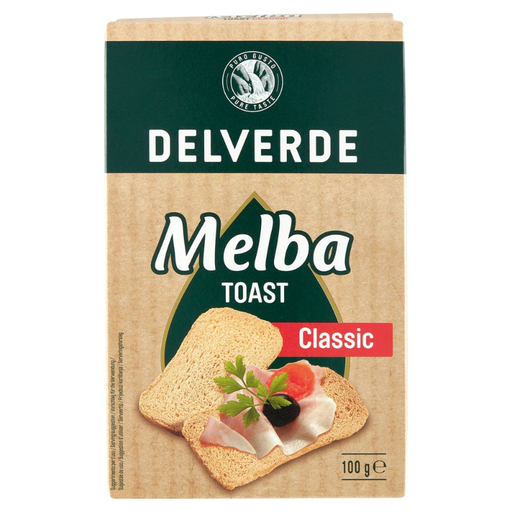 Image unavailable
A pack of melba toast for making a limited number of topped toast bites.
Net weight: 100 g. If you have an allergy, check the current packaging before serving the toast.
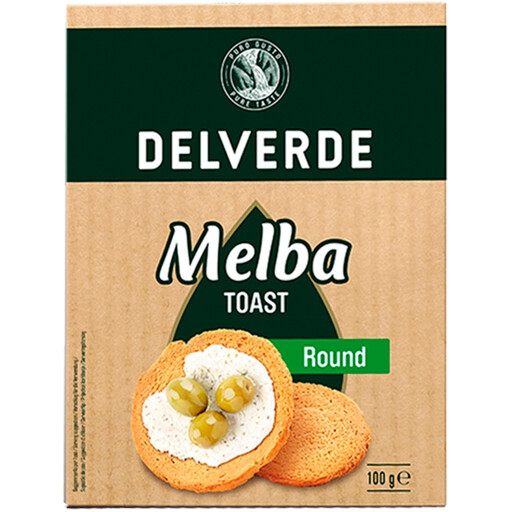 Image unavailable
Round melba toast for serving small topped bites.
Net weight: 100 g. If you have an allergy, check the current packaging before serving the toast.
Use ‘half loaf’ to describe the small quantity you’re looking for, not as a standard pack size for toast. Compare the net weight: ALDI, for example, lists 100 g toast cups, while Jumbo lists 120 g melba toast.
Choose a pack to suit the number of bites you expect to serve and any upcoming occasions when you could serve it again. Store any leftover toast according to the instructions on the packaging.
Toast cups are an option for soft or loose fillings that benefit from a raised edge. For thin toppings, you could choose flat melba toast; also compare the pack sizes.
Check the allergen information on the current packaging. The Netherlands Food and Consumer Product Safety Authority lists, among others, cereals containing gluten and sesame seeds as allergens. If you have an allergy, don’t rely solely on the product name or older online information.
You can’t assume this is true of every type of toast. The Netherlands Food and Consumer Product Safety Authority explains that iodine compounds may be present in bread and other bakery products through added baker’s salt. If this is relevant to your choice, check the ingredient information for the specific product.