
Family shoppers who prioritise fibre
You’re looking for toast for a secondary-school lunch and comparing the ingredients and fibre per 100 g. Salt and allergens on the packaging matter too: the name of the toast alone doesn’t tell you enough.


Choose wholemeal toast if fibre is a priority and the pupil will eat it. A multigrain option that clearly contains wholemeal flour can be a stepping stone for someone used to white toast. Compare the ingredients, fibre and salt per 100 g for each product, and check the allergens before packing.
You’re looking for toast for a secondary-school lunch and comparing the ingredients and fibre per 100 g. Salt and allergens on the packaging matter too: the name of the toast alone doesn’t tell you enough.
You’d like to introduce a pupil who is used to white toast to wholemeal, without assuming that every multigrain option is entirely wholemeal. The Voedingscentrum suggests mixing white and wholemeal as one possible way to make the change gradually.
You’re packing lunch for a pupil who needs to avoid certain ingredients or potential traces. In that case, the current packaging, the pupil’s individual care plan and the school’s arrangements determine which toast you can pack.
The ingredients in white, wholemeal and multigrain toast vary from product to product. So start by considering what the pupil will eat and what the label says, and always check allergens separately.
A good fit when: fibre is an important factor in your purchase and the pupil is happy with the taste and texture.
Consider: getting used to a different taste or texture can take time. Jumbo lists 9.7 g of fibre per 100 g for Van der Meulen Melba Wholemeal Toast; that figure applies to this particular variety.
A good fit when: you’re looking for a stepping stone from white to wholemeal toast and the ingredients list matches what you’re after.
Consider: multigrain doesn’t mean entirely wholemeal. The Van der Meulen Melba Multigrain Toast described by Jumbo contains 45% wholemeal wheat, as well as wheat flour.
A good fit when: familiar toast is the deciding factor when putting together the pupil’s lunch.
Consider: check the fibre content if you’re comparing this toast with wholemeal. Jumbo lists 3.9 g of fibre per 100 g for Van der Meulen Melba Original Toast.
| What to consider | What to check when buying | Especially relevant for |
|---|---|---|
| Fibre and wholemeal content | Check the proportion of wholemeal flour in the ingredients list and compare the fibre per 100 g across toast varieties. | If the grain content is a priority for lunch, you’ll want to know how much wholemeal flour and fibre the toast contains. This need is the top priority for around 42% of consumers. |
| Taste and getting used to it | Compare original, multigrain and wholemeal options; try a small pack first if you’re unsure. | If a pupil leaves wholemeal toast uneaten, you’ll want to find a flavour they like, which may also give them a chance to get used to it. Taste is the top priority for around 33% of consumers. |
| Allergens and school arrangements | Read the current ingredients and allergen information, and take the pupil’s individual care plan and the school’s arrangements into account. | If a pupil needs to avoid certain ingredients, you’ll want to know before packing whether this toast meets the agreed requirements. This check is the top priority for around 25% of consumers. |
Multigrain toast can contain wheat flour as well as wholemeal flour. For Van der Meulen Melba Multigrain Toast, Jumbo lists both ingredients, so the product name alone doesn’t tell you how much wholemeal flour it contains.
Compare the proportion of wholemeal flour and the fibre per 100 g on the packaging of the varieties you’re considering.
Other ingredients and potential traces may matter too. The allergen information for the Melba varieties described by Jumbo varies.
Read the full information on the current packaging, and follow the pupil’s care plan and the school’s arrangements.
According to the Voedingscentrum, bakers aren’t required to use baker’s salt. So the type of toast alone won’t tell you whether this ingredient has been used.
Check the ingredients list for the specific product, or ask the manufacturer if this is relevant to your choice.
A pupil who is used to white toast may not take to a wholemeal or multigrain option straight away.
Try a small pack first, or offer it at a few lunches, and see which variety they actually eat.
Uneaten toast can go to waste.
The original, multigrain and wholemeal varieties described by Jumbo make it possible to compare options within the same toast range.
AH Melba Original Toast is an original variety in a 240 g multipack, making it easy to compare the label with those of other original toast products.
The Bolletje products described here are crackers, not Melba toast. They’re worth considering as an alternative if you don’t need toast for lunch.
If you’re looking for original Melba toast as a base for toppings in a school lunch, this variety may be worth a look. When choosing between original, multigrain and wholemeal, compare the nutritional information and allergens on the packaging too.
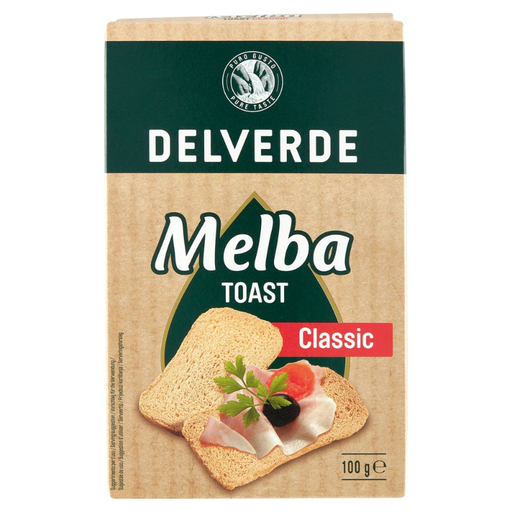 No image available
An option if you’d like to use Melba toast as a base for toppings in a school lunch. If you’re also considering wholemeal or multigrain toast, compare the fibre per 100 g on the current packaging.
The product description lists gluten from wheat and barley, and possible traces of sesame, soya and mustard. Check the packaging and the pupil’s arrangements before packing.
No. The choice also depends on what the pupil will eat and which ingredients they need to avoid. If fibre is a priority, compare wholemeal toast with other types by looking at the fibre per 100 g. A blended option may be a good step for someone getting used to wholemeal.
No. Check which grains have been used and how much wholemeal flour is listed. Jumbo says Van der Meulen Melba Multigrain Toast contains 45% wholemeal wheat, as well as wheat flour.
Only if it’s suitable for the pupil and allowed under the school’s arrangements. The Melba varieties described contain cereals with gluten. Check the current packaging for other allergens and possible traces too, and follow any individual care plan.
No, you can’t tell from the type of toast. According to the Voedingscentrum, bakers aren’t required to use baker’s salt. Check the ingredients list for a specific product, or ask the manufacturer.
If needed, pack moist toppings separately and add them at lunchtime. Keep the toast dry and seal the pack well again after opening.