For picky eaters, a toast cracker with a clearly stated mix of wheat flour and wholemeal flour can be a stepping stone. If you’re looking for a fully wholegrain base, choose toast labelled as wholemeal. According to the Netherlands Nutrition Centre, for toast and crackers, this label means the flour used is entirely wholemeal. Then compare the ingredients, fibre and salt per 100 g, portion packaging and allergens.
Who might find each option suitable?
Families looking to make a gradual switch
If fully wholemeal toast isn’t an immediate hit, a stated ratio of flour to wholemeal flour can help you decide. Albert Heijn lists LU Mini Crackers made with wheat flour and wholemeal flour as containing 57% wheat flour and 38% wholemeal wheat flour.
Shoppers looking for a wholegrain base
When choosing toast for dips or toppings, the grain base may matter more than what goes on top. According to the product information from Jumbo, Van der Meulen Melba Wholemeal Toast contains 9.7 g of fibre per 100 g. Also check the other nutritional information and ingredients for the exact variant.
Planning several snack occasions
If you’re sharing crackers over several days or among a group, look for individually wrapped portions and check the allergens for each flavour variant you choose. Albert Heijn describes the LU mixed crackers as coming in ten small packs. Check the toppings’ labels before serving, too.
What should you look for when choosing?
First decide whether you’re looking for fully wholemeal toast, a deliberate mix of flour and wholemeal flour, or simply a cracker to serve with toppings. Then compare the labels and packaging of products within that category.
Wholemeal melba toast
When: when a fully wholegrain base is the priority and your guests are happy to eat this toast.
Consider: this isn’t a stepping stone made with white flour; also check the salt and allergens for your chosen variant.
Crackers made with flour and wholemeal flour
When: when you’re deliberately looking for a clearly labelled mix for picky eaters.
Consider: a mix containing wholemeal flour isn’t the same as fully wholemeal toast.
Regular wheat flour crackers
When: when you’re looking for a cracker to serve with toppings, without needing a wholemeal mix.
Consider: check the ingredients if a higher wholemeal flour content is still important to you.
| What to consider |
What should you check? |
Who is this important for? |
| Wholegrain base |
Read the product description and ingredients. According to the Netherlands Nutrition Centre, ‘wholemeal’ on toast and crackers means they’re made entirely with wholemeal flour; ‘with wholemeal flour’ doesn’t mean this. |
I want to be sure the toast has a fully wholegrain base when I serve it at the snack table. An estimated 45% of consumers prioritise this reassurance. |
| A deliberate mix |
Compare the stated proportions of wheat flour and wholemeal flour. The LU mixed crackers at Albert Heijn list 57% and 38%, respectively. |
If fully wholemeal is too big a step for picky eaters, I want to see how much wholemeal flour the mix contains. For around 33% of consumers, this transition is the main reason for choosing it. |
| Portions and serving |
Check for individual packs, nutritional information per 100 g and allergens on the current packaging; assess toppings separately. |
When planning several snack occasions, I want to be able to divide portions and check in advance what I can serve. For around 22% of consumers, this practical use is the most important factor. |
Common mistakes
-
Assuming ‘with wholemeal flour’ means ‘fully wholemeal’
Adding some wholemeal flour doesn’t make a cracker fully wholemeal. The LU mix described by Albert Heijn contains both 57% wheat flour and 38% wholemeal wheat flour.
Read the product description and the percentages in the ingredients list. Choose the mix if that stepping stone is what you’re looking for.
-
Comparing fibre alone
Fibre doesn’t tell you everything about a product’s nutritional information. Jumbo lists Van der Meulen Melba Wholemeal Toast as containing 9.7 g of fibre and 1.9 g of salt per 100 g; Albert Heijn lists the LU mixed crackers as containing 7 g of fibre and 2.1 g of salt per 100 g.
Compare fibre and salt on the same basis, per 100 g, and think about how many pieces of toast and how much topping you plan to serve.
-
Assuming the allergens are the same across variants
Ingredients can vary between toast and cracker flavours. The products described here include cereals containing gluten and sesame; one variant also carries a warning that it may contain milk.
Before buying and serving, check the allergen information on the current packaging for the exact variant you’ve chosen, as well as for the toppings. The Netherlands Food and Consumer Product Safety Authority explains that allergens must be listed on the labels of prepacked products.
-
Assuming every pack of toast contains iodine
Whether iodised baker’s salt is used can vary from product to product. The fact that bread can provide iodine through baker’s salt, according to the Netherlands Nutrition Centre, doesn’t confirm anything about a specific pack of toast.
If iodine content matters to your choice, check the ingredients list or ask the manufacturer.
Brands and product ranges to compare
Van der Meulen Melba Toast
Melba toast for dips and toppings, including a 120 g wholemeal variant listed by Jumbo.
- The wholemeal variant described contains wholemeal wheat flour, 4% sesame seeds and 9.7 g of fibre per 100 g.
- The same variant contains 1.9 g of salt per 100 g. Check the allergens on the packaging, including the listing for wheat and sesame.
LU Mini Crackers
Toast crackers, including a flour-and-wholemeal mix and a plain variant made with wheat flour.
- The mix listed by Albert Heijn contains 57% wheat flour and 38% wholemeal wheat flour, and comes in ten small packs.
- The mix isn’t fully wholemeal and, according to Albert Heijn, contains 2.1 g of salt per 100 g. For the separate plain variant, Jumbo lists 98% wheat flour.
Albert Heijn
The range of toast for drinks and nibbles includes AH Melba Toast Plain and AH Organic Melba Toast with Sesame Seeds.
- Plain and sesame varieties offer different flavours and product options to compare.
- Check the ingredients and nutritional information for each individual product; a category name doesn’t tell you how much wholemeal flour it contains.
Jumbo
Jumbo’s own toast range includes Mini Crackers Plain, Mini Crackers Olive Oil & Oregano and Crispy Toast.
- The different shapes and flavours make it easy to find a cracker or piece of toast to go with your planned toppings.
- Don’t infer the grain base or nutritional value from the flavour name; check the information for the variant you’ve chosen.
Bolletje
Bolletje is worth considering if you’re looking at crackers, crispbread or rusks to serve with toppings as well as toast.
- Bolletje’s range includes wholemeal crackers, wholemeal crispbread and wholemeal rusks.
- Crackers, crispbread and rusks are different products from melba toast; don’t compare them as if their portions or texture were the same.
Toast crackers for your snack table at Joybuy
This cracker is a good fit for snack occasions where toppings take centre stage. If you’re specifically looking for a flour-and-wholemeal mix or fully wholemeal toast, check the ingredients and product description of another variant.
 No image available
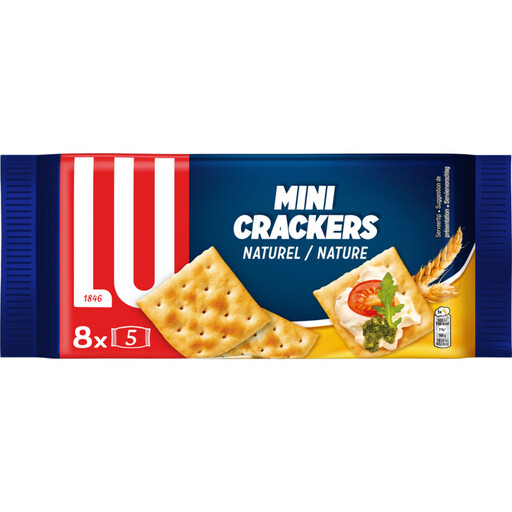
LU Mini Cracker Natural 250 g
An option for a snack table where the crackers are served as a base for toppings. The pack contains 250 g. If the grain base or ingredients are important to your choice, check the ingredients and allergens on the current packaging.
View at Joybuy
Frequently asked questions
Is toast ‘with wholemeal flour’ fully wholemeal?
Not necessarily. According to the Netherlands Nutrition Centre, ‘wholemeal’ on toast and crackers means they’re made entirely with wholemeal flour, while ‘with wholemeal flour’ can also refer to a mix containing regular flour. Check the ingredients list for the proportions.
When should I choose crackers made with flour and wholemeal flour?
Choose this kind of mix if you’re looking for a deliberate stepping stone for picky eaters and can check the proportions on the packaging. The LU variant described by Albert Heijn contains 57% wheat flour and 38% wholemeal wheat flour, so it isn’t a fully wholemeal cracker.
Does toast always contain iodine from baker’s salt?
No, don’t assume it does. The Netherlands Food and Consumer Product Safety Authority outlines the permitted use of iodine through baker’s salt in bakery products, but you’ll need to check the ingredients on the packaging of a specific toast product or ask the manufacturer.
Where can I check allergens for a snack table?
Check the label of every toast or cracker variant you’ve chosen, as well as the toppings. According to the Netherlands Food and Consumer Product Safety Authority, allergen information for prepacked products is shown on the label; don’t rely on information for a different flavour or pack.
How can I keep opened toast or crackers crisp?
Follow the storage advice on the packaging and reseal an opened pack securely to keep moisture out. Also consider whether individually wrapped portions suit the number of snack occasions you’re planning.


