
If you want the soup to take centre stage
You’re serving pea soup as a main course and want a thin, crunchy toast that doesn’t have a strong flavour of its own, such as herbs or olive.


Choose plain Melba toast if you want the pea soup and toppings to provide the flavour. Multigrain or wholegrain spelt toast is worth comparing if fibre is more important to you; choose sesame or herbs only if the flavour suits the meal and the people eating it. Whichever variety you choose, check the label for ingredients, allergens and salt, as these vary between products.
You’re serving pea soup as a main course and want a thin, crunchy toast that doesn’t have a strong flavour of its own, such as herbs or olive.
You want to choose between plain, multigrain and wholegrain spelt toast for this meal. You look at fibre, ingredients and salt per 100 g, not just the name on the front of the pack.
You’re also buying for people with an allergy or intolerance. For them, the information on the current packaging about cereals containing gluten, sesame, soya and milk matters more than the flavour variety.
Start by thinking about the role of the toast in the meal: a subtle accompaniment to the soup or an extra flavour on the table. Then compare the nutritional information and packaging of the varieties that fit the bill.
| What to consider | What to check when buying | Who it matters to |
|---|---|---|
| Flavour alongside the soup | Choose between plain toast and a variety with sesame, olive or herbs; match the flavour to your toppings. | If the soup and toppings already have strong flavours, I don’t want the toast to overpower them. Around 31% of consumers put this balance of flavours first. |
| Fibre, grains and salt | Compare fibre and salt per 100 g, and check which grains are actually in the variety you choose. | When choosing between plain and multigrain, I want to know what the nutritional information really says. Around 31% of consumers give this comparison top priority. |
| Allergens | Read the current ingredients and allergen information, including for sesame and multigrain varieties. | If one of my guests needs to avoid certain ingredients, I need to be able to check the specific packaging. For around 23% of consumers, checking allergens is the most important consideration. |
| Pack size and where to buy | Check the net weight and retailer; once opened, follow the storage instructions on the packaging. | If I’m buying for a larger group, I want to be able to buy enough toast and store an opened pack properly. This is the first consideration for around 15% of consumers. |
A luxury-sounding name, an organic label or a special blend of grains won’t tell you how much fibre or salt the toast contains, which allergens it includes or how strong its flavour is.
Decide what matters to you for your pea soup meal, then compare the ingredients and nutritional information of the specific varieties.
The toast varieties discussed have different ingredients; cereals containing gluten, sesame, soya and milk may all be relevant. If you have an allergy, the product name is no substitute for checking the label.
Check the current allergen information before buying, and take any warnings about the possible presence of allergens into account too.
The products discussed list a range of salt levels. Stock, smoked sausage, bacon, cheese or butter may also be part of the meal.
Compare the salt per 100 g in the toast varieties that suit your preferences for flavour and ingredients.
Lidl lists a 240 g pack of Melba toast as an in-store product. So if you’re buying for a group, you’ll need to consider where it’s sold as well as the pack size.
Before you shop, check where the variety you’ve chosen is available and follow the storage instructions on the packaging once opened.
These brand names can help you compare types of toast and pack sizes; ultimately, choose based on the specific variety.
Melba toast available in varieties including plain, multigrain and wholegrain spelt.
Supermarket own-label, including organic sesame Melba toast and Melba toast with Italian herbs and olive.
Retailer with product information for various Melba toasts, including plain and multigrain varieties from Van der Meulen.
A place to shop for a 240 g pack of Melba toast.
Brand of plain Melba toast listed by ALDI Netherlands in a 240 g pack.
Brand of crunchy baked goods such as crispbreads and crackers: a different option from Melba toast.
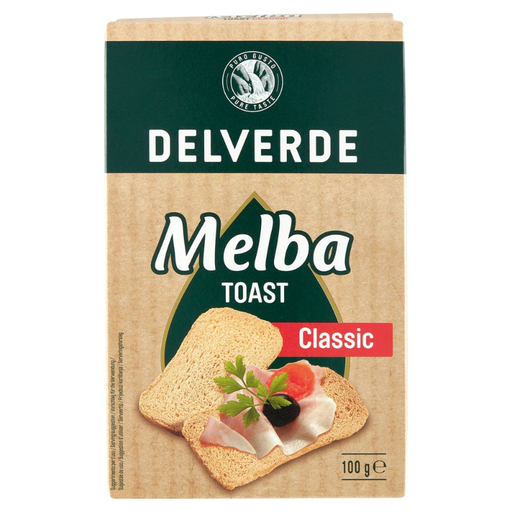
This plain Melba toast is an option if you want the pea soup and any toppings to provide the flavour.
 No image available
Its plain flavour goes well with pea soup when you want to choose your own toppings. Joybuy describes this Melba toast as crunchy; if you have an allergy, check the information on the current packaging.
Plain Melba toast is a subtle option if you want the soup and toppings to provide the flavour. Sesame, olive or herbs work better when you deliberately want to add those extra flavours to the meal.
The name alone doesn’t tell you how much fibre or salt a pack contains. For the varieties discussed, Jumbo lists 7,5 g of fibre per 100 g for Van der Meulen Multigrain, while Albert Heijn lists 9,4 g per 100 g for Van der Meulen Wholegrain & Spelt. Compare the ingredients and allergens too.
Before buying pre-packed toast, read the allergen information on the current packaging. The Netherlands Food and Consumer Product Safety Authority says this information must appear on the label; also look out for statements about the possible presence of allergens. If you’re buying loose toast, ask the seller for product information.
You can’t tell from the product category ‘toast’ alone. The Netherlands Nutrition Centre describes bread made with iodised baker’s salt as a source of iodine in the Netherlands, but for a specific type of toast you’ll need to check which salt is listed in the ingredients or ask the baker.
Follow the storage instructions for the variety you’ve chosen and seal the pack tightly. Albert Heijn and Jumbo’s product information recommends, among other things, storing the toast in a dry place or keeping it in a sealed tin.