
If you snack alone or with someone else now and then
If you only eat a few pieces of toast at a time, consider a 100–125 g pack or one with individually wrapped portions. That way, you don’t have to open the whole contents of a large pack at once.


For a late-night snack for one or two people, a 100–125 g pack of toast is a sensible choice if you’d rather not open too much at once. If you eat toast more often, a 240 g pack with individually wrapped portions could also suit you. Check the nutritional information and storage instructions for the specific variant, too.
If you only eat a few pieces of toast at a time, consider a 100–125 g pack or one with individually wrapped portions. That way, you don’t have to open the whole contents of a large pack at once.
Check whether the toast is labelled wholegrain, and compare fibre and salt per 100 g. A wholegrain label on its own doesn’t tell you how much salt the variant contains.
A 240 g pack could suit you if you eat toast regularly or share it. Seal an opened pack well; Voedingscentrum recommends storing toast in a cool, dry, dark place.
Start by thinking about how much you’ll open for each snack. Then consider the type of grain and nutritional information you’re looking for, and whether the pack size suits how often you eat toast.
| What to consider | What to check before buying | Who it matters to |
|---|---|---|
| How much you’ll have open | Compare the pack weight and check whether the contents are divided into individual portions. Albert Heijn states that its 240 g melba toast comes in twelve packs of six pieces. | If I only eat a few pieces of toast now and then, I want to be able to finish an opened pack quickly. Around 40% of consumers give the highest priority to having fewer opened leftovers. |
| Wholegrain, fibre and salt | Check the wholegrain label and compare fibre and salt per 100 g on the label for the variant you choose. | The type of grain matters to me for a late-night snack, and I also want to compare salt content. For around 30% of consumers, this nutritional information comes first. |
| How you’ll use it and how much to keep in stock | Consider whether you’ll use the pack at other times, too, and how to store it once opened. Lidl states that its 240 g melba toast is only available in store. | I often serve toast with toppings or as a snack to share, and want to have enough in the cupboard. Convenience matters most to around 30% of consumers. |
For a small household, it makes a difference whether you open one large pack or a separate portion each time. An opened pack can lose its crunch.
If you only eat toast occasionally, choose a pack you can finish easily, or check whether a larger pack contains individually wrapped portions. Once opened, store the toast in an airtight container or reseal the pack well.
Van der Meulen lists 9.7 g of fibre and 1.9 g of salt per 100 g for its wholegrain Melba toast. So the wholegrain base doesn’t tell you how much salt this variant contains.
For the specific products you’re considering, compare both fibre and salt per 100 g.
According to Voedingscentrum, using baker’s salt isn’t compulsory. So you can’t tell from the product category alone which salt has been used in a specific variant.
If you want to know, check the ingredients on the pack you’re buying.
Ingredients and allergen information can vary between variants. The Netherlands Food and Consumer Product Safety Authority explains the mandatory allergen labelling requirements for pre-packed foods.
Check the current ingredients and allergen information on the specific pack, even if you’ve bought it before.
Its own-brand range includes 240 g melba toast in twelve individual packs of six pieces, as well as 125 g party toast.
The manufacturer lists plain and wholegrain melba toast, including 120 g packs.
ALDI lists Sun Snacks Plain Melba Toast in a 240 g pack.
Lidl lists a 240 g pack of melba toast.
Bolletje is an alternative to consider for crackers, rather than the same product category as melba or party toast.
This 100 g pack of melba toast could suit you if you’d rather open a small pack for a late-night snack. Check the information on the pack before you choose, too.
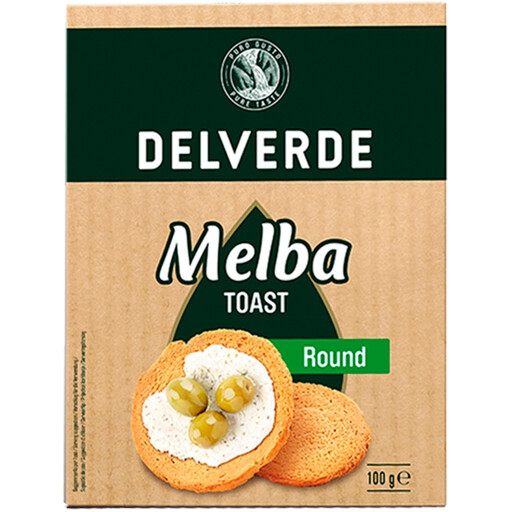 Image unavailable
A 100 g pack for anyone who wants to open a small amount of melba toast for a late-night snack.
Round toast. Check the pack to see how many pieces it contains, and read the current ingredients and allergen information.
No. A 240 g pack could suit you if you eat toast often or share it. Albert Heijn also divides its 240 g melba toast into twelve individual packs of six pieces. If you only eat toast occasionally, a 100–125 g pack may be easier to finish.
Store opened toast in a cool, dry, dark place in a well-sealed container or pack. Voedingscentrum recommends keeping opened crispbreads and toast in a kitchen cupboard for up to one month; follow the instructions on the pack, too.
A wholegrain label helps you identify the type of grain, but it doesn’t tell you everything about the nutritional value. Voedingscentrum says toast can only be called wholegrain if it’s made entirely from wholemeal flour. Also compare fibre and salt per 100 g across the variants you’re considering.
No. According to Voedingscentrum, using baker’s salt isn’t compulsory. Check the ingredients of the specific toast if you want to know which salt has been used.
Read the allergen information for the exact variant you’re buying, even if you’ve bought the product before. The Netherlands Food and Consumer Product Safety Authority explains how allergens must be listed on labels for pre-packed foods.