If you use toast regularly in a large household, start by choosing a pack size that suits how quickly you get through it. Then check that the shape works with your chosen toppings, and read the ingredients and nutritional information for each variety. Melba toast may be thinly sliced, but the term ‘medium sliced’ doesn’t specify a standard size.
Who should consider these factors?
Stocking up for a large household
If you serve toast often, it helps to choose a pack size that suits how much you use, with inner packs that can stay unopened until needed. Albert Heijn’s product listing describes AH plain Melba toast as a 240 g multipack containing twelve packs of six pieces of toast.
Choosing toast to suit your toppings
Whether you’re serving sweet or savoury toppings, the shape of the toast matters as well as the flavour. Van der Meulen describes its Melba toast as thinly sliced, while Jumbo lists JP by Jos Poell Toast Naturel as suitable for both sweet and savoury toppings.
Households that check labels carefully
If you’re keeping an eye on ingredients, allergens, fibre or salt, check the specific variety you’re buying. You can’t tell whether toast contains iodine from its name, either: according to the Netherlands Nutrition Centre, using baker’s salt in baking isn’t compulsory.
What should you look for when choosing?
| What to consider |
What to check when buying |
Who should pay particular attention? |
| Pack size |
Compare the net weight and the number of individual inner packs. Check how the toast should be stored once opened. |
If I serve toast often, I want enough in the cupboard without having to open it all at once. This is the top priority for around 37% of consumers. |
| Grain type and nutritional information |
If you’re looking for a wholemeal option, check that it’s explicitly labelled ‘wholemeal’, and compare fibre and salt per 100 g. |
If I use it regularly, I want to know which grain I’m buying and what the label says about fibre and salt. Around 27% of consumers give this nutritional consideration top priority. |
| Ingredients and allergens |
Read the current ingredients list, allergen information and any precautionary allergen warning for the variety. |
If someone at the table needs to avoid certain ingredients, I don’t want to rely on the word ‘plain’. This check comes first for around 18% of consumers. |
| Shape and toppings |
Look at the product photo and description: is it thinly sliced, round or another shape? |
If I’m choosing toast for toppings or a drinks platter, I want to know whether the shape works with what I’m serving. This is the top consideration for around 18% of consumers. |
Common buying mistakes
-
Looking only at a single pack
A small pack can be handy for trying out a shape, while a larger pack may suit more frequent use. The net weight alone doesn’t tell you how practical the packaging is once opened.
Compare the pack weight and any inner packs, then choose an amount your household will actually use.
-
Assuming all plain toast contains the same allergens
‘Plain’ doesn’t mean there’s a standard list of ingredients. The Albert Heijn and Jumbo product listings reviewed here give different ingredients and possible traces.
Check the current allergen information and precautionary allergen warning on the packaging of each variety.
-
Treating toast as equivalent to everyday bread
The nutritional information for a toast product isn’t automatically the same as that for a type of bread. The Netherlands Nutrition Centre also says that using baker’s salt isn’t compulsory, so the product name doesn’t tell you anything definitive about its iodine content.
Check the grain type, fibre and salt content for each product, and don’t assume you know its iodine content just because the word ‘salt’ appears.
-
Taking ‘medium sliced’ to mean a standard slice thickness
A term such as Melba toast can help you identify the shape, but ‘medium sliced’ doesn’t specify a particular size for these products. Van der Meulen describes its Melba toast as thinly sliced.
Check the shape and description before choosing a large pack, especially if you want the toast to suit particular toppings.
Brands to consider
Albert Heijn
Albert Heijn’s product listing describes AH plain Melba toast as a 240 g multipack containing twelve smaller packs.
- Individual inner packs can be useful when you don’t want to use all the toast at once.
- Check the current ingredients and allergen information for this variety before buying.
Van der Meulen
Jumbo lists Van der Meulen Melba toast in 120 g packs, including plain and wholemeal varieties.
- The description of the plain variety says it consists of thinly sliced, toasted pieces.
- Check the ingredients and nutritional information for each variety; the product range name alone doesn’t tell you enough.
JP by Jos Poell
Jumbo lists JP by Jos Poell Toast Naturel in a 100 g pack, suitable for sweet or savoury toppings.
- The smaller pack gives you a chance to see how the shape works with your chosen toppings.
- Check the current packaging if ingredients or possible traces are important to your household.
100 g packs of Melba toast on Joybuy
These two 100 g packs are worth considering if you’d like to see which shape of Melba toast works best with your toppings. If you use it regularly in a large household, work out separately how many packs you’ll need.
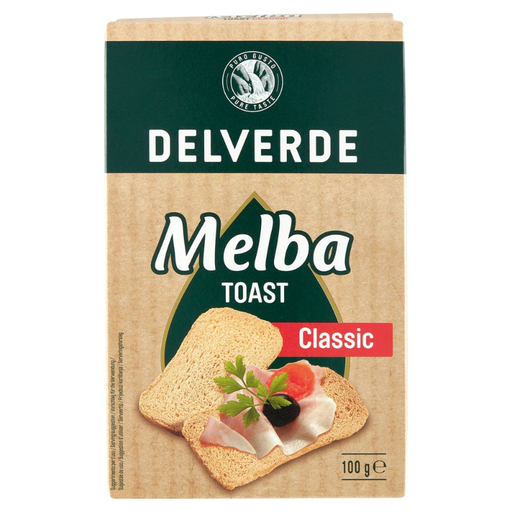 Image unavailable
Delverde Classic Melba Toast, 100 g
A pack to help you see whether this shape of Melba toast works with your chosen toppings. Check the current allergen information on the packaging; the available product description contains conflicting statements about this.
View on Joybuy
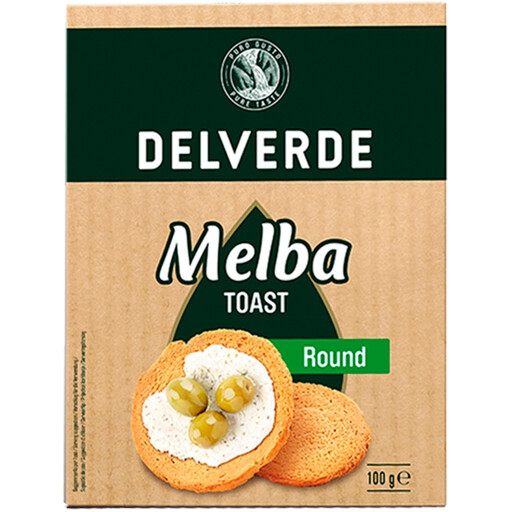 Image unavailable
Conimex Delverde Melba Toast Round, 100 g
The round shape is the main difference to consider when choosing toast for your toppings. Check whether it suits what you plan to serve. Also check the current allergen information on the packaging, as the product description gives conflicting information about sesame and soya.
View on Joybuy
Frequently asked questions
Is ‘medium sliced’ a standard size for toast?
No, for the toast discussed here, that term doesn’t specify a standard size. Van der Meulen describes its Melba toast as thinly sliced. Check the product photo and description if the shape matters for your toppings.
Does toast in the Netherlands always contain iodine from baker’s salt?
No. The Netherlands Nutrition Centre says that using baker’s salt in baking isn’t compulsory. The Netherlands Food and Consumer Product Safety Authority explains the conditions under which iodine may be present in bakery products through baker’s salt. Don’t assume you know the iodine content of a toast product from its name or the word ‘salt’ alone.
How should I store toast from a large pack once it’s open?
Follow the storage instructions on the packaging of the toast you’ve chosen. For the Melba toast it reviewed, Albert Heijn says to store it in a sealed tin after opening. You only need to open individual inner packs when you’re ready to use them.
Is wholemeal toast the same as wholemeal bread?
No. They’re separate products, so you should compare the nutritional information on each pack. If you’re looking for wholemeal toast, choose a variety explicitly labelled ‘wholemeal’ and check the fibre and salt content per 100 g, among other details.


