
A table with different preferences
If everyone wants a different kind of toast, serving a mix of plain and wholegrain melba toast gives guests a choice without needing a separate base for every topping.


For an Italian evening with guests who have different preferences, you can serve plain and wholegrain toast side by side rather than choosing just one type for everyone. Toast with olives, tomato or herbs works well when you want the toast itself to add flavour. Check the ingredients and allergen information on the packaging for each variety you choose.
If everyone wants a different kind of toast, serving a mix of plain and wholegrain melba toast gives guests a choice without needing a separate base for every topping.
A dark colour or the label ‘multigrain’ doesn’t mean the same as ‘wholegrain’. The Netherlands Nutrition Centre also advises checking for the wholegrain label on toast.
For a simple antipasti board, toast with olives, tomato and herbs can be an alternative to a plain base topped with strongly flavoured ingredients.
First decide whether you want to give your guests a choice between plain and wholegrain. Then decide whether you want the Italian flavour to come mainly from the toppings or the toast itself.
| What to consider | What to check when buying | Who it matters to |
|---|---|---|
| Plain and wholegrain options | Choose two clearly different types and check that the wholegrain variety is labelled as such on the packaging. | If guests have different preferences, I don’t want to limit everyone to one type of toast. Around 33% of consumers prioritise having this choice between plain and wholegrain. |
| Flavour in the toast or the toppings | Check whether the ingredients include olives, tomato or herbs. Choose a plain base when you want a variety of toppings to provide the flavour. | When serving simple toppings, I want the toast itself to suit the Italian theme. Around 27% of consumers prioritise flavour in the toast. |
| Wholegrain and fibre | Look for the wholegrain label and compare the fibre listed per 100 g for the products you’re considering. | When I specifically want to serve wholegrain, a dark colour alone isn’t enough. This check is the top priority for around 20% of consumers. |
| Allergens and salt | Read the current label, including any ‘may contain’ warnings, and compare salt per 100 g if you also want to take the toppings into account. | If a guest has a relevant food allergy, I need to know what’s in each type before serving it. Around 20% of consumers prioritise checking the label. |
If you specifically want to serve wholegrain, colour or another grain label alone won’t tell you whether the toast meets your requirements.
Look for the wholegrain label on the pack and read the ingredients list. According to the Netherlands Nutrition Centre, toast can only be labelled wholegrain if it is made entirely from wholegrain flour.
The plain, wholegrain and flavoured varieties mentioned have different ingredients and may carry different ‘may contain’ warnings. A previous product listing may not match the pack you’re serving.
Check the current ingredients and allergen information for every type of toast, especially if wheat, other gluten-containing cereals, soya, sesame, egg or milk could affect a guest.
Jumbo lists herbs and 1,89 g of salt per 100 g for its toast with black olives and sun-dried tomatoes. This is worth bearing in mind if you’re also serving strongly flavoured or salty toppings.
Check the nutritional information for your chosen toast and toppings together. You could also serve plain toast for guests who prefer to get the flavour from the topping.
Melba toast available in plain and wholegrain varieties, making it easy to compare the two options side by side.
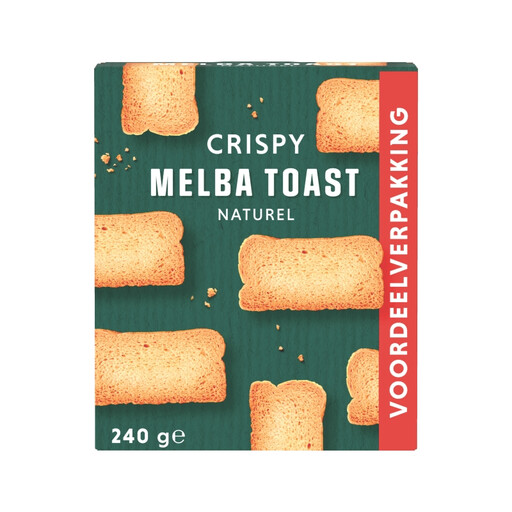
AH plain melba toast is a neutral option in a 240 g pack for anyone who wants the toppings to provide the flavour.
Jumbo offers toast with black olives and sun-dried tomatoes, among other varieties, for anyone looking for flavour in the toast itself.
ALDI’s toast range includes plain and wholegrain varieties, as well as Sun Snacks toast and melba toast.
This melba toast works well for an Italian evening where the toppings provide the flavour. If you also want to serve wholegrain toast or toast with Italian flavourings, choose a separate variety.
 No image available
A plain base for serving a variety of toppings. The pack contains 240 g. If you have allergies, check the ingredients and any ‘may contain’ warnings on the current packaging.
Look for the wholegrain label and check the ingredients list on the pack. According to the Netherlands Nutrition Centre, toast can only be labelled wholegrain if it is made entirely from wholegrain flour. ‘Multigrain’, spelt or a brown colour doesn’t automatically mean the same thing.
Don’t assume that ordinary melba toast is gluten-free. The AH plain melba toast mentioned contains wheat and barley, among other ingredients. Check the current ingredients and allergen information on the packaging of the toast you’re actually serving.
Follow the storage instructions for the product you’ve chosen. Albert Heijn recommends storing its melba toast in a sealed tin once opened; for the Jumbo toast mentioned, the advice is to store it in a cool, dry, dark place.