
Anyone shopping for one
You have toast for breakfast or a light meal and want to choose a pack size that suits how often you eat it.


For a meal for one, choose a pack you expect to finish; a larger pack isn’t automatically better value if you end up with toast left over. Use toast as a base for toppings, and check the specific label if wholegrains, allergens or baker’s salt matter to your choice.
You have toast for breakfast or a light meal and want to choose a pack size that suits how often you eat it.
You’re looking for a simple base for one and choosing toppings and sides to complement the rest of your meal. The Netherlands Nutrition Centre suggests options such as hummus, egg, vegetables and fruit for lunch.
You check the ingredients and allergens in the product you’re buying, or want to know whether it contains baker’s salt.
First, work out how much toast you use and what for. Then choose the type and pack size. If you have specific dietary requirements or allergies, always check the label on the pack.
| What to consider | What to check when buying | Who should consider this? |
|---|---|---|
| How much you use per pack | Compare the weight in grams with the amount of toast you usually eat. | If I only eat toast occasionally, I don’t want to be left with a pack I can’t finish. Around 36% of consumers put how much they use per pack first. |
| Putting a meal together | Check whether the specific product is labelled wholegrain, and think about which toppings or sides you’d like. | For lunch, I want more than just a crisp base, so I choose carefully what to eat with it. Around 29% of consumers prioritise what makes up the meal. |
| Pack size and storage | Check the weight and storage instructions, including what to do after opening. | If I don’t eat toast every day, an opened pack needs to suit how quickly I use it. For around 21% of consumers, this convenience matters most. |
| Ingredients and labelling | Read the allergen information and check for baker’s salt if it matters to your choice. | If I have a food allergy, I need to know what’s in this exact pack. Around 14% of consumers put checking ingredients and labels first. |
The toast packs reviewed range from 100 g to 240 g. For one person, what matters most is how much toast you’ll actually use after opening the pack.
Choose a pack size to suit your usage and check how to store the product.
Melba toast is a type of product, not a label that means it’s wholegrain. Multigrain doesn’t automatically mean wholegrain either.
If you want wholegrain, look for the explicit wholegrain claim on the specific product.
According to the Netherlands Nutrition Centre, bread doesn’t have to be baked with baker’s salt. So the type of product alone won’t tell you whether it’s been used.
Check the ingredients list on the toast if baker’s salt matters to your choice.
Ingredients and allergens can vary between products. Albert Heijn also points out that product information can change.
Read the packaging for the product you’re buying, including any warnings about cross-contamination.
These brands and shops offer different types of toast or alternatives. Always compare the specific product and pack.
ALDI own-brand range, including Toast Cups Naturel and Melba Toast Naturel.
A Melba toast brand with plain and wholegrain options listed by Jumbo, among others.
A supermarket with listings for its own Melba toast and product information for individual varieties.
A supermarket with its own Melba toast variety and listings for several Van der Meulen varieties.
A supermarket with a 240 g Melba toast listing.
An alternative for anyone who’d rather have crackers than toast with a meal for one.
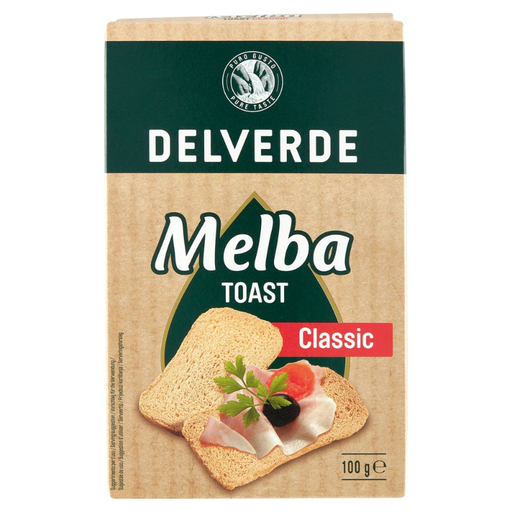
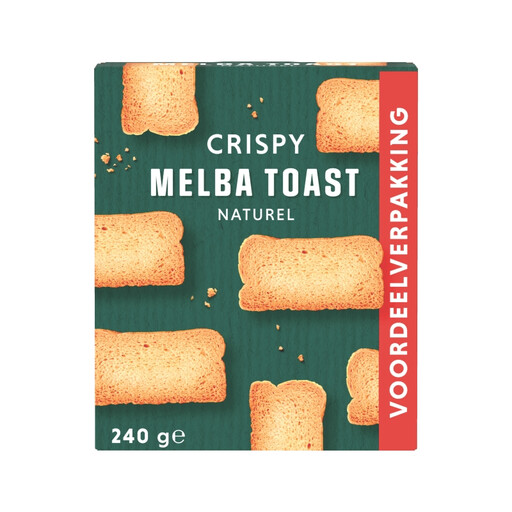
These Joybuy products are packs of Melba toast weighing 100 g and 240 g. Choose the size that suits how often you have toast as part of a meal for one.
 No image available
A 100 g pack could be a good choice if you’re buying a smaller amount of Melba toast for one person. Check the packaging for specific ingredients, allergens and baker’s salt.
 No image available
This 240 g pack may suit you if you eat Melba toast more often and can use it all. The allergen information for this product is contradictory, so check the ingredients and allergens on the packaging before buying or eating it.
It’s better to use Melba toast as a base for lunch than as the whole meal. The Netherlands Nutrition Centre suggests options such as hummus, egg, vegetables and fruit to pair with bread or toast.
No, you can’t tell from the type of product alone. According to the Netherlands Nutrition Centre, bread doesn’t have to be baked with baker’s salt, so check the ingredients list for the specific toast.
Read the ingredients, allergen information and any cross-contamination warnings on the pack you’re buying. A Van der Meulen Melba toast product listed by Albert Heijn contains wheat, barley and soya, among other ingredients, according to its product listing. However, this information doesn’t automatically apply to other varieties.
Follow the storage instructions on your pack. For one Melba toast variety reviewed, Jumbo recommends storing it in a cool, dry place. Keep an opened pack sealed as directed on its own label.