For your weekly shop, choose wholemeal toast or Melba toast if fibre is a priority, but compare the salt and ingredients per 100 g and per serving too. Toast on its own isn’t a solution for constipation: the Netherlands Nutrition Centre also lists drinking enough, eating a varied, fibre-rich diet and keeping active as relevant factors.
Who might find these choices useful?
If you’re keeping an eye on fibre
You buy toast for several occasions and want to compare the fibre content on the label. According to the Netherlands Nutrition Centre, fibre is part of a diet that supports good digestion; simply choosing a different type of toast isn’t a complete approach to digestive problems.
If you’re comparing salt and allergens
You want to check how much salt each variety contains and whether its ingredients and allergens are suitable for your household. Product information from Albert Heijn shows that wholemeal toast and related products differ in this respect.
If you’re shopping for the whole week
You want to work out in advance how many pieces you’ll use and how to store an opened pack. Check the serving and storage information on the packaging of the product you buy.
What should you look for in toast?
Start with the ingredients and nutritional information, then use the per-100 g figures to work out what they mean for the portion you usually eat. A wholemeal label doesn’t make it any less important to check the salt and allergens.
| What to consider |
What to check on the pack |
Who it matters to |
| Fibre |
Check whether wholemeal flour is listed in the ingredients. Compare fibre per 100 g and see how much one serving contains. |
If I buy toast for several occasions, I want to know how much fibre I get from my usual portion. For around 45% of consumers, fibre would be the first consideration. |
| Allergens and ingredients |
Read the current allergen declaration, especially for wheat or gluten and any statements about sesame, soya, milk or egg. |
When buying a pack for the household, I want to check whether its ingredients suit our dietary requirements. For around 28% of consumers, allergens and ingredients would be the priority. |
| Salt and serving size |
Compare salt per 100 g and work out how much is in the number of pieces you eat; include the toppings too. |
If I eat several pieces of toast, I want to know how much salt is in the whole portion, including the toppings. Salt and portion size would be the main considerations for around 27% of consumers. |
Common mistakes when choosing
-
Seeing wholemeal toast as a complete solution for digestive problems
Alongside fibre, the Netherlands Nutrition Centre also lists drinking enough and keeping active as factors that support digestion. Switching products doesn’t replace this broader approach.
Think of toast as just one part of your diet. If constipation persists, contact your GP rather than simply switching to a different type of toast.
-
Looking at fibre alone
According to product information from Albert Heijn, Van der Meulen Volkoren Melbatoast contains 2.0 g of salt per 100 g, while Bolletje Volkoren beschuit lists 0.47 g per 100 g. Beschuit is a different product from toast.
When comparing toast, look at fibre and salt side by side per 100 g, then consider what your own portion means, including the toppings.
-
Assuming wholemeal toast is allergen-free
Product information from Albert Heijn lists wheat, sesame and soya among the ingredients of various wholemeal products, as well as possible traces of milk and egg. This varies by recipe.
Read the allergen declaration on the pack each time you buy, even if you’ve bought the same product before.
-
Assuming toast contains iodine because of its name
According to the Netherlands Nutrition Centre, using baker’s salt isn’t compulsory. So you can’t tell from the product category alone whether a particular variety of toast is made with it.
If iodine is relevant to your choice, check the ingredients list for baker’s salt or iodised salt.
Brands and product ranges to consider
These examples show which product details you can compare alongside the name and wholemeal label. Beschuit is a related crisp product, but it isn’t toast.
Van der Meulen
Wholemeal Melba toast for anyone looking for thin, crisp toast made with wholemeal wheat flour.
- According to product information from Albert Heijn, this variety contains 88% wholemeal wheat flour, 7% sesame seeds and 8.4 g of fibre per 100 g.
- The same product information lists 2.0 g of salt per 100 g and allergens including wheat, sesame, barley and soya.
Jos Poell
Wholemeal toast in small pieces, ideal for serving with toppings.
- Product information from Albert Heijn lists 10 g of fibre per 100 g.
- It also lists 1.64 g of salt per 100 g. Check the listed wheat and gluten, as well as possible traces of egg, milk, soya and sesame.
Bolletje
Wholemeal beschuit as an alternative for a crisp snack, though it’s not the same type of product as toast.
- For Bolletje Volkoren beschuit, product information from Albert Heijn lists 11 g of fibre and 0.47 g of salt per 100 g.
- The ingredients include wheat and egg. Beschuit isn’t suitable if you’re specifically looking for toast or need to avoid these ingredients.
Sansepolcro
Wholemeal toast made from roasted slices of bread.
- According to product information from Albert Heijn, this variety contains 36% wholemeal wheat flour and 8 g of fibre per 100 g.
- The same information lists 1.25 g of salt per 100 g and ingredients including wheat, barley and sesame.
Crisp grain products at Joybuy
This cracker is a crisp alternative if you’re looking for more than just classic toast for your weekly shop. If you’re choosing based on fibre or allergens, check the current packaging.
 No image available
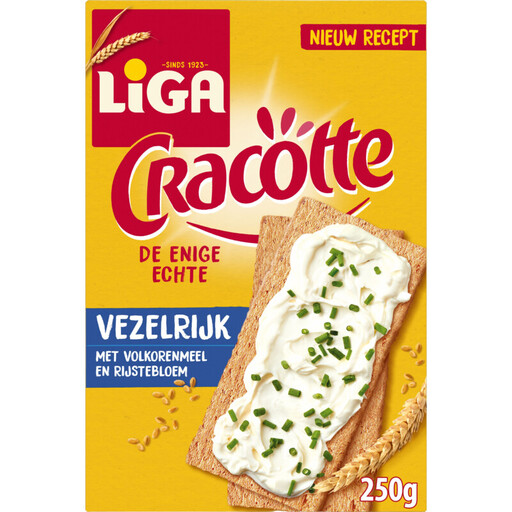
Liga Cracotte, 250 g
A cracker for anyone considering a crisp alternative to toast for their weekly shop.
Pack size: 250 g. If you’re choosing based on fibre or allergens, check the current packaging, paying particular attention to fibre per 100 g and any mention of wheat and milk.
View at Joybuy
Frequently asked questions
Does wholemeal toast automatically help with constipation?
No, switching to a different type of toast won’t solve constipation on its own. For constipation, the Netherlands Nutrition Centre also recommends drinking enough and being active every day. If your symptoms persist, contact your GP.
Does all toast contain iodine from baker’s salt?
No, you can’t tell from the name toast. According to the Netherlands Nutrition Centre, baker’s salt isn’t compulsory. If it matters to your choice, check the ingredients list on the specific pack.
How should you store an opened pack of toast during the week?
Follow the storage instructions on the pack and seal it securely after use. Product information from Albert Heijn recommends storing various toast and beschuit products in a dry place and, once opened, keeping them sealed. Always follow the instructions for your specific product.
Should you compare the salt in wholemeal toast too?
Yes, a wholemeal label doesn’t tell you how much salt a product contains. Compare the nutritional information per 100 g, then consider how many pieces you usually eat and what you put on them.


