
Brunch hosts serving a variety of toppings
You’re looking for a neutral, crunchy base for savoury and sweet toppings. Also consider how many pieces you’ll need and how the pack is divided.


If you want to serve a wide variety of toppings, choose plain melba toast as a neutral base. If you want the toast itself to have more character, compare wholemeal, spelt and sesame varieties by their ingredients and nutritional values. For each option, check the allergens, the quantity per pack and the salt content per 100 g. According to the Netherlands Nutrition Centre, bread does not have to be baked with baker’s salt, so don’t assume it contains iodine just from the name of the toast.
You’re looking for a neutral, crunchy base for savoury and sweet toppings. Also consider how many pieces you’ll need and how the pack is divided.
You want to choose between options such as wholemeal, spelt and mixed grains. Compare the ingredients and fibre content per 100 g rather than relying on the product name alone.
Allergens may be a deciding factor for you or your guests. Check each product for the grains and other allergens it contains, as well as any possible traces listed on the label.
First decide whether the toast should mainly carry the toppings or add a distinct grain or sesame flavour of its own. Then choose a pack and ingredients to suit your guests.
| What to consider | What to check | Who should consider this? |
|---|---|---|
| Toppings and presentation | Choose a shape that works for canapés or more generous toppings; add moist toppings shortly before serving. | I want to offer a variety of toppings without the toast overpowering their flavour. Around 31% of consumers prioritise how well the toast works with toppings. |
| Grains and fibre | Compare the type of flour in the ingredients list and the fibre per 100 g; multigrain does not automatically mean wholemeal. | If the toast itself has a bigger role on the table, I want to know which grains it contains. Around 23% of consumers prioritise grains and fibre. |
| Ingredients and allergens | Check the current label for both the allergens present and any warnings about possible traces. | I need to be able to tell whether all my guests can eat this toast. Around 23% of consumers put checking ingredients and allergens first. |
| Quantity and availability | Compare the weight and, where stated, the number of pieces per pack; check where it’s sold before you shop. | For a brunch with several guests, I want to buy enough toast without having too much left over. Around 23% of consumers prioritise buying the right amount. |
According to the Netherlands Nutrition Centre, bread does not have to be baked with baker’s salt. So words such as toast, organic and premium don’t tell you whether baker’s salt has been used.
Check the ingredients on the label, or ask about them if the product is sold loose.
The grain and sesame toasts described contain ingredients including wheat, sesame and soya; some labels also warn of possible traces.
If you’re serving guests with allergies, check the current label on the exact pack you’re buying, including any warnings about traces.
A 100 g pack and a 240 g pack won’t provide the same amount of toast for your brunch table. The number of pieces or individual sachets can also make a difference when planning.
Choose the weight and number of pieces to suit your guests, and check where the product is available before you buy.
Moist toppings can make the toast less crunchy.
Store opened toast according to the pack instructions, keep moist toppings separate and prepare the pieces shortly before serving.
Albert Heijn and Jumbo list several melba toast varieties, including wholemeal spelt, seven-grain and sesame.
AH Melba toast naturel is a neutral option for a brunch with a variety of toppings.
At Jumbo, you can compare different shapes and grain varieties within the Van der Meulen range described.
ALDI describes Sun Snacks Melba Toast Naturel as a 240 g pack for anyone looking for a neutral toast base.
Delverde Classic Melba Toast comes in a compact pack for a small toast presentation.
This order groups the products described by how they could be used for Easter brunch: a compact, neutral toast, a wholemeal spelt variety, sesame toast and a larger neutral pack. It is not the result of a taste or quality test.
| Position | Product | Features | Why consider it? | Retailer |
|---|---|---|---|---|
| 1 | Delverde Classic Melba Toast 100 g | 100 g; according to Joybuy, 1.25 g of salt per 100 g. | A compact melba toast for anyone serving a variety of toppings. According to Joybuy, this variety contains wheat and barley. | Joybuy |
| 2 | Van der Meulen Melba Toast Luxe Volkoren & Spelt 100 g | Wholemeal wheat and spelt; according to Albert Heijn, 9.4 g of fibre per 100 g. | For anyone who wants to take the grains in the toast into account. Check the allergens for this specific variety. | Albert Heijn |
| 3 | Van der Meulen Melba Biologische Toast Sesam 100 g | According to Jumbo, 7% sesame seeds. | For anyone specifically looking for sesame toast. Sesame is also an allergen to check with your guests. | Jumbo |
| 4 | AH Melba toast naturel 240 g | According to Albert Heijn, 12 sachets of 6 pieces. | A neutral base for a variety of toppings when you want to divide the portions between several guests. | Albert Heijn |
These products are options for a small toast presentation or a larger brunch table. Rice toast is a different type of product from melba toast, so choose according to the shape, quantity and ingredients you want.
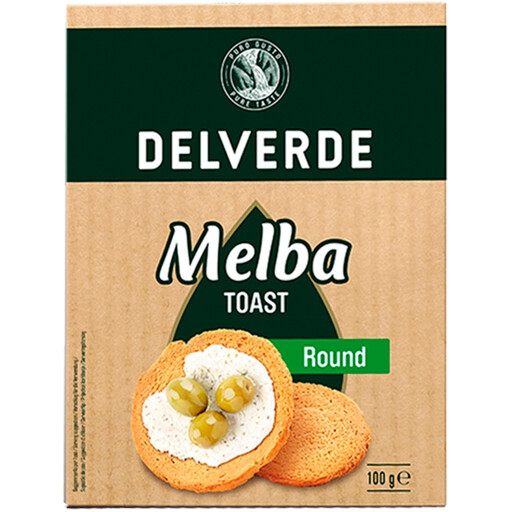 No image available
This round melba toast is an option for small bites on the brunch table.
Pack size: 100 g. If you have allergies, check the ingredients and warnings on the current label.
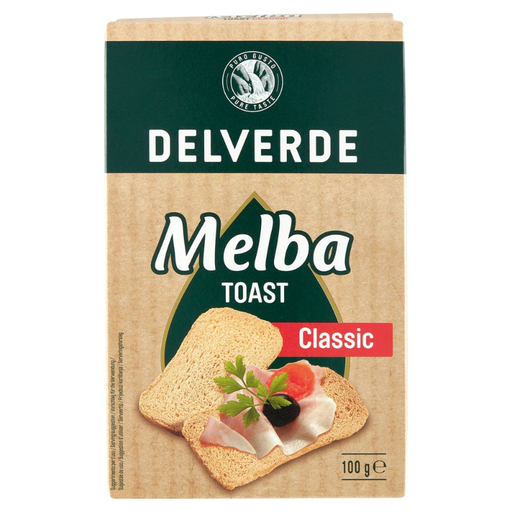 No image available
This classic melba toast works well for a small presentation with a variety of toppings.
Pack size: 100 g. If you’re serving guests with allergies, check the current label.
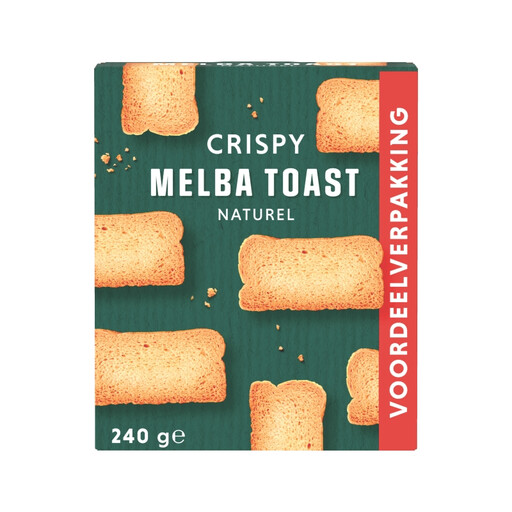 No image available
This pack of melba toast is an option when you’re shopping for several brunch guests.
Pack size: 240 g. Check the current label for allergens before serving; the available product description contains conflicting information about them.
 No image available
This rice toast is a toast-like option for a small brunch presentation, but it isn’t melba toast.
Pack size: 65 g. If allergens or a gluten-free option are important, check the current label; the available product description is unclear about allergens.
No. Compare the nutritional values and ingredients of individual products. For example, Albert Heijn lists 3.9 g of fibre per 100 g for AH Melba toast naturel and 9.4 g per 100 g for Van der Meulen Luxe Volkoren & Spelt. That doesn’t tell you how good a product is based on the word premium alone.
No. According to the Netherlands Nutrition Centre, using baker’s salt when baking is not compulsory. For packaged toast, check the ingredients list; if it’s sold loose, ask what type of salt was used.
Check the current label on the specific pack for ingredients, allergens and warnings about possible traces. The Netherlands Food and Consumer Product Safety Authority states that allergen information must appear on the label of pre-packed foods. Don’t rely on words such as organic or luxury.
Store opened toast according to the instructions on the pack and add moist toppings shortly before serving. If the pieces will be on the table for a while, serve these toppings separately.
Compare the amount of salt per 100 g and consider how much toast you plan to serve. Joybuy lists 1.25 g of salt per 100 g for Delverde Classic Melba Toast; the Van der Meulen organic sesame toast described lists 2.1 g per 100 g. Always check the nutritional information on the pack you buy.