What should you look for when choosing?
When choosing toast for a morning snack, first decide whether the grain base, an accessible flavour, allergens or the packaging matters most to you.
| What to consider |
What to check when buying |
Who it matters to |
| Wholemeal and fibre |
Look for the wholemeal label and compare the fibre per 100 g in the nutrition table. |
If I want fully wholemeal toast, I look beyond a dark colour or seeds on the packaging. For around 36% of consumers, the wholemeal base and fibre content are the top priorities. |
| Flavour and a stepping stone |
For multigrain toast, check the proportion of wholemeal flour and which other types of flour are used. |
For a fussy eater, I want to choose toast that sits somewhere between plain and fully wholemeal. A gradual change in flavour is the deciding factor for around 29% of consumers. |
| Ingredients and allergens |
Check the latest packaging for both the listed allergens and any warnings about possible traces. |
If I need to avoid an ingredient, this particular option must meet my requirements. This is the top priority for around 21% of consumers. |
| Portions and storage |
Check how the product is packaged and the storage instructions after opening. |
If I want to take toast with me or spread a pack over several snack breaks, how practical the packaging is matters. It’s the main consideration for around 14% of consumers. |
Toast options at Joybuy
This plain Melba toast is a good choice if you’re mainly looking for a neutral, crisp base for a snack. Don’t consider it a confirmed stepping stone containing wholemeal flour.
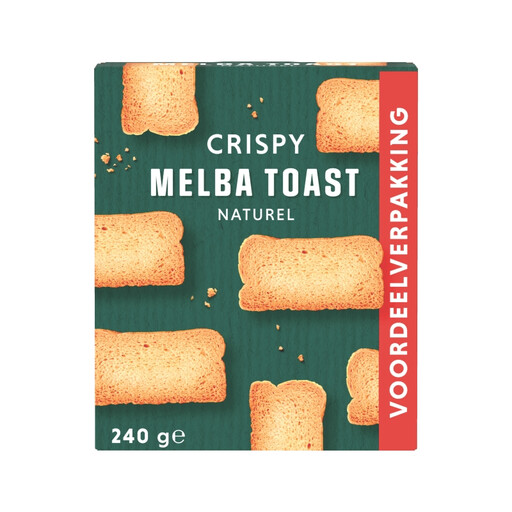 Image unavailable
Crispy Melba Toast 240 g
A plain toast base for anyone looking for a neutral flavour to go with toppings. The pack contains 240 g. Before buying, check the latest ingredients and allergen information on the packaging, especially if you need to avoid soya or sesame.
View at Joybuy
Frequently asked questions
Is multigrain toast the same as wholemeal toast?
No. The term multigrain doesn’t, by itself, mean that all the flour used is wholemeal. For example, the Van der Meulen Melba Meergranen Toast described by Jumbo contains 45% wholemeal wheat flour as well as wheat flour. So check the ingredients if you’re looking for a fully wholemeal base.
Which toast could be a stepping stone for a fussy eater?
A multigrain option with a stated proportion of wholemeal flour could be suitable if fully wholemeal isn’t the preferred choice yet. Still, compare the ingredients and fibre per 100 g. Choose plain toast if a neutral base is your priority.
Which allergens should I check for in toast?
Check the latest packaging for the ingredients and listed allergens in the option you’ve chosen. The Melba toasts reviewed include ingredients such as wheat, soya and sesame, while the grains and warnings vary between options. According to the Netherlands Food and Consumer Product Safety Authority, allergens must be clearly listed on the label.
How can I tell whether toast contains iodised salt?
Check the ingredients list on the specific pack to see what type of salt is used. Don’t assume it contains iodised salt just because it’s toast; if the label is unclear, ask the manufacturer or retailer for product information.
How should I store toast after opening?
Follow the storage instructions on the packaging and seal the toast securely after opening. For AH Melba Toast Naturel, Albert Heijn recommends storing the toast in a sealed tin after opening.


