
Anyone who regularly serves toast
If toast is often served with afternoon coffee, choose a pack size that suits how much you eat and how you store the toast after opening.


For a regular coffee break, a pack that suits how you use it is a practical place to start. If fibre matters most, compare the nutritional information for specific toast varieties per 100 g, and check the salt content and allergens on the current label too. Crispy toast is not automatically a substitute for wholemeal bread every day, or suitable for people with chewing or swallowing difficulties.
If toast is often served with afternoon coffee, choose a pack size that suits how much you eat and how you store the toast after opening.
Compare the fibre content per 100 g of the variety you choose. The Netherlands Nutrition Centre advises older people to eat wholegrain products every day; toast is not automatically equivalent to ordinary wholemeal bread.
Check the salt content, ingredients, allergens and any warnings on the current pack. This information can vary between toast varieties.
First, work out how much toast you usually serve. Then compare the nutritional information for varieties that suit how you’ll use them, especially if fibre, salt or allergens will influence your choice.
| What to consider | What to check | Who it matters to |
|---|---|---|
| Pack size and storage | Compare the pack weight with how much you use, and check the storage instructions for after opening. | If I serve toast regularly, I don’t want to open more than we can eat within the recommended storage period. Around 36% of consumers prioritise a pack size that suits their needs. |
| Fibre and type of grain | Read the ingredients and compare the fibre content per 100 g of specific varieties. | If you consider the type of grain and nutritional value even for a small coffee break, you’ll want to know what your chosen toast contains; around 29% of consumers put this first. |
| Salt and allergens | Compare the salt content per 100 g and read the full allergen information, including any warnings. | If you need to avoid an ingredient or are watching your salt intake, the label matters more than the product name. Around 21% of consumers prioritise these checks. |
| Portion and shape | Check the size for the topping you have in mind, and consider the person’s ability to chew and swallow. | For a small serving, I want a shape that suits the person eating it; around 14% of consumers prioritise portion size and ease of use. |
Van der Meulen Melba Wholemeal Toast, listed by Jumbo, contains 9.7 g of fibre and 1.9 g of salt per 100 g. The ingredients include cereals containing gluten, sesame and soya.
Compare fibre and salt separately, and if you have an allergy, read the full information on the current pack.
According to the Netherlands Nutrition Centre, the use of baker’s salt is not compulsory. So you can’t assume it is present just because a product is called ‘toast’.
If baker’s salt matters to your choice, check the ingredients of the specific product.
A thin, crispy shape says nothing about someone’s individual ability to chew or swallow.
Choose with the person eating it in mind, and ask a healthcare professional for advice if they have difficulty chewing or swallowing.
ALDI Netherlands lists Sun Snacks Melba Toast Natural in a 240 g pack.
Jumbo lists Melba Toast Natural, Melba Wholemeal Toast and Melba Multigrain Toast, each in a 120 g pack.
ALDI Netherlands’ toast and cracker range includes Sun Snacks Melba Toast in a 240 g pack.
Lidl Netherlands lists 240 g melba toast as a store product.
These products come in different pack sizes and toast shapes to suit a coffee break. Compare their labels on the points that matter to you.
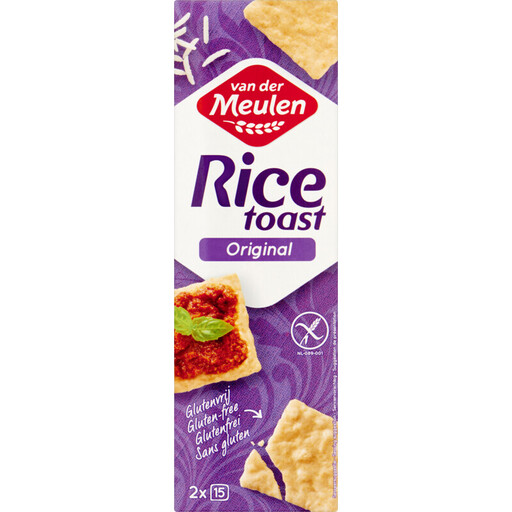 Image unavailable
Rice toast to consider if you’re looking for a small pack for your coffee break.
Pack size: 65 g. If you have an allergy, check the full information on the packaging.
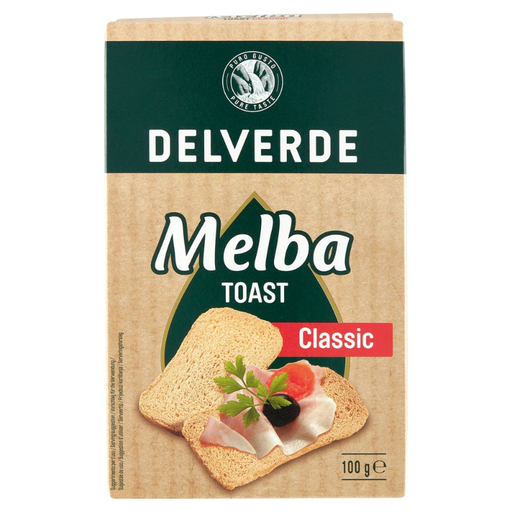 Image unavailable
Plain melba toast for serving with your choice of topping.
Pack size: 100 g. To compare salt and fibre, check the per-100 g values on the current label, and check the allergen information.
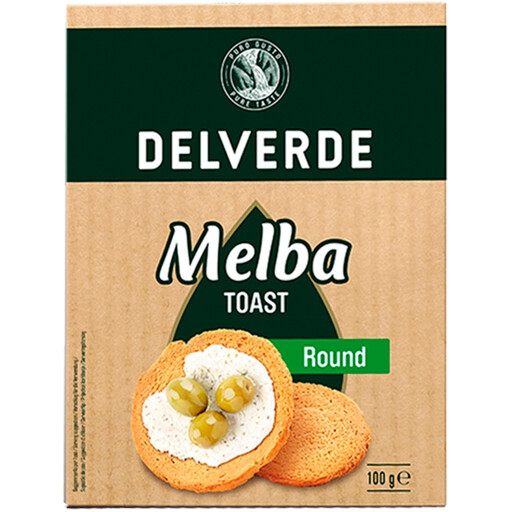 Image unavailable
The round shape could work well for a coffee break with toppings or dip.
Pack size: 100 g. Check the nutritional information per 100 g and the full allergen information on the packaging.
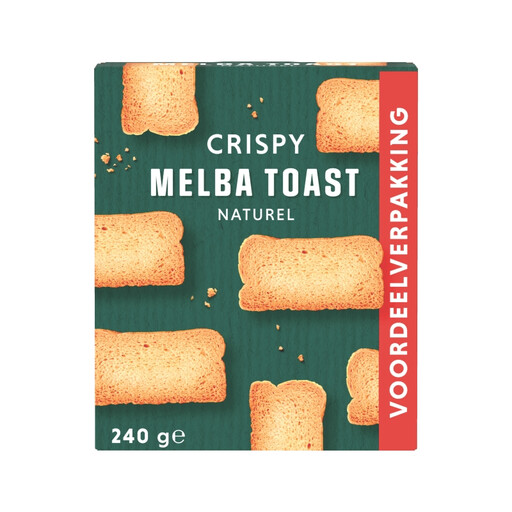 Image unavailable
A larger pack to consider if you serve melba toast more often.
Pack size: 240 g. Check the current packaging for salt, fibre and allergens; don’t assume the crispy shape is suitable for anyone with chewing or swallowing difficulties.
Not necessarily. Compare the specific toast with the rest of your diet instead of relying on the word ‘wholemeal’ alone. The Netherlands Nutrition Centre describes wholemeal bread as a source of fibre, vitamins and minerals; Van der Meulen Melba Wholemeal Toast, listed by Jumbo, contains 9.7 g of fibre but also 1.9 g of salt per 100 g.
Compare the salt content per 100 g across toast varieties, and consider your toppings too. For the Van der Meulen natural, wholemeal and multigrain varieties checked, Jumbo lists 1.3 g, 1.9 g and 1.5 g of salt per 100 g respectively.
Read the ingredients, allergen information and any warnings on the current pack of the variety you’ve chosen. The Netherlands Food and Consumer Product Safety Authority emphasises that information about the contents of pre-packed foods must be easy to read. Don’t rely on the words ‘natural’ or ‘wholemeal’ alone.
No, you can’t tell from the type of product. According to the Netherlands Nutrition Centre, the use of baker’s salt is not compulsory; check the ingredients of the specific product if this matters to your choice.
Follow the storage advice on the packaging you bought. Albert Heijn advises storing AH BASIC Melba Toast in a sealed tin after opening; don’t apply that instruction to another variety without checking its label.