
Vandaag of morgen in huis

Kwaliteit gegarandeerd

Welkomstaanbiedingen ontgrendelen: GRATIS bezorging | Tot 80% korting | Gratis 30 dagen JoyPlus-proefperiode
Download de app
Buying tissues sounds simple, until you have to choose between pocket tissues, facial tissues, lotion tissues, family packs and toilet paper. The difference is not just in the brand name or packaging. For everyday use, the key factors are the number of layers, quantity, softness, strength and how you plan to use the tissues.
A family pack may look appealing, but always check the total number of sheets and the number of packs. Packaging with lots of boxes may contain less overall than a compact bulk pack. Divide the price by the number of tissues or packs to compare like-for-like quantities.
For taking with you, eight small packets are often more practical than one large box. At home, a box with 128 sheets or a multipack containing hundreds of sheets may be more convenient.
Marketing terms such as soft, strong or comfortable are only useful when you also look at the specifications. Check:
A 3-ply tissue can offer a practical balance between softness and strength. However, the number of layers does not tell you everything about how they feel. Embossing, fibre structure and moisture resistance also play a part.
According to the product description, lotion tissues can feel pleasant when wiping your nose frequently. For example, Kleenex Balsam Pocket Tissues are described as tissues with a calendula balm layer. This is a claim from the brand’s product information and should not be interpreted as a medical effect.
Fragranced tissues are not suitable for every user either. If you have sensitive skin or are sensitive to fragrances, an unscented option is a sensible choice. Always check the label and stop using the product if irritation occurs.
For facial tissues and tissues used during a cold, contact with the skin is important. A soft tissue will generally feel more comfortable when used repeatedly. Look for product information such as 3-ply paper, lotion, cotton or a description such as “soft and strong”. Treat this as a product specification, not a guarantee for every user.
If you are looking for tissues for sensitive skin, you could start with unscented options. For example, C&S Facial Tissue Face Pink Soft is offered as 3-ply, unscented paper made from 100% virgin pulp. The manufacturer states that the product is intended for everyday use on the face and hands; it is not a medical product.
Thin tissues are lightweight and easy to carry, but may tear more quickly. For intensive everyday use, multiple layers and a larger sheet are often more practical. A 3-ply tissue is generally more suitable for your nose, hands and face than very thin, napkin-like paper.
Also pay attention to warnings about moisture. Facial tissues are usually intended for single use and should be put in the bin. Do not flush paper tissues or facial tissues down the toilet unless the packaging explicitly says that you can and this is compatible with your local drainage system. Toilet paper is designed for a different purpose.
Choose packaging that suits your routine:
Store paper products in a dry place. In a damp bathroom, tissues may lose their strength more quickly. When your order arrives, also check that the packaging is undamaged.
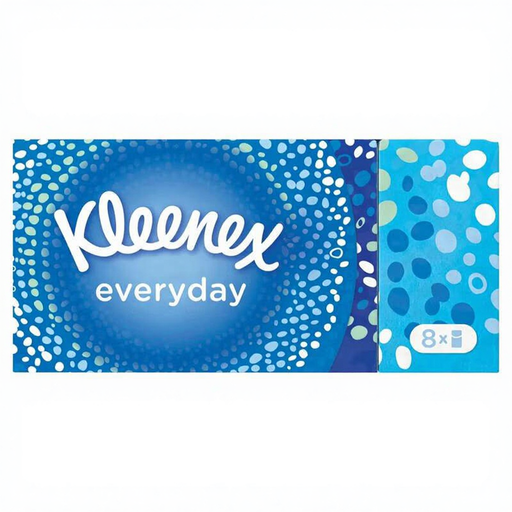
Why it suits this profile: Eight compact packets containing 72 tissues in total are suitable for everyday use and carrying in your coat, bag or car.
The contents are clearly specified as 8 packs of 9 tissues. This means you can check the quantity in advance.
Pocket size, 72 tissues in total and designed for use on the go.
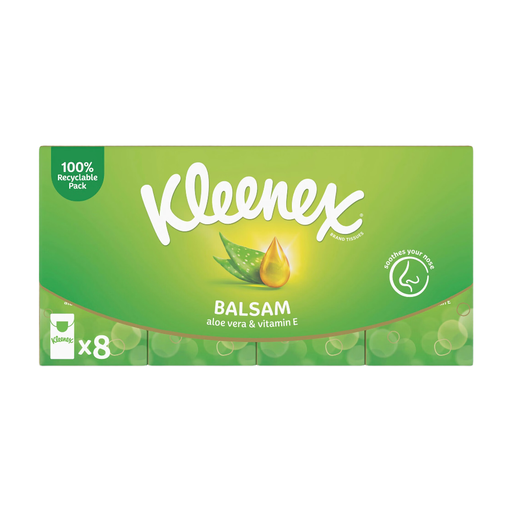
Why it suits this profile: For users who want to carry pocket tissues with a balm layer, for example during a period when they are wiping their nose more frequently.
The product information explicitly mentions calendula balm. This means you can decide in advance whether a lotion version suits your preferences.
Eight pocket packs and a described balm layer; check the label when buying for the current ingredients.
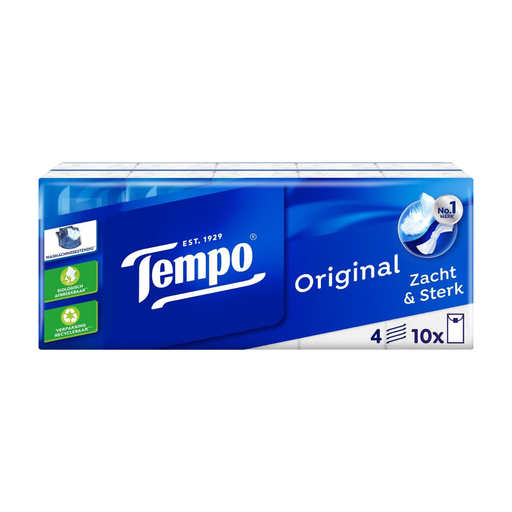
Why it suits this profile: Handy for travellers, families and anyone who wants to have a tissue to hand for sneezing, colds or minor mishaps.
The description states that the tissues can withstand a wash cycle if they accidentally end up in the laundry. Used tissues are still intended for single use.
Ten tissue packets; according to the product information, soft, strong and dermatologically tested.
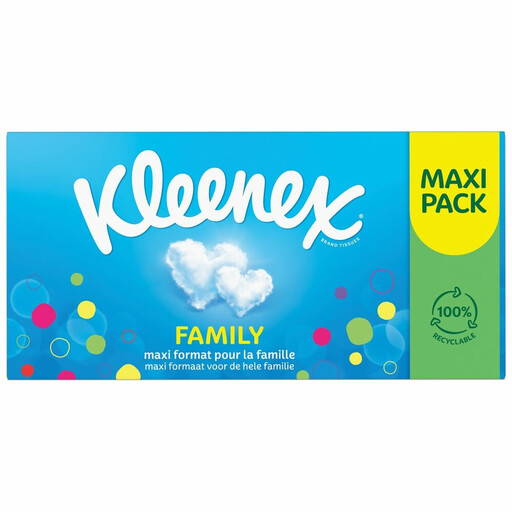
Why it suits this profile: A box containing 128 tissues is practical for a household where several people use facial tissues every day.
The quantity of 128 pieces is clearly stated in the product specifications. This makes it easier to compare the supply with other family packs.
128 tissues, suitable for general family use and storing at home.
We have put together a complete, up-to-date list of products that fully meet these strict selection criteria and the applicable European safety regulations.
Use paper tissues and facial tissues for your nose, face and hands. Choose pocket tissues when portability is important. Lotion tissues may be suitable if you are looking for a softer-feeling option, while unscented tissues are a more sensible choice if you are sensitive to fragrances.
Toilet paper belongs in the bathroom and has a different construction and purpose. Do not put ordinary tissues down the toilet. Even with toilet paper labelled “flushable”, it is sensible to follow the instructions on the packaging and check whether it is suitable for your drainage system.
Pocket tissues are the most practical option. They take up little space and come individually packaged. Pay attention to the number of packets and tissues per packet. According to the product specifications, Kleenex Everyday contains 8 packs of 9 tissues; TEMPO Original is offered as 10 tissue packets.
Paper tissues generally do not have a short shelf life like food products. However, check the packaging for any date or storage information. Store the packs in a dry place, away from direct sunlight and moisture. An opened pack in a damp room may become soft or lose its strength more quickly.
This varies from person to person and depends on the formulation. Lotion tissues contain additional ingredients, while fragranced versions contain perfumes. Check the label and product information carefully. If you want to avoid potential fragrance triggers, choose unscented tissues. Stop using them if irritation occurs and follow the instructions on the packaging.
