
Vandaag of morgen in huis

Kwaliteit gegarandeerd

Welkomstaanbiedingen ontgrendelen: GRATIS bezorging | Tot 80% korting | Gratis 30 dagen JoyPlus-proefperiode
Download de app
Tinned and jarred vegetables are handy for busy weeknights, well-stocked cupboards and dishes where you don’t want to spend time chopping fresh ingredients. Frozen vegetables are another convenient option. However, not every pack is equally well suited to your household. A small tin, for example, may not be enough for a family, while a large bag of frozen vegetables can be inconvenient if you only cook them occasionally.
When buying vegetables online, it’s worth looking beyond the front of the pack. Read on to find out which common pitfalls to avoid, what information to check and which products suit different needs.
A tin or jar usually shows the net weight. That isn’t always the same as the amount of vegetables you’ll actually eat. With products in water or brine, the weight is lower once drained. So check whether the pack lists a drained weight, and compare products based on how much you need per meal.
For example, a 195g pack may work as a side dish for one or two people, but be less practical for a family. Packs of 400, 450, 680 or 800 grams are often more convenient for several portions.
‘Vegetable mix’ may contain several vegetables, but it could also include herbs, oil, sauce or other additions. Always check the ingredients list. Tinned peeled tomatoes, for example, may contain added tomato juice and citric acid. An Italian vegetable mix may include herbed cream, oil and salt as well as vegetables.
If you want to keep things simple or need to check for allergens, it’s worth reading the full label. Product information can change, so always check the packaging when your order arrives.
Store unopened tins and jars in a cool, dry place, away from heat and direct sunlight, as instructed on the packaging. Don’t use a pack if the tin is bulging, leaking or visibly damaged. Once opened, vegetables should usually be kept chilled and used within the time stated on the label.
Frozen vegetables are the opposite: keep them frozen until you’re ready to use them, follow the temperature guidance on the pack and don’t refreeze them once thawed.
Choose a pack size that suits your cooking routine:
For frozen vegetables, consider how much freezer space you have. An 800g bag can work out cheaper per portion if you use it regularly, but is less suitable if it will be left open in the freezer for a long time.
Compare the salt content per 100 grams rather than relying only on ‘less salt’ on the front of the pack. For example, HAK Extra Fine Peas and Carrots lists 0.31 grams of salt per 100 grams, with carrots, peas, water and sea salt in the ingredients list. g’woon Very Fine Peas lists peas and water as ingredients, and 0.02 grams of salt per 100 grams.
That doesn’t automatically make a product suitable for everyone, but it does give you a clear point of comparison. If you’re looking for the simplest possible ingredients, also check for added sugar, oil, cream or flavour enhancers.
Tinned and jarred vegetables are usually already cooked. They just need to be gently heated, or drained and added to a dish. Heating them for too long can affect their texture. Prepare frozen vegetables according to the instructions on the pack; some varieties can go straight into a pan or wok.
Also check the allergen information. Several of the products mentioned state that they don’t contain any of the 14 major EU allergens, but always check the latest label before buying and using them. For mixed products, such as a vegetable mix with herbed cream, it’s especially important to read the full ingredients list.
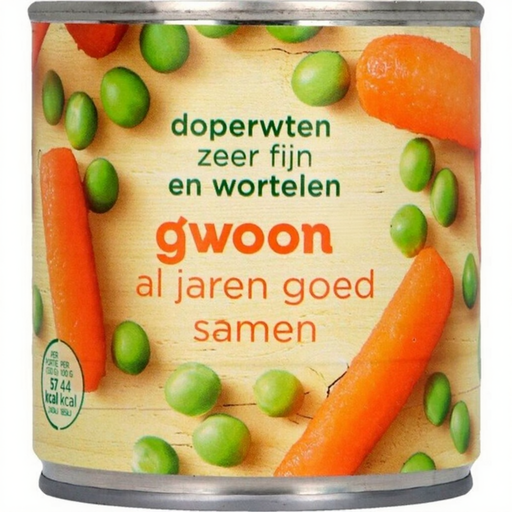
Why it suits this profile: A familiar combination to serve with potatoes, meat alternatives and gravy, or as part of a quick meal. The 400g pack is a manageable size for everyday use.
The ingredients list is short: water, peas and carrots. That makes it easy to check for additions.
400 grams; a combination of peas and carrots; product information states that it contains none of the 14 major EU allergens.
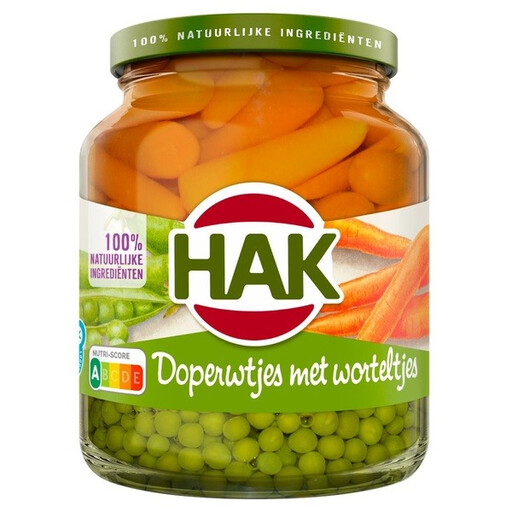
Why it suits this profile: A small pack for anyone who wants fine-cut vegetables and a portion with no leftovers.
The net weight of 195 grams makes the portion size clear; the preparation instructions recommend heating gently.
Extra-fine peas and carrots; 0.31 grams of salt per 100 grams according to the product information; the label states that it contains none of the 14 major EU allergens.
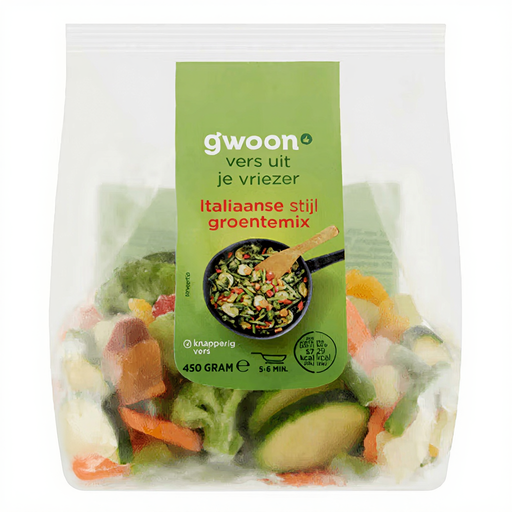
Why it suits this profile: Handy for stir-fries, pasta, rice dishes and oven bakes when you want to use several types of vegetables at once.
The ingredients list names the individual vegetables and the herbed cream. So you know this isn’t a plain vegetable mix with no additions.
450 grams; includes courgette, broccoli, green beans, pepper, celery and carrot; cooking instructions for a wok or frying pan.
We’ve put together a complete, up-to-date list of products that meet these strict selection criteria and current European safety requirements.
Unopened products generally keep for a long time when stored somewhere cool, dry and dark. The exact date is shown on the packaging. Before use, check the tin or jar for damage, leaks or a bulging lid. Once opened, keep the product chilled and use it within the stated time.
It depends on your storage space and cooking habits. You can keep tinned and jarred vegetables in the cupboard and use them straight away. Frozen vegetables need freezer space, but are often easy to portion out for each meal. A larger bag of frozen broccoli, kale, peas or mixed vegetables can be practical if you use them regularly.
Compare the pack size, ingredients list, salt content per 100 grams, preparation method and storage instructions. For beans, broad beans, tinned peeled tomatoes and mixed vegetables, also check whether the pack suits your recipe and household size. That way, you can choose tinned vegetables that really work for your everyday needs.
