If a guest has coeliac disease, choose individually packaged bread clearly labelled ‘gluten-free’ for them, rather than regular tiger bread. Under European Union rules, this claim can only be used if the food sold to consumers contains no more than 20 mg/kg of gluten. Keep the bread separate from regular tiger bread when serving it. If iodised salt is relevant to your choice, check the ingredients too.
Who is this choice important for?
Host with a guest who has coeliac disease
You want to offer bread clearly labelled gluten-free and make sure it doesn’t come into contact with crumbs or used utensils when served. The Dutch Coeliac Society warns about cross-contamination with gluten.
Family serving two types of bread
You want to serve regular tiger bread to some guests and separate gluten-free bread for the guest who needs it. Keep the bread and serving utensils separate.
Shopper comparing bread labels
After checking the gluten-free claim, you can also compare the ingredients and nutritional information, such as fibre and salt per 100 g. If iodised salt matters to you, check each product’s ingredients list.
What should you look for when choosing?
First, decide which bread is suitable for your gluten-free guest. Then arrange the bread table so that the two types stay separate.
Individually packaged gluten-free bread
Choose this: for the guest with coeliac disease, after checking the gluten-free claim on the current packaging.
Worth bearing in mind: a gluten-free bread alternative may not have the same crust or shape as tiger bread, and needs its own place when served.
Regular tiger bread
Choose this: only for guests who don’t need gluten-free bread.
Worth bearing in mind: according to the Dutch Coeliac Society, contact with crumbs can contaminate gluten-free food served separately.
| What to consider |
What to check when buying |
Who is this most important for? |
| Gluten-free food and separate serving |
Check for the ‘gluten-free’ claim on the packaging. Set aside clean, separate serving equipment. |
When I buy bread for a guest with coeliac disease, I want to prevent it coming into contact with gluten-containing crumbs at dinner. For around 50% of consumers, this gluten-free safety is the top priority. |
| A practical bread table |
Choose a bread size that suits the number of gluten-free diners and set out a separate plate. |
I want to offer both types of bread without putting them in the same basket. For around 30% of consumers, arranging the bread table practically comes first. |
| Nutritional information and ingredients |
Compare fibre and salt per 100 g and read the ingredients list, including checking for iodised salt if relevant. |
When choosing between gluten-free breads, I also want to know how their ingredients and nutritional values differ. Around 20% of consumers say this comparison is their top priority. |
Common mistakes
-
Assuming tiger bread is gluten-free
The name tiger bread doesn’t mean it carries a gluten-free claim. Jumbo lists regular tiger bread and gluten-free bread as separate options.
Choose a product labelled ‘gluten-free’ for your guest with coeliac disease, and keep regular tiger bread for the other guests.
-
Using the same equipment to serve both types of bread
The Dutch Coeliac Society warns that crumbs and shared equipment can transfer gluten to gluten-free food.
Wash your hands, use clean, separate utensils, and serve the gluten-free bread on its own plate with separate spreads or dips.
-
Assuming all gluten-free bread contains iodised salt
The Netherlands Food and Consumer Product Safety Authority says that adding iodine through baker’s salt is permitted in bread and certain other bakery products. That doesn’t make it a standard feature of every gluten-free bread.
Check the ingredients of your chosen product if iodised salt is important to your comparison.
Brands and shops to consider
Albert Heijn
Albert Heijn lists AH Gluten-Free Brown Bread Half as a bread alternative; the product name doesn’t indicate a tiger bread version.
- The product information gives a weight of 480 g and lists iodised salt in the ingredients.
- Check the current packaging before choosing this bread for your gluten-free guest.
Jumbo
Jumbo’s online bread range lists gluten-free bread and regular tiger bread as separate options.
- This makes it easier to plan two separate bread choices for one dinner.
- Check the claim and ingredients for the individual product. Being listed in the category doesn’t mean tiger bread is labelled gluten-free.
PLUS
PLUS’s gluten-free bread range includes white, brown and multiseed bread.
- You can browse different types of bread without assuming they’re the same as regular tiger bread.
- Check the gluten-free claim, ingredients and nutritional information on each pack before choosing a variety.
Bread mix as a gluten-free alternative
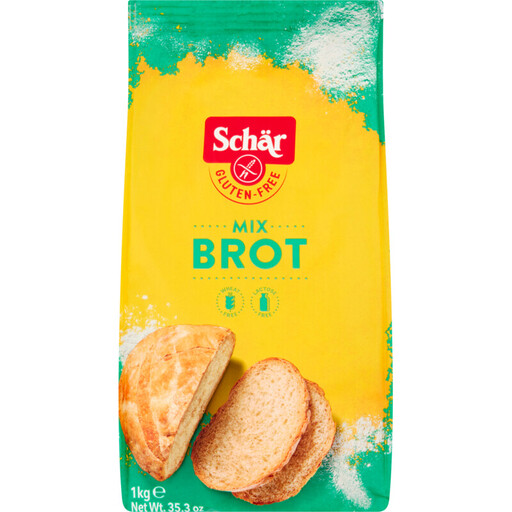
If you’d like to bake your own bread for a family dinner, consider using a bread mix instead of buying ready-made tiger bread. For a guest with coeliac disease, check the gluten-free claim on the current packaging and prepare and serve the bread using clean, separate equipment.
 No image available
Schär Bread Mix-Mix B gluten-free bread mix, 1 kg
For anyone who wants to bake a separate loaf to serve alongside regular tiger bread. This is a 1 kg bread mix, not a ready-made loaf. Check the gluten-free claim and preparation instructions on the packaging before using it for your guest with coeliac disease.
View at Joybuy
Frequently asked questions
Can I serve regular tiger bread to a guest with coeliac disease?
No. Choose bread whose current packaging clearly says ‘gluten-free’. According to the Netherlands Nutrition Centre, a gluten-free diet is essential for people with coeliac disease; the name or appearance of tiger bread doesn’t confirm that it’s suitable.
What does the ‘gluten-free’ claim on bread mean?
Under Commission Implementing Regulation (EU) No 828/2014, ‘gluten-free’ can only appear on a food if the product sold to consumers contains no more than 20 mg/kg of gluten. Check the packaging of the bread you choose for this claim.
How should I serve gluten-free bread alongside tiger bread?
Serve the gluten-free bread on a separate plate with clean utensils. The Dutch Coeliac Society warns about cross-contamination, so don’t use a knife, board, bread basket or dip that has come into contact with regular bread.
Does gluten-free bread always contain iodised salt?
No, don’t assume it does. The Netherlands Food and Consumer Product Safety Authority says that adding iodine through baker’s salt is permitted under certain conditions. Check the ingredients of the individual bread if iodised salt is relevant to your choice.


