
Shoppers with a specific food allergy
You need to be able to check whether your allergen is present in the exact loaf. For packaged bread, check the label. If the bread is sold loose, ask for allergen information before buying.


Only choose tiger bread or sourdough when you have a food allergy after checking the current ingredients, allergens and any warnings for that exact loaf. Standard wheat-based tiger bread is out if you need to avoid wheat or follow a strict gluten-free diet; sourdough does not automatically make bread allergen-free. Baker’s salt is not a given either: according to the Netherlands Nutrition Centre, its use is not compulsory.
You need to be able to check whether your allergen is present in the exact loaf. For packaged bread, check the label. If the bread is sold loose, ask for allergen information before buying.
If you have coeliac disease, standard bread made with wheat, rye or barley is not suitable, even if it is made with sourdough. The Dutch Coeliac Society explains that a gluten-free diet is essential for people with coeliac disease.
You might be looking for a tiger-crust loaf or the flavour of sourdough, while also wanting to know which grains and type of salt it contains. Labels such as white, brown, wholemeal or sourdough are no substitute for the ingredients list.
If a food sensitivity affects your choice of bread, first check whether the exact product fits your list of foods to avoid. Only then consider other features, such as flavour and the type of salt used.
| What to consider | What to check when buying | Who it matters to |
|---|---|---|
| Specific allergens | Read the current ingredients and allergen information, including any relevant warnings. If the bread is sold loose, ask about the exact variety. | I want to rule out my specific allergen before choosing bread. For around 46% of consumers, this check comes first. |
| Choosing strictly gluten-free | Choose a bread alternative labelled gluten-free and check the ingredients for wheat, rye and barley; don’t rely on the word sourdough. | If I need to follow a strict gluten-free diet, standard wheat-based tiger bread is out. Around 36% of consumers put this first. |
| Flavour and ingredients | Check that the bread is actually made with sourdough. Look at the ingredients list for baker’s salt or iodised salt if this is relevant to your choice. | Once the bread passes my allergen check, I also want to choose based on sourdough flavour and ingredients. This is the biggest factor for around 18% of consumers. |
Sourdough describes the leavening method, not the absence of gluten or other allergens. Bread made with wheat, rye or barley is therefore still unsuitable if you need to avoid those grains.
Check the grains used and the allergen information for the specific loaf. If you follow a strict gluten-free diet, don’t choose bread based on how it is leavened.
Albert Heijn and PLUS state in their product information that ingredients and allergen details can change. So a previous check doesn’t tell you enough about the loaf you’re buying now.
Read the packaging again each time you buy. If the bread is sold unpackaged, ask for information about that exact variety.
According to the Netherlands Nutrition Centre, using baker’s salt is not compulsory. So the name tiger bread or sourdough won’t tell you which salt has been used.
Check the label for baker’s salt or iodised salt, or ask the baker. Never let this question take priority over avoiding an allergen.
Product listings from Albert Heijn and PLUS show different allergens. The name of the bread alone therefore won’t tell you whether it contains milk, soya, sesame or other ingredients.
Compare the current information for the exact loaf with the ingredients you need to avoid. Don’t rely just on the shop name or type of bread.
Product names and online information can help you search more effectively, but you still need to check allergens for each loaf every time you buy.
The product page for AH Extra lang lekker tijger bruin heel lists the allergens present and those that may be present.
Jumbo provides an ingredients list for Boeren Tijgerbrood Bruin.
Lidl provides an ingredients and allergen overview for its freshly baked bread range.
ALDI lists Boeren tijger volkoren as pre-sliced bread.
PLUS provides allergen information for Korenlanders Boeren tijger wit.
Dirk lists Bakker van der Akker Boeren tijger wit heel as a bread product.
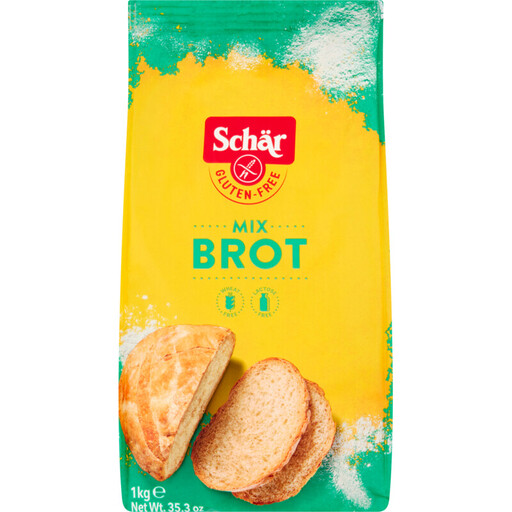
If you’re avoiding standard wheat-based tiger bread, you could consider a gluten-free bread mix and bake your own. The mix below is not tiger bread and is not sold as sourdough; check the current allergen information for this product too.
 No image available
A bread mix for baking your own loaf if you’re looking for a gluten-free alternative to standard tiger bread; this is not a ready-made loaf or a sourdough product.
The mix is described as gluten-free and wheat-free, and contains soya. Before buying, check the current packaging for ingredients, allergens and any warnings relevant to you.
No. Sourdough tells you something about the leavening method, not about all the grains or other ingredients in the bread. Check the current allergen information and any relevant warnings for the exact variety.
No, standard tiger bread made with wheat is not gluten-free. The Dutch Coeliac Society explains that a gluten-free diet is essential for people with coeliac disease. Choose a suitable gluten-free bread alternative and check the label of the specific product.
Before buying, ask which allergens are present in the exact loaf. For packaged bread, allergen information appears on the label, according to the Dutch Food and Consumer Product Safety Authority. For bread sold loose, it’s important to ask specifically, as you can’t rely on an old product page or the name of the bread alone.
No. According to the Netherlands Nutrition Centre, using baker’s salt when baking bread is not compulsory. Check the ingredients list for the exact loaf or ask the baker which salt has been used.