
Diagram reader on the go
You view diagrams alongside text or notes in different study locations, and weigh up screen space against size and weight.


For viewing and annotating diagrams, a clear screen and easy portability are important. A larger screen gives you more room to work alongside your notes, but is less compact. If you need to use GIS software yourself, first check which application and operating system your course requires. ArcGIS Pro does not run directly on macOS, and you should not assume that a Chromebook supports local software.
You view diagrams alongside text or notes in different study locations, and weigh up screen space against size and weight.
You may need to open or edit spatial files. The University of Amsterdam notes that some courses have specific laptop requirements, so check which software and operating system your course requires.
You want to pay for features that suit your assignments. The Consumers’ Association distinguishes between light use and running several programmes at once.
Choose this option: if your course requires ArcGIS Pro on your laptop, or if you’re not yet sure which software you’ll need.
The trade-off: compare the screen, weight, memory and ports of each specific configuration. ArcGIS Pro’s requirements don’t apply if you only need to view diagrams.
Choose this option: if your course software works on macOS and you mainly use it to view diagrams and sources, or to run QGIS.
The trade-off: ArcGIS Pro does not run directly on macOS; you’ll need a Windows environment to use it.
Choose this option: only if you can do your work in suitable browser-based services and your course doesn’t require other locally installed software.
The trade-off: the standard QGIS download lists Windows, macOS and Linux, not ChromeOS. Don’t assume local software support based on screen size alone.
| Consideration | What to look for | Who is it important to? |
|---|---|---|
| Reading diagrams and sources | For the exact configuration, compare screen size, resolution, aspect ratio and reflections. If possible, view one of your own diagrams on the screen. | If you want to read legends and notes side by side, screen space is your top priority; around 33% of consumers prioritise readability. |
| Taking it between study sessions | Compare the weight of the configuration, charging options and the conditions behind the stated battery life. | If you often move between study locations, a lighter device may be easier to carry; around 27% of consumers prioritise portability. |
| Potential GIS software use | Ask which application your course requires and check its supported operating systems and software requirements. | If you need to edit spatial files yourself, you’ll want to know whether the required application will work; around 27% of consumers prioritise local GIS compatibility. |
| Choosing the right configuration | Match memory and storage to the work you’ll actually do, and check whether the memory can be upgraded later. | If you don’t want to pay for capacity you won’t use, compare the configuration with your assignments; around 13% of consumers prioritise cost and a configuration that meets their needs. |
QGIS offers downloads for Windows, macOS and Linux. Esri describes ArcGIS Pro as software for supported Windows systems; on a Mac, you’ll need a Windows environment to run it.
Ask your course provider which application you’ll need and check the operating system requirements. Don’t assume that everyone who reads diagrams needs GIS software.
Apple lists separate battery life claims for wireless internet use and video streaming. Neither is a measurement for diagram or GIS work.
Check which activity a battery life claim is based on, and think about where you can charge between study sessions.
The Consumers’ Association points out that laptop memory often can’t be upgraded. For a specific OmniBook Ultra configuration, HP lists a recommended USB-C adapter that is sold separately.
Check the upgrade options, included power supply and charging requirements for the exact model number.
An adapter you need to buy separately, or a configuration with non-upgradeable memory, could affect how you use the laptop and which one you choose.
The ThinkPad T14 range is a Windows option to consider if local software compatibility and a matte screen matter to you. Specifications vary between configurations.
The OmniBook Ultra range includes Windows configurations with different screens and processors, so compare the full model number.
The 13-inch MacBook Air M5 is a compact macOS option if your course software works with it.
This selection includes Windows and macOS laptops for viewing diagrams and sources, with a range of screen sizes and portability features. If you have GIS assignments, always check your course software requirements first.
 Image unavailable
The 15.6-inch screen gives you room to view diagrams; the stated starting weight is 1.61 kg.
 Image unavailable
The 15.3-inch screen with a 16:10 aspect ratio gives you room for diagrams and sources; the stated weight is around 1.50 kg.
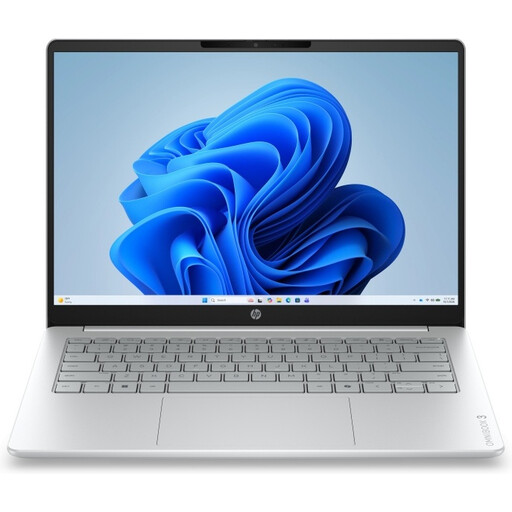 Image unavailable
The 14-inch anti-glare screen is a more compact option for viewing documents and diagrams; the stated weight is around 1.42 kg.
 Image unavailable
With a stated weight of 1.23 kg, this is a compact option for taking on the go; QGIS is available for macOS.
 Image unavailable
The stated weight is around 0.98 kg; if you use specialist study software, check that it’s compatible with this configuration first.
Not if you’re only viewing the diagrams. If you need to use GIS software yourself, first check which application your course requires and what system specifications it needs.
Check your course instructions and choose the version for your operating system. The QGIS project offers downloads for Windows, macOS and Linux, and recommends the long-term release if you’re unsure.
The Consumers’ Association says 8 GB is enough for light internet and office work, and recommends 16 GB where possible if you’re running several programmes at once. If ArcGIS Pro is required, compare the configuration separately with Esri’s system requirements for that application.
No. According to the Dutch government, the Netherlands has no fixed legal guarantee period: you’re entitled to a product that meets what you could reasonably expect from it. If a product is faulty, the retailer is your point of contact; a commercial or manufacturer’s guarantee is in addition to this.