
Flight stick owners looking for finer throttle control
You already have a flight stick and want a separate throttle for making small, repeated power adjustments. Consider the lever travel, resistance and how it will sit alongside your stick.


Choose a standalone throttle if you already have a suitable flight stick, or a complete HOTAS set if you still need one. For formation flying on a single monitor, look for a throttle that lets you make fine adjustments comfortably, with easy-to-reach view controls. Extra buttons are only useful if you can configure and use them in your simulator.
You already have a flight stick and want a separate throttle for making small, repeated power adjustments. Consider the lever travel, resistance and how it will sit alongside your stick.
You want to keep the lead aircraft in view while adjusting the throttle. Check whether an easily reached hat switch, throttle button or configured cockpit view works with your simulator and controls.
You need controls for both steering and throttle. Check whether you’re looking at a complete set or a standalone throttle.
Choose this if: you already have a suitable flight stick and mainly want to practise making small throttle adjustments.
Bear in mind: a flight stick isn’t included, and the stated travel alone doesn’t show how precisely you’ll be able to fly.
Choose this if: you don’t yet have a flight stick and want steering and throttle controls together.
Bear in mind: check you have room for both components and that you can configure the controls in your simulator.
Choose this if: you want to control different engines or other aircraft functions using separate levers.
Bear in mind: you’ll also need suitable steering controls, and the extra levers take up space.
Choose this if: you genuinely want to use two throttle axes, configurable detents or extra controls on the grip.
Bear in mind: extra features need configuring, and don’t guarantee that you’ll be better at formation flying.
| What to consider | What should you look for? | Who is this important for? |
|---|---|---|
| Small throttle adjustments | Compare the lever travel and any adjustable resistance or detents. Assign the throttle axis and check the controls in your simulator. | I want to adjust power in small increments while following an aircraft. Around 36% of consumers are mainly looking for fine control. |
| Keeping the aircraft in view | Check whether you can easily reach a hat switch or button, and whether you can configure the cockpit views you want. | I want to keep my eyes on the lead aircraft on a single monitor without having to search for the controls. For consumers who prioritise view controls, this is the main need for around 29%. |
| Complete steering and throttle controls | Check whether the set includes both a flight stick and a throttle, and whether both suit your available space and simulator. | I don’t yet have a suitable flight stick and want to buy steering and throttle controls together. Around 21% of consumers are mainly looking for a complete first set. |
| Separate aircraft functions | Decide which axes you want to use for engines or other functions, and check how the throttle attaches to your desk. | I want to control engines or other aircraft functions separately, rather than leave extra levers unused. Around 14% of consumers prioritise these features. |
The TWCS is a standalone throttle. According to Thrustmaster, the T.Flight Hotas One combines a flight stick with a detachable throttle. A throttle without a flight stick isn’t a complete steering and throttle setup.
Before buying, check which components are included with the exact model.
Buttons only help if you can reach them and assign the cockpit views you want in your simulator.
Decide which views you need while following an aircraft, then test the controls in your simulator.
VKB describes the STECS Standard Mk.II as suitable for desk use. For the STECS Mini Mk.II, VKB recommends securing the base to the surface.
Compare the full model name and check the mounting instructions for the version you’re considering.
Offers both standalone throttles and a HOTAS set with a flight stick and detachable throttle, for those looking to expand an existing setup or get started with both components.
The STECS Standard Mk.II is a standalone throttle with two throttle axes and a base that VKB says is suitable for desk use.
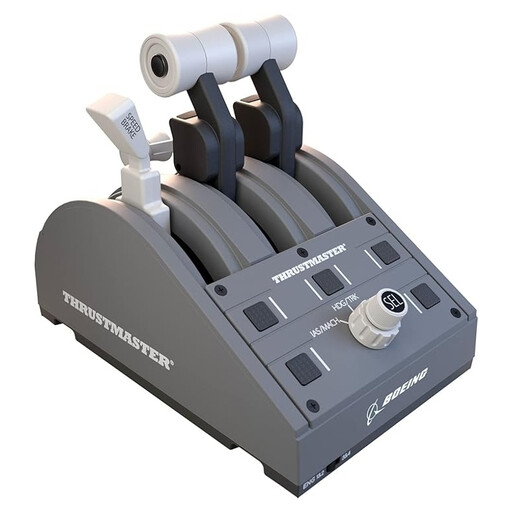
The Flight Throttle Quadrant is designed to provide separate levers for multiple engines or other programmable aircraft functions.
The CDT-VMAX is a standalone PC throttle with two throttle axes and adjustable mechanical settings.
The MTP is a standalone PC throttle with programmable controls.
A throttle quadrant with separate levers for controlling multiple aircraft functions.
 No image available
The separate levers are designed for anyone who wants to control the throttle and other aircraft functions independently.
The product description lists three axes with magnetic technology, 17 action buttons and four interchangeable levers. It also mentions use with flight simulators, including Microsoft Flight Simulator.
For use with Xbox, the product description states that it needs to be connected to the TCA Yoke Boeing Edition.
If you don’t have other suitable steering controls, you’ll also need a flight stick. The TWCS is a standalone throttle, while according to Thrustmaster, the T.Flight Hotas One includes both a flight stick and a throttle. Check what’s included with the exact model.
Assign an easy-to-reach view control or cockpit view in your simulator, then test whether you can quickly return to the view you want. A user guide on the Microsoft Flight Simulator forum describes setting up cockpit views with a hat switch; check the controls in your version of the simulator.
No. VKB describes the Standard Mk.II as suitable for desk use thanks to its base plate and rubber pads. For the Mini Mk.II, VKB recommends securing the base to the desk surface.
If there’s a fault that falls short of what you could reasonably expect with normal use, contact the seller. According to ACM ConsuWijzer, the seller is responsible for the statutory guarantee; in the Netherlands, there isn’t one fixed guarantee period of just two years. The Dutch government also states that online purchases from a business generally come with a 14-day cooling-off period, subject to applicable exceptions.