
Same-day & Next-day Delivery

Quality Guaranteed

Unlock Your Welcome Offers: FREE Delivery | Up to 80% OFF | Free 30-day JoyPlus trial
Download the APP
A hot lunch for the office, a cold drink during a bike ride or coffee at the campsite: a Thermos flask or insulated food container makes taking food and drinks with you easy. Yet the range often seems clearer than it really is. Terms such as “leak-proof”, “cold for 24 hours” and “professional insulation” only mean something when you know the conditions under which those performance claims were measured.
That is why the Joybuy Product Recommendation Officer advises you to focus mainly on verifiable specifications. This helps you avoid a poor purchase that becomes inconvenient after a few months due to a faulty seal, difficult cleaning or unsuitable capacity.
A manufacturer may state a certain level of temperature retention, but real-world performance depends on the starting temperature, the amount of contents, the ambient temperature and how often you open the bottle. A half-full Thermos flask generally cools differently from a completely full one. So check whether the stated hours apply to hot drinks, cold drinks or food.
For short working days, a travel mug with a few hours of insulation may be sufficient. For a long train journey, a camping weekend or working outdoors, a larger vacuum-insulated bottle is a more logical choice.
A leak-proof Thermos is only reliable when the lid is closed correctly and the seal remains clean and undamaged. A drinking opening, straw or push button may also have different limitations from a fully closed screw cap. For example, the Meoky tumbler states that the lid is leak-proof when the straw has been removed. The product information also warns against hot and carbonated drinks.
So look at the closure, removable parts and care instructions. For carrying in a laptop bag, a simple screw cap is often easier to manage than a complex drinking mechanism.
Stainless steel sounds durable, but not every stainless-steel Thermos has the same internal space, opening or wall construction. A narrow neck keeps a drinks container compact, but makes cleaning more difficult. A wide opening is useful for soup, pasta and porridge, but the container often takes up more space.
Capacity is also regularly misjudged. A 470 or 500 ml food Thermos is suitable for one portion. An insulated food container of 1.4 or 1.5 litres is more likely to be intended for several people or a large meal.
Use these guidelines as a practical starting point:
Also check the height and diameter. A 25 cm bottle may fit perfectly in a rucksack, but not in every side pocket. A wide food Thermos is practical at the table, but less suitable for a small work bag.
Double-wall vacuum insulation limits heat transfer between the contents and the outside. Brands may mention additional technologies, such as a copper layer or their own insulation system. Treat such performance claims as a statement made by the brand and focus mainly on the stated hours for hot and cold use.
Preheating with hot water or pre-cooling with cold water can help the container perform well. Then fill the container as much as possible without exceeding the stated maximum capacity. Leave some space for hot liquids and open carefully to prevent burns.
Many models are made from 18/8 or 304 stainless steel. These are clear material specifications, but they do not tell you everything about the lid, silicone ring or cleaning requirements. Check the following:
A wide opening is an advantage with a Thermos lunch box, as it makes it easier to eat from and reach the inside with a brush. With a travel mug, a removable lid is convenient if you take coffee or tea with you every day.
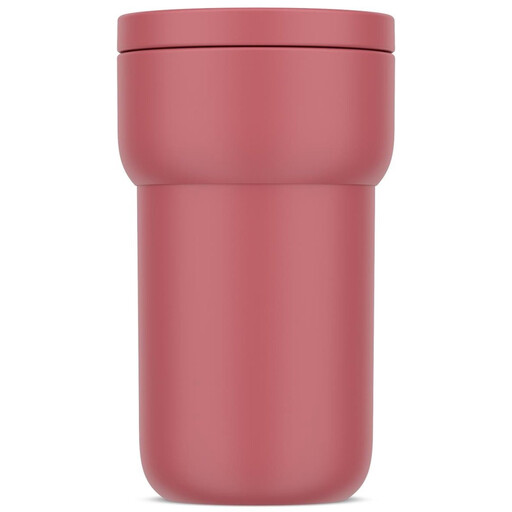
Why it suits this profile: The 275 ml capacity is suitable for a daily coffee or tea. Its compact dimensions are practical for a bag, commuting or use under a coffee machine.
The capacity and dimensions are clearly stated. According to the product description, the lid is leak-proof when closed correctly, and the mug is not suitable for use in a microwave.
Double-walled plastic, dishwasher-safe and compact. The manufacturer states a minimum statutory warranty of two years.
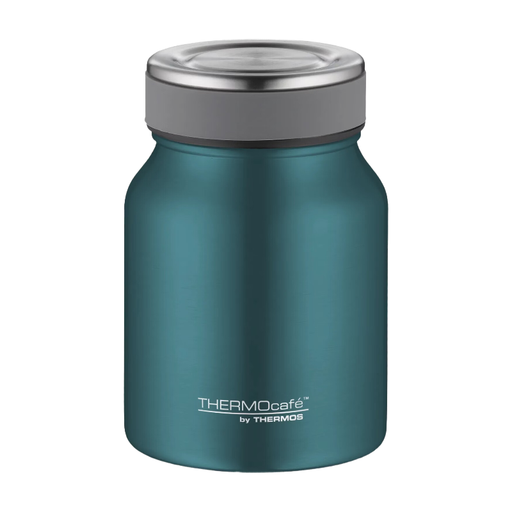
Why it suits this profile: This 500 ml food Thermos is designed for one meal. According to the product listing, the model keeps food hot for up to 9 hours and cold for up to 14 hours.
The capacity is not excessively large for individual use. The product description specifies a screw lid with a silicone sealing ring and a leak-proof design.
500 ml capacity, made entirely from stainless steel according to the product information, and dishwasher-safe. Check the current care instructions for your particular version.
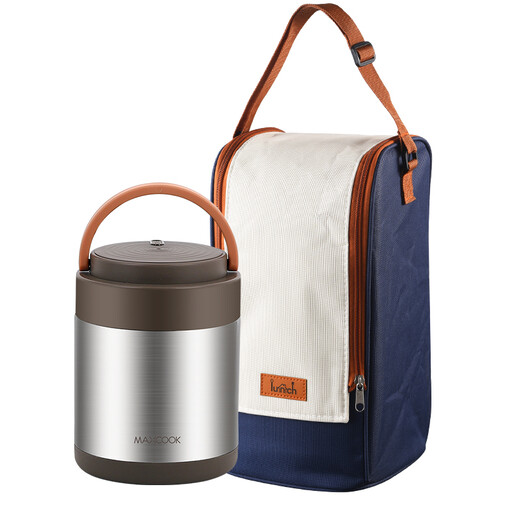
Why it suits this profile: The 1.4-litre capacity provides room for several portions of soup or a large meal. The wide opening makes filling, serving and cleaning easier.
The product information specifies 304 stainless steel, a wide opening and a securely closing lid. It also states that the container should not be turned upside down or tilted during transport.
1.4-litre capacity, vacuum insulation and a wide opening. According to the manufacturer, the stated thermal retention is 4–6 hours.
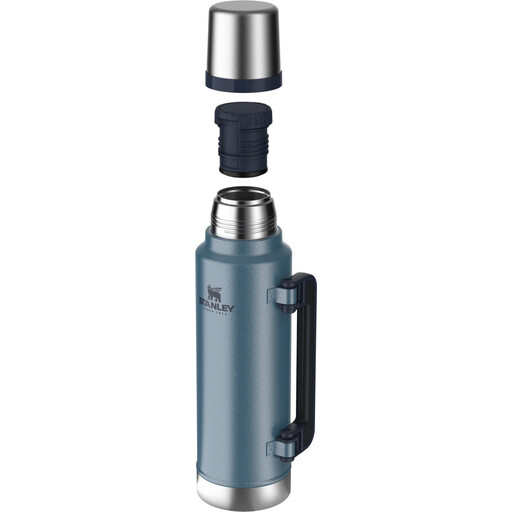
Why it suits this profile: The capacity is suitable for camping, building sites, long car journeys or a group. The bottle has a handle and a cap which, according to the product description, can also be used as a drinking cup.
The product listing gives a clear capacity of 1.9 litres, a diameter of 11.1 cm and a weight of 1,128 grams. This allows you to assess in advance whether carrying and storing it will be practical.
18/8 stainless steel, dishwasher-safe and fitted with a pouring system. According to the product information, it keeps contents hot for up to 45 hours and cold for up to 6 days.
We have compiled a complete, up-to-date list of products that fully meet these strict selection criteria and the applicable European safety regulations.
A Thermos product remains useful when you regularly check the closure and seal. Wash a new container with warm water and mild washing-up liquid before using it for the first time. Allow all parts to dry completely before closing and storing them. Odours are less likely to linger when you do not leave soup, coffee or dairy residue inside for hours.
Also bear the following points in mind:
We have compiled a complete, up-to-date list of products that fully meet these strict selection criteria and the applicable European safety regulations.
This varies by model and usage. According to product listings, the stated retention for some food containers is around 4–6 hours, while other models quote higher figures. Preheating, filling the container fully and opening it as little as possible will help it retain its temperature for longer. Always check the manufacturer’s instructions.
Yes, many food Thermos models are designed for soup, stews and other meals. Choose a wide opening, a secure-fitting lid and sufficient capacity. Leave some space for very hot contents and open carefully, as steam pressure and hot liquid can cause burns.
Follow the care advice for each product. Some models are dishwasher-safe, while others require hand washing only. Clean the flask, lid and sealing ring separately with warm water and mild washing-up liquid. Allow everything to dry completely to minimise odours and moisture build-up.
