
Livraison le jour même et le lendemain

Qualité garantie

Débloquez vos offres de bienvenue: Livraison GRATUITE | Jusqu'à -80 % | 30 jours d'essai gratuits à JoyPlus
Téléchargez l'application
A thermos food jar is handy for soup during a working day, pasta at school or a hot meal on a walk. But sometimes a product can disappoint in practice. A jar that’s lukewarm after a few hours, a lid that leaks in your bag or an opening that’s too narrow to clean properly can quickly make it less useful.
Use these checks to compare insulated food jars based on the features that really matter in the UK.
Brands often state how long food stays hot or cold. These are usually maximum figures measured under specific conditions. The actual temperature also depends on the starting temperature, the amount of food, how often you open the lid and the outside temperature.
So don’t just look at a claim such as “stays hot for up to 13 hours”. Check whether:
According to Stanley’s product information, the Classic Legendary Food Jar keeps food hot for up to 20 hours and cold for up to 24 hours. These are the brand’s product specifications; they don’t guarantee the same results in every situation.
A leakproof food jar depends on its lid, thread and silicone ring. A missing or poorly fitting seal can cause problems, especially with soup. So check whether:
Even a well-sealed soup thermos shouldn’t be overfilled. Leave some space and check the lid before putting the jar in your bag.
A capacity of 470 or 500 ml is suitable for one regular lunch or serving of soup. For a large portion, several people or a meal with plenty of volume, 710 ml, 940 ml or 1.5 litres is more practical. Bear in mind that a larger capacity usually means more weight and a bigger size.
A thermos lunch box is also different from a regular bento lunch box. A food thermos is best suited to liquid or compact dishes such as soup, porridge, curry and stew. A thermal lunch box or bento-style container is more useful when you want to keep different ingredients separate.
18/8 or 18/10 stainless steel is widely used for food containers. 304 stainless steel is a similar material grade often found in meal-prep containers. Some models use 316 stainless steel. Don’t just look at the number: check the finish too. A smooth inner wall without an unnecessary coating is easy to clean and less likely to absorb odours.
Also check the lid material. A plastic-free contact surface, as found on some models with cork, may be important to some users. On other products, a glass lid and silicone seal are practical for storing food in the fridge.
A vacuum-insulated food jar usually has a double wall. Most of the air between the walls is removed, slowing the transfer of heat. This is why a food jar can keep food at the right temperature for longer than a simple plastic lunch container.
For a fair comparison, make a note of:
A wide opening is useful for thick dishes. It makes the jar easier to fill, eat from and clean inside.
“Dishwasher safe” doesn’t mean the same thing for every product. Check whether it applies to the whole jar, just the metal part or only the top rack. Dry the silicone ring thoroughly after washing to help prevent lingering odours.
Models with a bowl in the lid or a built-in spoon save space in your bag. A handle is handy on a bike, during a walk or at a campsite, but can make the product less compact.
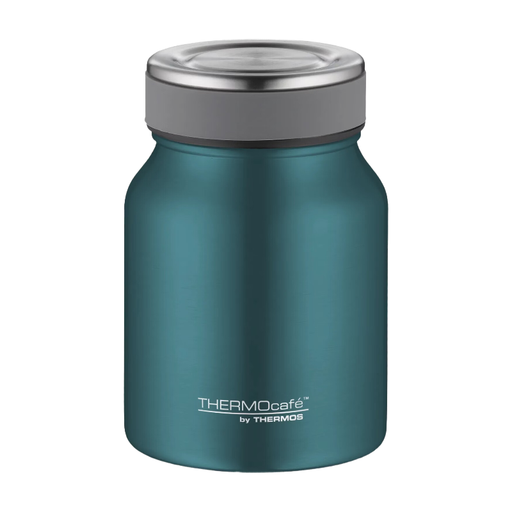
Why it suits this profile: The 500 ml capacity is a practical size for an everyday lunch, while its compact design makes it suitable for work, study and short trips.
The 6.5 cm wide opening makes filling and cleaning easier than with a narrow drinking flask. The product information specifies a screw lid with a silicone ring and a leakproof seal.
500 ml capacity, stainless steel body and, according to the product description, a dishwasher-safe design.
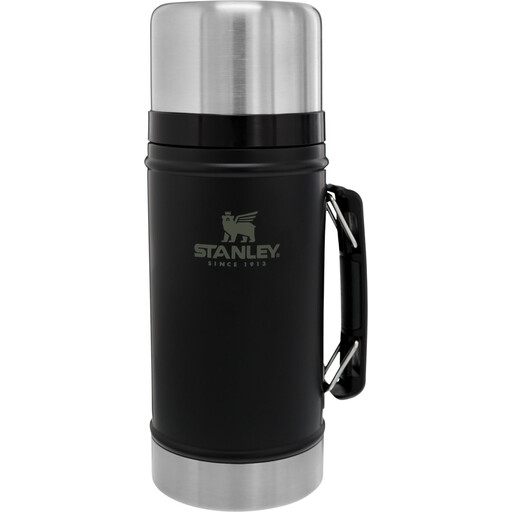
Why it suits this profile: The 940 ml capacity is ideal for larger lunches, a long working day or a meal after an outdoor activity.
The product description mentions a wide opening, a leakproof seal and dishwasher-safe construction. This makes filling, carrying and cleaning practical.
18/8 stainless steel, double-wall vacuum insulation, a folding handle and a lid that can be used as a cup.

Why it suits this profile: The 1.5-litre capacity is designed for large portions, sharing food on the go or carrying several meals when travelling or camping.
The wide opening is useful for thick dishes and makes cleaning easier. Its stated heat-retention time of 4–6 hours suits commuting and shorter trips, but doesn’t necessarily cover a full day.
316 stainless steel, vacuum insulation, a wide opening and a stated weight of approximately 860 grams.
We’ve put together a complete, up-to-date list of products that meet these strict selection criteria and the applicable European safety regulations.
To keep food hot for longer, preheat your food thermos with hot water for a few minutes. Pour the water away before adding your meal. For cold dishes, pre-chill the jar in the same way using cold water.
Fill the jar with freshly prepared food, screw the lid on tightly and keep it upright where possible. Take care when opening a jar containing very hot food. Always follow the product instructions, especially if the model isn’t suitable for use in a microwave, oven or freezer, or with carbonated drinks.
It varies by model and how you use it. Manufacturers often state a maximum heat-retention time, but the temperature, quantity and preparation all have an effect. For a reliable comparison, look at the stated number of hours as well as the vacuum insulation, capacity and lid design.
Some models are dishwasher safe, while others need to be washed by hand. Check the instructions for each part. Hand-washing may be preferable for a lid with a silicone ring, even if the jar itself is dishwasher safe.
For one serving of soup or a compact lunch, 470–500 ml is often enough. Choose around 710–940 ml for a larger portion. For several people, large meal-prep portions or a long outdoor activity, models with a capacity of 1.4–1.5 litres are more practical, but bear in mind the extra weight and size.
