
Vandaag of morgen in huis

Kwaliteit gegarandeerd

Welkomstaanbiedingen ontgrendelen: GRATIS bezorging | Tot 80% korting | Gratis 30 dagen JoyPlus-proefperiode
Download de app
A thermos food flask seems simple: fill it with soup, pasta or salad and take it with you. In practice, the lid, opening, capacity and ease of cleaning have the biggest impact on how enjoyable it is to use every day. A smart exterior tells you little about its insulation or leak resistance.
For commuters, students, families and outdoor enthusiasts, these are the most common pitfalls:
An insulated food flask with a capacity of 470 to 500 ml is usually a good fit for one lunch, a portion of soup or porridge. This size is compact enough for commuting and school. A model of around 710 to 940 ml gives you more room for pasta, curry or a larger meal.
For a family, picnic or multiple portions, a 1.4 to 1.5-litre food flask may be more practical. Check the diameter and height, too: a large food jar won’t necessarily fit in a standard lunch bag.
A wide opening makes filling, eating and cleaning easier. If you often carry your flask while walking or cycling, look for a handle or carry bag as well.
Double-wall vacuum insulation helps reduce the transfer of heat and cold. Manufacturers often state how many hours the contents stay at temperature. Treat this as a product specification based on certain conditions, not a guaranteed result in every situation.
According to the product description, Stanley states that the Classic Legendary Food Jar keeps food hot for up to 20 hours and cold for up to 24 hours. The product description gives figures of 13 hours hot and 15 hours cold for the Artisan Thermal Food Jar. According to its own product description, THERMOS states that certain THERMOcaf models keep food hot for up to 9 hours and cold for up to 14 hours. These are brand claims, so your actual experience may vary.
Preheat the flask with hot water or cool it with cold water before filling. Then fill it as full as possible and close the lid straight away. Take care when opening it if it contains hot soup. Some models have a pressure-release valve; let any built-up steam escape first.
304 or 18/8 stainless steel is widely used for food flasks. Some models use 316 stainless steel. Also check the seal, lid mechanism and care instructions. A silicone ring is a wear-and-tear part, so check it regularly for cracks or deformation.
A dishwasher-safe body doesn’t always mean that every part can go in the dishwasher. According to the product description, the containers in the Cooker King sets are dishwasher-safe, while lids and silicone seals are best cleaned by hand or on the top rack. A lunch bag will usually only need wiping with a damp cloth.
Be aware of your European consumer rights: according to the product information provided, the products mentioned come with the minimum statutory two-year guarantee. Any additional brand guarantees are separate, so check the product terms for details.
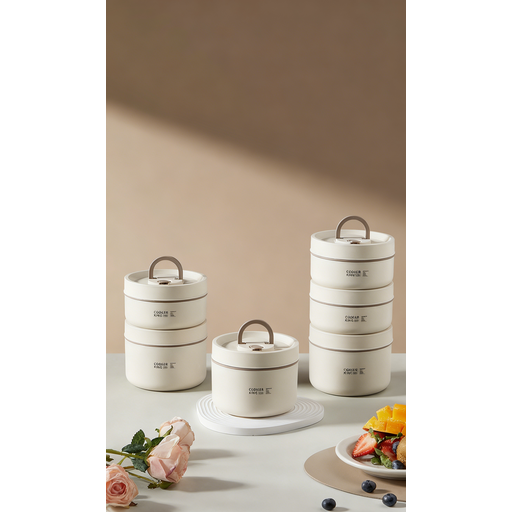
Why it suits this need: A set is handy if you want to take several portions, snacks or leftovers with you and don’t need one large soup flask straight away.
The different-sized containers make it less likely that you’ll use the wrong size for each meal. According to the product description, the bodies are dishwasher-safe.
304 stainless steel; four-piece set; lids with pressure-release valves, according to the product description.
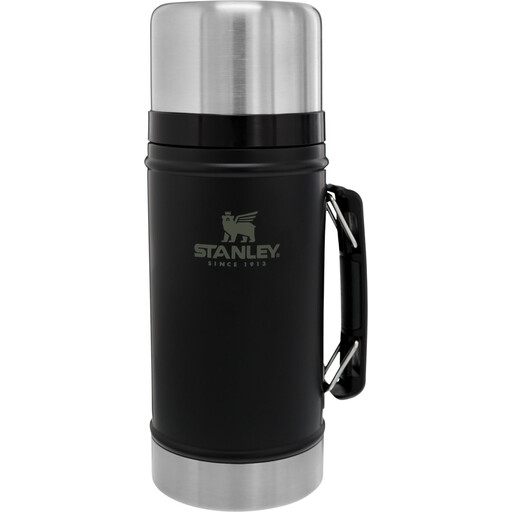
Why it suits this need: A good choice for long working days, travel and outdoor activities when you want a larger portion and a sturdy way to carry it.
The wide opening makes filling and cleaning easier. According to the product description, the lid also doubles as a cup and the handle folds down.
0.94-litre capacity; 18/8 stainless steel; double-wall vacuum insulation; dishwasher-safe according to the product information.

Why it suits this need: Its large capacity is designed for multiple portions, families or a long day outdoors. The included lunch bag makes it easier to carry.
The wide opening makes filling and cleaning easier. The carry bag protects the flask in transit, but it should be carried upright.
1.5-litre capacity; 316 stainless steel; insulated lunch bag included; keeps food at temperature for 4–6 hours, according to the product description.
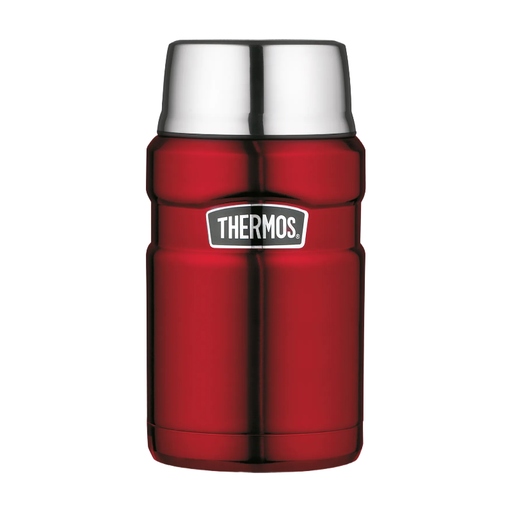
Why it suits this need: With a capacity of 710 ml, it gives you more room than a standard 500 ml model without going straight for a large family-sized flask.
According to the product description, the wide opening is suitable for soup, pasta and stew. It has a screw-top lid; check the seal regularly.
710 ml capacity; 18/10 stainless steel; built-in spoon; cylindrical shape with a diameter of 9.3 cm, according to the product information.
We’ve put together a full, up-to-date list of products that meet these strict selection criteria and the applicable European safety regulations.
A food flask isn’t a cooking pot. Don’t use it in the microwave, oven or on a hob unless the manufacturer explicitly says you can. For products that should be hand-washed, using a dishwasher may cause the seal or finish to wear more quickly.
It varies by model and how you use it. Manufacturers give estimated times under certain conditions. For more consistent results, preheat the flask, fill it fully and close it straight away. Always check the temperature before eating hot food.
A model may be described as leakproof or leak-resistant, but check the lid, silicone ring and instructions for use. It’s best to carry soup upright, and test a new flask with water before putting it in a full bag.
For a light lunch or one portion of soup, 470 to 500 ml is often enough. If you’re taking a larger meal, pasta or stew, consider a capacity of around 710 to 940 ml. Models with a capacity of 1.4 to 1.5 litres are better suited to multiple people, provided their size and weight work for the way you’ll be carrying them.
