
Same-day & Next-day Delivery

Quality Guaranteed

Unlock Your Welcome Offers: FREE Delivery | Up to 80% OFF | Free 30-day JoyPlus trial
Download the APP
A thermos food container is ideal for soup, pasta, porridge or a cold lunch on the go. Yet many people buy a model that does not really suit their needs in practice. A narrow opening makes food difficult to eat, a container that is too small leaves you hungry, and a loose seal can leave you with soup in your bag.
As a Joybuy Product Recommendation Officer, I therefore focus mainly on verifiable details: capacity, opening, material, closure, cleaning and the insulation duration stated by the manufacturer. This helps you look past marketing language and choose a thermos for food that suits work, school, travel or outdoor activities.
Brands often state that a food thermos can keep food hot for 9, 13 or 20 hours, for example. These are product claims made under specific conditions. The actual temperature depends on factors including the starting temperature, the amount of food, how often you open the lid and the outdoor temperature.
A thermos food container generally performs more consistently when you preheat it with hot water for a few minutes. Pour the water away before adding your meal. For cold dishes, pre-chilling works in the same way.
An insulated drinks bottle is designed for liquids. The opening is often too narrow for pasta, rice or a substantial stew. A soup thermos or food jar therefore usually has a wider opening, so you can fill, eat from and clean it without needing a long brush.
Pay attention to the closure too. A lid designed for coffee or fizzy drinks is not automatically suitable for thick meals. Always check that the product is explicitly marketed as a food container.
Calling a food thermos leak-free does not mean you can fill it indefinitely, turn it upside down or carry it loose in a bag. According to the product information for various models, the lid and silicone ring must be fitted correctly. Some containers also advise against turning the jar upside down or tilting it.
Do not fill a thermos for food right up to the rim. Very hot contents can create pressure. Open the container carefully and check the sealing ring regularly for signs of wear.
For a single lunch, 500 ml is often a practical size. It is suitable for a portion of soup, yoghurt, porridge or a meal for one person. A 470 ml model is more compact and can be useful for a smaller lunch or a child-sized portion.
If you want to take a larger meal, several portions or food for a family with you, consider 710 ml or 1.5 litres. Bear the weight and dimensions in mind: a large thermal lunch box takes up more space and is less suitable for a small bicycle pannier.
A wide opening of around 6.5 cm or more makes filling and eating easier. A cylindrical shape is generally stable in a bag, but check the diameter. A container approximately 10 cm wide will not fit in every side pocket of a rucksack.
A lid that doubles as a bowl, as with some Stanley food jar models, can be useful when you do not have any tableware with you. An integrated spoon is also practical, but check whether it is included and how it should be cleaned.
Stainless steel food container models are popular because of their robust construction and the absence of breakable glass. Pay attention to the difference between 304, 316 and 18/8 stainless steel. The product description should clearly state which material has been used; a higher number does not automatically determine the overall user experience.
A double-walled vacuum construction helps to limit heat transfer. However, the manufacturer determines the stated insulation duration. According to the product description, the THERMOS THERMOcaf Food Jar Sapphire Blue keeps food hot for up to 9 hours and cold for up to 14 hours. These stated figures are not a prediction for every situation.
Also check the dishwasher instructions. A dishwasher-safe food container is easy to maintain, but some models recommend hand washing to keep the coating, cork or seals looking good and working properly for longer. Where possible, remove the silicone ring from the lid and allow all parts to dry completely.
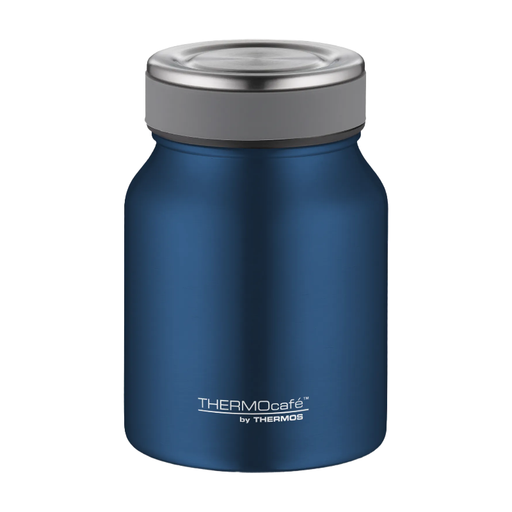
Why it suits this profile: The 500 ml capacity is suitable for a single lunch at work, school or on a short train journey. The wide 6.5 cm opening makes filling and eating practical.
The wide opening means you do not have to use a drinks bottle for solid meals. The product description states that it has a screw lid with a silicone sealing ring and is dishwasher-safe.
500 ml capacity; according to the product description, keeps food hot for up to 9 hours and cold for up to 14 hours; wide opening.
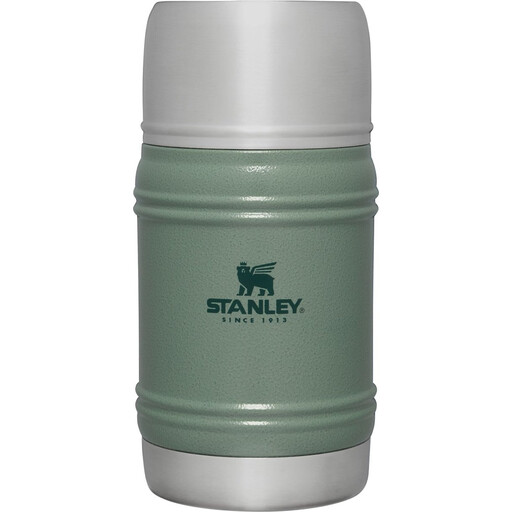
Why it suits this profile: This stainless steel food container combines a 500 ml capacity with a cork insert and lid. It is well suited to commuters and outdoor enthusiasts who value robust construction and distinctive materials.
The manufacturer states that it has a leak-free closure and is dishwasher-safe. Hand washing is recommended for a longer service life, helping you consider maintenance rather than focusing solely on insulation time.
500 ml; according to the product description, keeps food hot for up to 13 hours and cold for up to 15 hours; made from recycled stainless steel with cork components.

Why it suits this profile: The 1.5-litre capacity is designed for several portions, group use or long outdoor activities. The wide opening makes filling and serving directly from the container easier.
The manufacturer explicitly states that the container must not be turned upside down or tilted. Hand washing is recommended, making the care requirements clear from the outset.
1.5-litre capacity; 316 stainless steel; wide opening and, according to the product description, temperature retention for 4–6 hours.
We have put together a complete, up-to-date list of products that fully meet these strict selection criteria and the applicable European safety regulations.
This varies by model and usage. Manufacturers may state, for example, 4–6, 9, 13 or 20 hours. These figures come from the product description and depend on preheating, fill level and ambient temperature. For a lunch a few hours later, a well-sealed, preheated container is generally a more sensible choice than relying solely on the highest figure.
Some models are dishwasher-safe, while others recommend hand washing. Check the instructions for both the container and the lid. Cork, coatings and silicone seals may require extra care. Moreover, “dishwasher-safe food container” does not always mean that every component can go in every cycle.
For an average single meal, 500 ml is a useful starting point. Choose around 470 ml for a smaller portion and 710 ml when you want to take a larger meal with you. For several people or a full day away from home, 1.4 to 1.5 litres may be more suitable, as long as the size and weight work for your bag.
