
Same-day & Next-day Delivery

Quality Guaranteed

Unlock Your Welcome Offers: FREE Delivery | Up to 80% OFF | Free 30-day JoyPlus trial
Download the APP
Taking a hot lunch to work, school or a campsite sounds simple. In practice, though, a thermos food container is only truly useful when its capacity, closure and cleaning requirements suit the way you use it. A food jar that is too small means half a meal, an unclear closure can cause leaks in your bag, and a lid that is difficult to clean can quickly retain odours.
This buying guide compares objective specifications, such as material, capacity, opening, closure and maintenance. That way, you can find a food thermos that fits into your daily routine.
Brands sometimes state how many hours a container keeps food hot or cold. This depends on the starting temperature, the amount of food, the ambient temperature and how often you open the container. According to Maxcook’s own product description, the vacuum insulation helps maintain the temperature for 4 to 6 hours. Stanley’s own product information states a heat-retention time of up to 13 hours for hot contents.
Treat these times as an indication, not a guarantee for every meal. A properly preheated container that is completely full will generally perform differently from a half-empty pot carried in a cold cycling bag.
A leakproof lunch box depends on a properly tightened lid, a clean silicone ring and correct use. For some models, the product information also states that you should not turn the container upside down or tilt it. So check whether the thermos fits upright in your bag and whether the closure can be cleaned regularly.
Hot soup can also create pressure. According to the product description, the Cooker King set advises opening the silicone air valve before opening a container filled with hot soup. This is a practical safety instruction that you should not skip.
When choosing a stainless steel food container, you should look beyond the inside. Silicone seals can lose their elasticity through heat, harsh cleaning products or prolonged exposure to the dishwasher. According to the product information, the containers in the Cooker King set are dishwasher-safe; the product information recommends placing the lids and silicone rings on the top rack or washing them by hand. The included lunch bag should be cleaned with a damp cloth.
Always check what the manufacturer recommends for each individual component. This helps prevent a container from becoming less secure after just a few months.
Choose the capacity based on when and how you plan to eat:
A larger food thermos does take up more space and usually weighs more. For a school pupil or commuter, 470 to 710 ml is often more practical than a 1.5-litre model. For a family, long car journey or outdoor activity, the extra capacity can be particularly useful.
304 stainless steel is widely used in food containers and provides a sturdy, easy-to-maintain foundation. 316 stainless steel contains additional alloying elements and is often chosen for greater resistance in certain conditions. However, the material alone does not determine how well a thermos insulates or seals. The vacuum wall, lid, seal and overall construction also play a part.
Also look for an uncoated interior if you want the flavour of soup or other meals to remain as neutral as possible. According to their own product descriptions, certain Thermos models have an untreated inner surface.
A wide opening makes filling, eating from and cleaning the container easier. This is particularly convenient for thick soup, pasta, porridge or stews. A narrow thermos is often easier to fit into a bag, but it can be more difficult to clean.
Also check the dimensions. A 1.5-litre model can be approximately 22 cm high and have a diameter of around 15 cm, while a 470 ml food jar is considerably more compact. Measure the compartment in your rucksack, lunch bag or cycling bag beforehand.
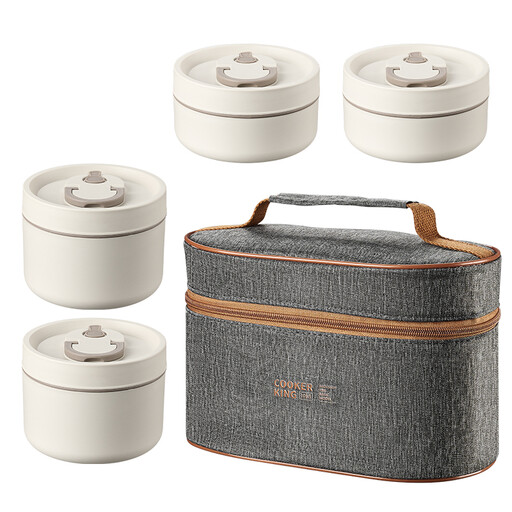
Why it suits this profile: A set of five stainless steel containers offers flexibility for meal prepping, work and school. The different containers are useful for carrying several portions or separate ingredients.
The product description specifies separate care instructions for the containers, lids, silicone rings and lunch bag. For hot soup, it advises releasing pressure through the air valve.
304 stainless steel; five containers; containers are dishwasher-safe according to the product description.
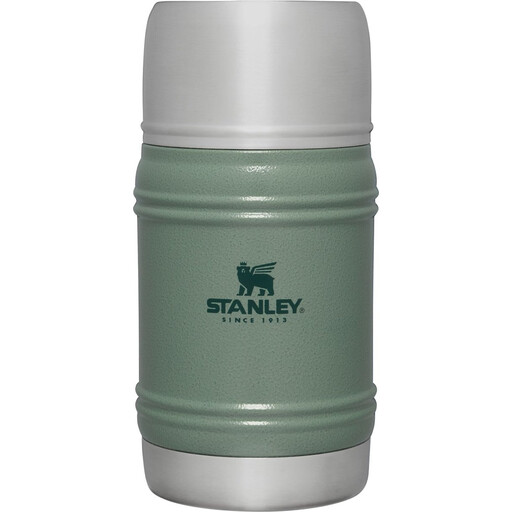
Why it suits this profile: This compact thermos lunch box is designed for a single portion and everyday transport. Its 500 ml capacity is suitable for soup, porridge or a smaller meal.
The capacity is clearly specified and the model has a double-wall construction. According to its own product information, the jar is leakproof and dishwasher-safe.
Recycled stainless steel according to the product description; 500 ml capacity; cork insert and lid.

Why it suits this profile: The 1.5-litre capacity is designed for large portions, longer journeys, camping or meals for several people. The included lunch bag makes transport more organised.
The wide opening makes filling and cleaning easier. The product description recommends hand-washing the pot and wiping the lunch bag with a damp cloth.
316 stainless steel; 1.5-litre capacity; vacuum insulation; lunch bag included.
We have put together a complete, up-to-date list of products that fully meet these strict selection criteria and the applicable European safety regulations.
This varies by model and usage. Manufacturers provide different indications, such as 4 to 6 hours for certain Maxcook models and up to 13 hours for the Stanley Artisan, according to their own product information. Preheating the container, filling it completely and opening it as little as possible will help it retain its temperature for longer.
For one standard portion, 470 to 710 ml is often practical. Choose around 500 ml for soup or a light lunch, and approximately 710 ml for pasta, rice or a larger meal. A 1.4 to 1.5-litre model is more suitable for several portions, family use or longer outdoor activities.
This varies by product and component. Some containers are dishwasher-safe, while lids, silicone rings and lunch bags may need to be washed by hand. Always check the product description and do not use a scouring pad or wire wool on stainless steel. With hot meals, also bear in mind the pressure that can build up and the risk of burns when opening the container.
