
Same-day & Next-day Delivery

Quality Guaranteed

Unlock Your Welcome Offers: FREE Delivery | Up to 80% OFF | Free 30-day JoyPlus trial
Download the APP
A thermos food container seems simple: fill it, close it and take it with you. Yet many purchases disappoint. A lid may not seal as well after a few weeks, the opening may be too narrow for hearty meals, and a large capacity can make a container awkwardly heavy for everyday use.
For commuters, school pupils, students, parents, campers and outdoor enthusiasts, choosing a container is about more than insulation. Pay particular attention to capacity, seal, material, opening, care and how you’ll actually use it.
Brands sometimes say that a food flask keeps food hot or cold for many hours. In practice, the result depends on factors such as the starting temperature, the amount of food, the ambient temperature and whether you preheated the container.
So a claim such as “keeps warm for up to 9 hours” is a product claim based on certain conditions, not a guarantee that every meal will be at the same temperature after nine hours. Product information from various brands recommends pre-treating the container for a few minutes with hot or cold water.
A screw-top lid with a silicone ring can provide a good seal, but the ring must be clean, undamaged and correctly positioned. The lid also needs to be fully tightened. For example, the product information for Maxcook models advises against turning or tilting the container to prevent spills.
So don’t just check whether a product is described as a leakproof food container. Also check:
A 1.5-litre thermos food container can be useful for several people or a long outdoor activity. For lunch at work or school, 470 to 710 ml is often easier to handle. A larger food flask takes up more room and weighs considerably more when full.
Choose the capacity to suit your meal:
Think about the shape, too. A wide food container is easier to fill and makes it simpler to eat straight from it. A narrow food flask may take up less space in your bag, but it can be harder to clean.
A double-wall construction with vacuum insulation limits heat transfer. Manufacturers often give separate times for hot and cold contents. Compare these figures only when the products have been described in the same way.
According to the product information, the THERMOS THERMOcaf Food Jar is stated to keep contents hot for up to 9 hours and cold for up to 14 hours. The Stanley Artisan Thermal Food Jar is stated in the brand’s product information to keep contents hot for 13 hours and cold for 15 hours. These are stated product figures; actual performance may vary depending on factors such as portion size and outdoor temperature.
An stainless steel food container is sturdy and generally does not retain odours in the way some plastic interiors can. Check the stated grade of steel, but don’t assume this automatically guarantees quality. 304 and 316 stainless steel are different material grades; for everyday use, the seal, wall construction and finish also matter.
Also check:
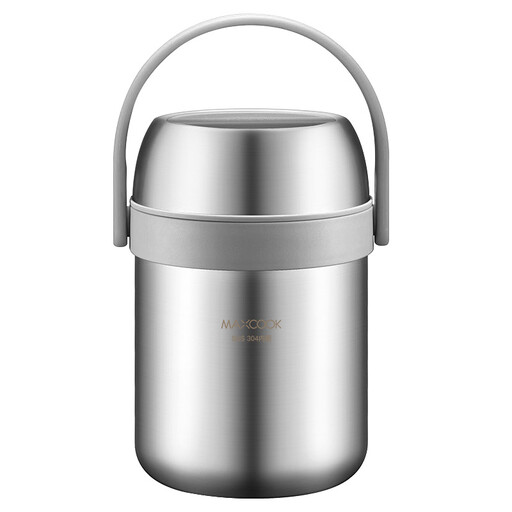
Why it suits this profile: Its generous capacity is suitable for several portions or a large meal. The wide opening makes it easier to fill and eat from.
The specifications list a wide opening and a screw-top lid with a seal. The product information recommends carrying the container upright.
304 stainless steel, a 1.5-litre capacity and, according to the product information, temperature retention for 4–6 hours.
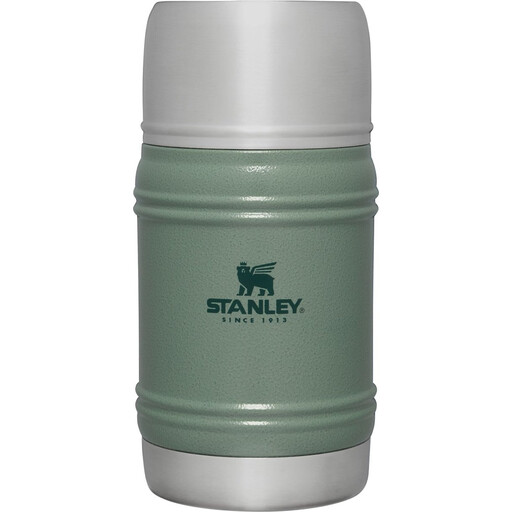
Why it suits this profile: This compact food jar is designed for taking a single meal with you every day. According to the product information, it has a stainless steel body and cork components.
With a capacity of 500 ml, you won’t need to carry an unnecessarily large, heavy container for a single lunch.
According to Stanley, it keeps food hot for up to 13 hours and cold for up to 15 hours. The product information describes the container as leakproof and dishwasher-safe.
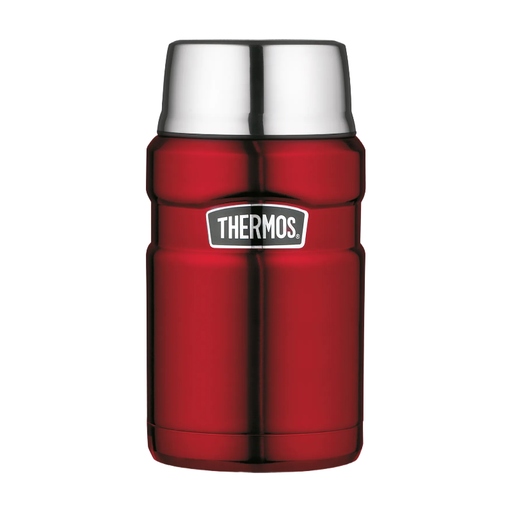
Why it suits this profile: With a capacity of 710 ml, it’s a good fit for commuters, campers and professionals who want to take a generous meal with them.
The wide opening is suitable for soup, pasta and stew. The supplied specifications recommend hand-washing and say not to use it in a microwave, freezer or on the hob.
18/10 stainless steel, a weight of around 390 grams and a stated hot-food retention time of 6–8 hours.
We’ve put together a complete, up-to-date list of products that meet these strict selection criteria and current European safety regulations.
An insulated lunch box is not a substitute for refrigeration when food needs to be kept safely chilled for a long time. For perishable foods, follow the storage instructions on the packaging.
It varies by model and how you use it. Product information gives figures such as 4–6 hours for certain Maxcook containers, 6–8 hours for the 710 ml THERMOS SK and up to 9 hours for the 500 ml THERMOcaf. Preheating and filling the container can help with insulation, but the actual temperature depends on the conditions.
Not always. Some models, such as the Stanley Artisan Thermal Food Jar and certain THERMOcaf models, are described as dishwasher-safe in the product information. Other containers need to be washed by hand. Always check the instructions for the sealing ring and lid.
For a small lunch, 375–500 ml is often enough. If you’re taking a full meal or a generous portion of soup, consider 470–710 ml. A 1.5-litre capacity is most practical for several portions and less suited to everyday carrying in a small bag.
