
Same-day & Next-day Delivery

Quality Guaranteed

Unlock Your Welcome Offers: FREE Delivery | Up to 80% OFF | Free 30-day JoyPlus trial
Download the APP
A thermos food container may seem simple: fill it, twist the lid shut and take it with you. Yet most problems only arise after a few weeks of use. A lid that does not seal properly, an opening that is too narrow to clean or a capacity that does not suit your mealtime can make a purchase impractical.
For work, school, travel, walking and camping, three pitfalls are particularly important:
A small thermos for food of around 470 to 500 ml is suitable for a packed lunch, soup or porridge for one person. A capacity of around 710 to 940 ml provides more room for a substantial meal or a longer day out. A large 1.5-litre food container makes more sense when you want to take several portions with you, for example for a family, picnic or camping trip.
Do not only look at the number of millilitres. A wider, shorter shape may fit more easily into a bag than a tall cylinder, while a narrow container takes up less space in a rucksack. So also check the diameter, height and weight.
A double-wall construction with vacuum insulation is a common basis for a soup thermos or food container for hot meals. The low-air space between the walls limits heat transfer. For cold meals, yoghurt or salads, a food container for cold meals works on the same principle.
Read temperature claims as a guideline. According to Stanley’s own product information, the Classic Legendary Food Jar keeps hot contents hot for up to 20 hours and cold contents cold for up to 24 hours. The Stanley Artisan models are stated to keep contents hot for up to 13 hours and cold for up to 15 hours. Maxcook states a temperature retention period of 4 to 6 hours for various models. These are brand claims under certain conditions, not a guarantee for every real-life situation.
For a working day, 4 to 8 hours is often sufficient. For long walks or journeys, a greater margin may be useful. Preheat or pre-chill the container for a few minutes with hot or cold water to reduce the temperature difference when filling it.
A leakproof food container needs more than a sturdy screw-top lid. Look for:
A wide opening prevents food residue from collecting in the corners. Also check whether the container is dishwasher-safe. With some models, the stainless-steel base can go in the dishwasher, while the lid and silicone ring are best washed by hand or placed on the top rack. A lunch bag generally should not go in the dishwasher. Do not use wire wool or harsh abrasive cleaners, as these can damage the surface and seal.
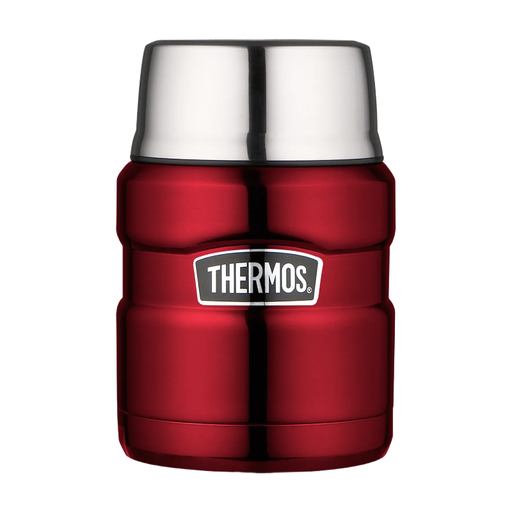
Why it suits this profile: The 470 ml capacity is suitable for a single lunch or bowl of soup. The included spoon means you do not need to take extra cutlery to the office, school or when travelling.
The wide opening and screw-top closure are practical for filling and cleaning. According to the product information, hand washing is required, so you should factor this into your daily routine.
18/8 stainless steel, 470 ml capacity, built-in spoon and an explicit warning to open hot contents carefully.
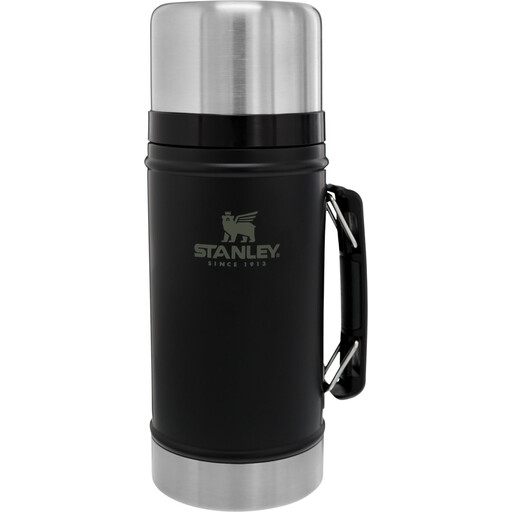
Why it suits this profile: The 0,94-litre capacity is suitable for large lunches, long working days and outdoor activities where you cannot easily refill it.
The product information specifies double-wall vacuum insulation, a leakproof closure, a wide opening and dishwasher safety. This helps avoid several practical drawbacks, although transporting it upright is still advisable.
18/8 stainless steel, 730 g, foldable carry handle, lid that can be used as a cup and a stated statutory warranty of at least two years in the EU.

Why it suits this profile: The large capacity is suitable for several portions, group meals, picnics and longer outdoor activities. The wide opening makes serving straight from the container easier.
The product description specifies a wide opening, vacuum insulation and a leakproof closure. The manufacturer advises hand washing and warns against turning the container upside down.
316 stainless steel, 1.5-litre capacity, product weight of approximately 0.86 kg and preparation with hot or cold water before use.
Do not fill a thermos food container right to the brim. Very hot soup can create steam pressure, so follow the manufacturer’s instructions and open any valve first. After use, empty the container completely and allow it to dry, especially around the silicone ring.
A stainless-steel food container will generally withstand daily use, but the seal is a wear part. Check it regularly for cracks, deformation or a persistent smell. Do not put a food jar in the microwave, oven or freezer unless the manufacturer explicitly permits it. An insulated lunch box with a separate carry bag is handy for transport, but check whether the bag may only be cleaned with a damp cloth.
We have put together a complete, up-to-date list of products that fully meet these strict selection criteria and the applicable European safety regulations.
This varies by model and usage. According to the product information for the products mentioned, the stated duration ranges from around 4 to 20 hours. Preheating the container, filling it well and opening it as little as possible will help it retain heat for longer. Treat the brand claim as an indication, not a guaranteed result.
Yes, provided the model is designed for liquid food and has a well-sealing lid. Choose a wide opening and check whether the manufacturer provides instructions on releasing pressure. Do not fill soup to the brim while it is boiling hot, and check the seal before putting the container in a bag.
Always follow the care instructions. Some stainless-steel containers can go in the dishwasher, while other models require hand washing. Clean the lid and sealing ring separately with warm water and mild washing-up liquid, rinse them thoroughly and allow all parts to dry completely before closing the container.
