
Same-day & Next-day Delivery

Quality Guaranteed

Unlock Your Welcome Offers: FREE Delivery | Up to 80% OFF | Free 30-day JoyPlus trial
Download the APP
Taking a hot lunch to the office, school or campsite sounds simple. Yet many buyers run into problems after a few weeks: a leaking lid, a container that is difficult to clean or a capacity that does not suit a single meal. In this guide, you can compare a thermos food container, insulated food container and stainless steel lunch box based on the features that matter in everyday use.
Brands sometimes state a long period during which food is meant to stay hot or cold. These are generally figures from the product information or the brand’s own tests. The actual temperature also depends on the starting temperature, the amount of food, how often you open the container and the ambient temperature.
Treat any stated insulation time as a guideline, not a guarantee for every situation. A meal packed at 7.00 am requires different features from a snack for a short train journey.
A bento lunch box with compartments is useful for bread, fruit, rice and side dishes that you want to keep separate. However, most models are not designed to keep a meal hot for hours. A thermos food jar generally uses a double-wall vacuum construction and is better suited to soup, pasta, porridge or stews.
A screw-top lid with a silicone seal works differently from clip fasteners or separate lids for each compartment. Check whether the seal can be removed, how the lid opens and whether there is a pressure valve. Hot soup can cause steam pressure to build up. That is why the product information for some models recommends opening a silicone valve before loosening the lid.
For one standard lunch, 470 to 500 ml is often a sensible choice. This size is compact enough for a work bag or rucksack and suitable for soup, yoghurt, pasta or a meal for one person. A 500 ml thermos food jar is also practical if you want to keep the weight down.
A capacity of 710 ml provides more room for a large portion or an extra side dish. A 710 ml thermos food jar is worth considering for long working days, camping trips and meals after sporting or outdoor activities. For several portions or a meal for two, look at around 940 ml.
Do not focus solely on the number of millilitres. A tall, narrow container takes up less width, but it may be harder to eat from once emptying it. A wide opening makes filling, stirring and cleaning easier.
A stainless steel food container is generally sturdier than a plastic tub and is less likely to absorb smells. Product information may refer to 304 stainless steel, 316 stainless steel and 18/8 stainless steel. These designations describe the composition of the steel; on their own, they do not indicate how well a container insulates.
Insulation mainly comes from the construction: a double-wall vacuum space limits heat transfer. A single-wall stainless steel lunch box may be durable, but it will not keep food hot in the same way. Also check whether the inside is coated, whether the lid contains multiple parts and which cleaning method the manufacturer recommends.
A wide opening makes the inside easier to reach. Also check:
A leakproof food jar is only practical if the seal remains clean, dry and undamaged. Do not fill a thermos food container right up to the brim with boiling-hot food, and check that the lid is properly closed before transporting it.
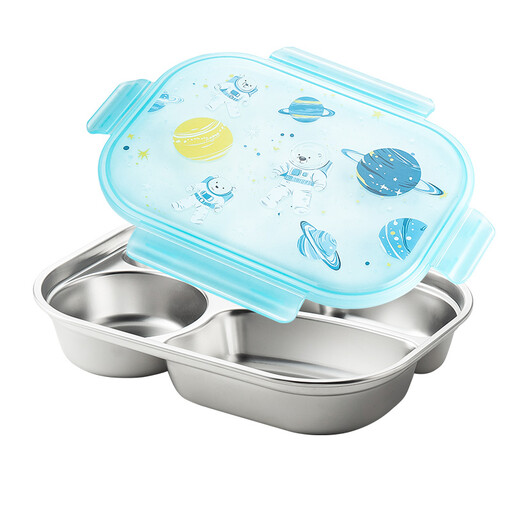
Why it suits this profile: This stainless steel lunch box divides a meal into four compartments and is suitable for the office, school, picnics or meal preparation. Choose this type when keeping ingredients separate matters more than maintaining heat for a long time.
The four compartments stop fruit, bread and side dishes from getting mixed together. However, check the supplied closure and available dimensions before transporting liquid dishes.
316 stainless steel according to the product name, four compartments and a portable design for the office or a picnic.
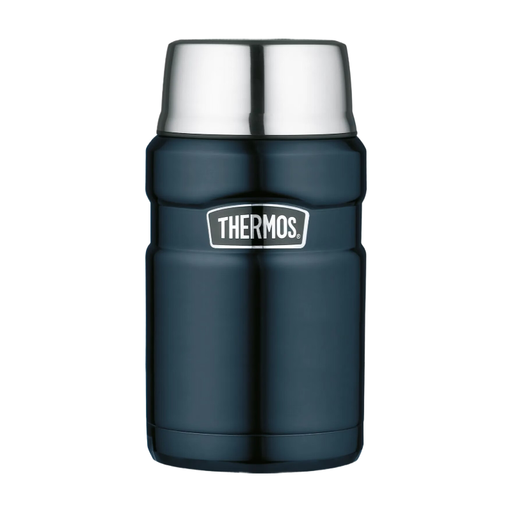
Why it suits this profile: The 710 ml capacity provides room for larger hot meals during work, travel or outdoor activities. According to the product description, this model has a wide opening, double-wall stainless steel construction and a dishwasher-safe design for the top rack.
The wide opening makes filling and cleaning easier. The product description states that it has a leakproof seal and a twist/slide lid; always check the lid after closing it.
710 ml capacity, approximately 447 grams according to the product details, and a wide opening for food and cleaning.
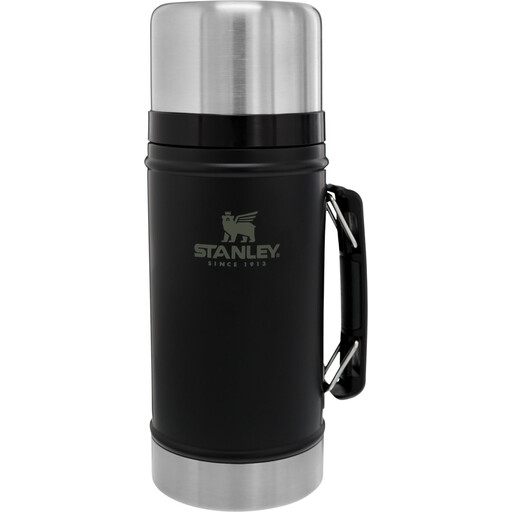
Why it suits this profile: With a capacity of 0.94 litres, this food container is designed for long days, camping and multiple portions. According to the product description, the model has a handle, a wide opening and a lid that can be used as a cup.
The wide opening reduces the risk of food residue collecting in hard-to-reach places. Bear in mind the weight of approximately 730 grams and check the latest cleaning instructions.
940 ml capacity, double-wall vacuum insulation, leakproof closure and a foldable handle according to the product details.
We have put together a complete, up-to-date list of products that fully meet these strict selection criteria and the applicable European safety regulations.
For one lunch, 470 to 500 ml is often enough. Choose 710 ml for a larger portion, soup with a side dish or a long day outdoors. A 940 ml model is better suited to several portions, but it is also heavier and takes up more space.
This varies by model and how you use it. Brands provide their own figures for this. For example, Thermos states that some models retain heat for several hours, while other product descriptions quote longer periods. Fill the container fully, open it as little as possible and always check the temperature before eating.
A thermos lunch box is suitable for hot or cold dishes that you want to keep at the right temperature. A bento lunch box is more convenient when you want to carry several ingredients separately. If you are transporting bread, fruit and snacks, a bento layout is often more useful; for soup and stews, a food jar is the better choice.
