
Same-day & Next-day Delivery

Quality Guaranteed

Unlock Your Welcome Offers: FREE Delivery | Up to 80% OFF | Free 30-day JoyPlus trial
Download the APP
A thermos flask and insulated food jar seem simple enough: fill, close and take with you. Yet most disappointments come from choosing the wrong contents, a closure that doesn't suit how you'll use it, or temperature claims read without context. The features you need for a train journey to the office are different from those for a long walk, camping trip or meal for several people.
A manufacturer might state that a stainless steel thermos flask keeps contents hot or cold for, say, 12, 15 or 24 hours. That's no guarantee of the same temperature under all conditions. The starting temperature, the amount of liquid, how often you open the flask and the ambient temperature all play a part.
So check whether the stated duration refers to heat, cold or both. A thermos flask for coffee and tea is usually used differently from an insulated drinks bottle for cold water.
A leak-proof thermos flask needs to seal well, but it also has to suit the way you carry it. A screw cap usually requires two hands and must be tightened fully. A drinking lid with a safety lock can be more convenient in the car or while walking.
Also look out for warnings. Some food thermos models must not be turned upside down or tilted. With hot contents, pressure can also build up. Open a food jar carefully and follow the manufacturer's instructions.
A 900 ml thermos flask is practical for a long car journey or a day out, but it takes up more space than a 500 ml model. A 1.5 litre food jar is suitable for multiple portions, but weighs considerably more when full. Choose the capacity based on your normal use, not just the lowest price per millilitre.
Use these guidelines as a starting point:
Alongside capacity, check the height and diameter. A 900 ml thermos flask, for example, might be around 28.2 cm tall and 8.2 cm wide. That won't fit in every cup holder or rucksack side pocket.
Stainless steel, such as 18/8, 304 or 316 stainless steel, is widely used for thermos flasks and food containers. The product information should clearly state which material has been used and which parts are made of plastic, silicone or cork.
Double-walled vacuum insulation limits heat transfer between the inside and the outside. This helps keep hot or cold contents at temperature for longer. The outside may stay cool and dry, but this doesn't automatically tell you how long the contents will stay hot or cold.
For a soup thermos or thermos food container, a wide opening is practical. You can fill it more easily, eat straight from the pot and clean the inside. Also check whether the lid, sealing ring and any spoon can be cleaned separately.
Look at these points before you order:
A simple step helps with any model: rinse the bottle or pot with warm water for hot contents and with cold water for chilled contents. Don't fill to the brim and close the lid fully before placing the product in a bag.
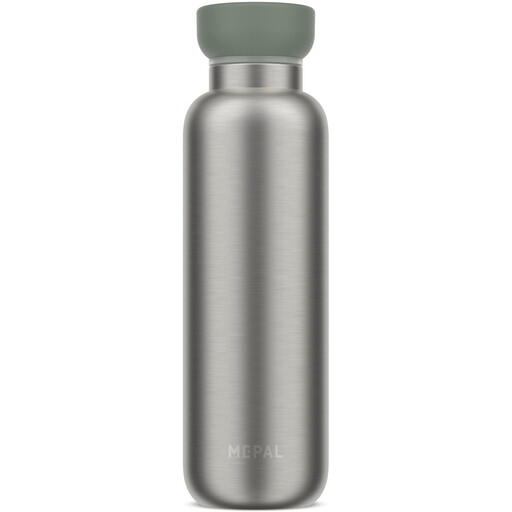
Why this fits the profile: The 500 ml capacity is manageable for daily commuting, study and office use. The bottle is 23.8 cm tall and has a diameter of 7 cm.
The product information mentions vacuum insulation and a leak-proof construction. So you don't have to pay for a large capacity when 500 ml is enough.
According to the product information, it keeps contents hot for up to 12 hours and cold for 24 hours; the plastic parts of the lid are dishwasher-safe.
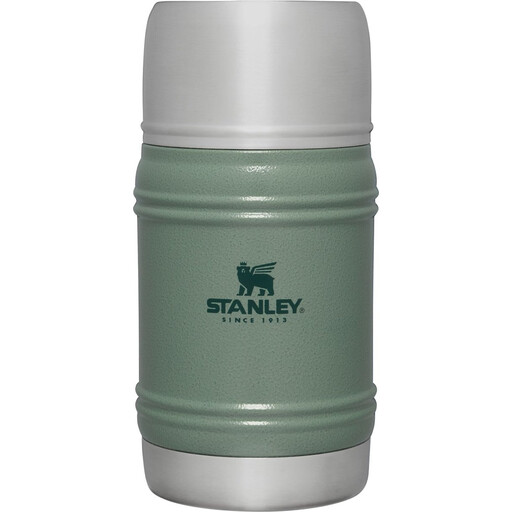
Why this fits the profile: This 500 ml food jar suits those who care about material choice, portability and a closure for everyday use.
The specifications mention a leak-proof lid and dishwasher safety. Hand washing is recommended to help extend its lifespan.
The product information states that it is made from recycled stainless steel, with an insulation time of 13 hours hot and 15 hours cold.

Why this fits the profile: The 1.5 litre capacity is aimed at multiple portions, group meals, camping or a long day without a kitchen.
The wide opening makes filling and cleaning easier than with a narrow drinks bottle. The information states a leak-proof closure, but advises against carrying the pot upside down.
The product information states that it has 316 stainless steel and vacuum insulation, with a stated temperature retention of 4–6 hours. Hand washing is recommended.
We've put together a full, up-to-date list of products that fully meet these strict selection criteria and current European safety regulations.
Choose a stainless steel thermos flask or insulated drinks bottle if you're mainly taking water, coffee or tea. A thermal mug of around 375–470 ml is practical for a short journey or desk use. For soup, pasta, couscous or stews, you'll need a soup thermos with a wide opening.
An insulated lunch box or thermos food container is more suitable when you want to take food without needing an extra pan or microwave. For larger quantities, a 1.4 or 1.5 litre food jar can be a great solution. A 10-litre insulated cool box works better for multiple chilled items during a picnic or camping trip.
Rinse the product after each use with warm water and mild washing-up liquid. Clean sealing rings separately if the design allows. Always check the manual: some models can go in the dishwasher, while with others only certain parts are suitable for the top rack.
That varies by model and use. Product information for different food jars might state, for example, 4–6 hours or up to 9 hours. Preheat the pot beforehand, fill it sufficiently and open it as little as possible. These steps help maintain the temperature for longer, but they don't replace the stated product specifications.
Not always. A 900 ml model can be handy for a long day, but it's heavier and takes up more space. For one person, 500 ml is often more practical. So compare capacity, weight, dimensions, closure and maintenance rather than just the price per litre.
