
Same-day & Next-day Delivery

Quality Guaranteed

Unlock Your Welcome Offers: FREE Delivery | Up to 80% OFF | Free 30-day JoyPlus trial
Download the APP
A thermal food flask is handy for soup at the office, pasta on a walk or a cold meal on the go. But an insulated food container can look better on paper than it performs in everyday use. It may have a narrow opening, a lid that’s difficult to clean or a generous capacity that makes it heavy.
So don’t just focus on colour, brand or claimed insulation time. Pay close attention to capacity, the seal, the opening, materials and care instructions. That way, you’re less likely to be left with a leaking food flask or an awkward food container after just a few weeks.
Brands sometimes say that food will stay hot or cold for many hours. According to information from the manufacturer or seller, these times are usually measured under specific conditions, for example with a completely full, preheated container. The actual temperature depends on the starting temperature, the amount of food, how often you open the lid and the ambient temperature.
So use these figures as a guide, not a guarantee. A soup flask will usually perform better if you rinse it with hot water first and fill it straight afterwards.
A screw-top lid with a silicone ring can provide a good seal, but only if the ring is clean and fitted correctly. Before buying, check:
Take extra care with hot liquids. Don’t fill a food container to the brim, and open the lid slowly, as hot contents can build up pressure.
A narrow opening makes a container compact, but also makes it harder to fill and clean. Bits of porridge, sauce or soup can get stuck in the screw thread or under the silicone ring. That’s why a wide opening matters more than many shoppers expect.
Also check whether the container is dishwasher-safe. Specifications vary by model: according to the product information, some Thermos models are hand-wash only, while other versions can go in the top rack of the dishwasher.
The right capacity depends on what you’re eating and how you’ll carry it.
Don’t just look at millilitres. Check the container’s diameter and height to make sure it will fit in your bag, cycle pannier or lunchbox.
Double-wall vacuum insulation helps limit heat and cold transfer. A stainless steel food container is sturdy and doesn’t have a glass interior that can break. Some models have an untreated interior. According to the Thermos Stainless King product description, this design is intended to keep flavours neutral and make cleaning easier.
Other models use additional technologies or materials. For example, the Thermos THERMOcaf is described as having a copper layer on the inside and Thermax vacuum insulation. The Stanley Artisan is described as using recycled stainless steel and a cork component in the lid. These are product specifications; the stated temperature performance comes from the product information and may vary in use.
An opening of around 6.5 cm or wider makes filling and eating easier. Also consider the weight. According to the product details, a compact 470 ml Thermos weighs 376 grams, while some 500 ml Stanley models weigh around 710 grams. You’ll notice the difference when walking or cycling.
Finally, check:
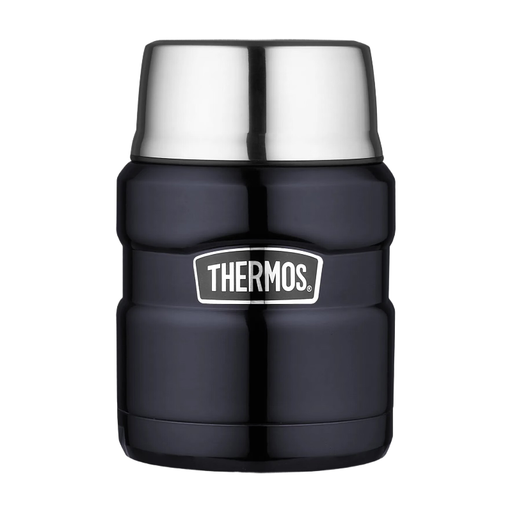
Why it suits this profile: With a capacity of 470 ml, it’s suitable for one person, and at 376 grams it’s light enough for everyday commuting.
The product information describes a screw-top lid with a sealing structure and recommends hand washing. This helps you factor in care requirements rather than focusing only on insulation claims.
470 ml capacity, stainless steel body, compact size and a spoon included according to the product details.
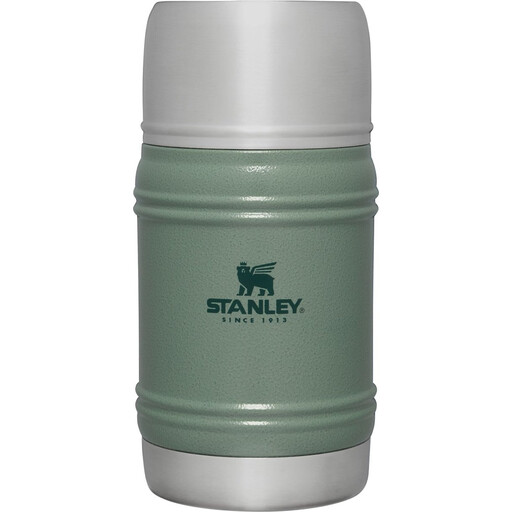
Why it suits this profile: This 500 ml food flask combines a stainless steel construction with cork details. It’s designed for people who care about the choice of materials and the finish.
The product information describes a leakproof seal and says it’s dishwasher-safe. Hand washing is recommended to help extend the product’s lifespan.
500 ml capacity, recycled stainless steel, cork insert and a claim in the product description that it keeps food hot for 13 hours and cold for 15 hours.
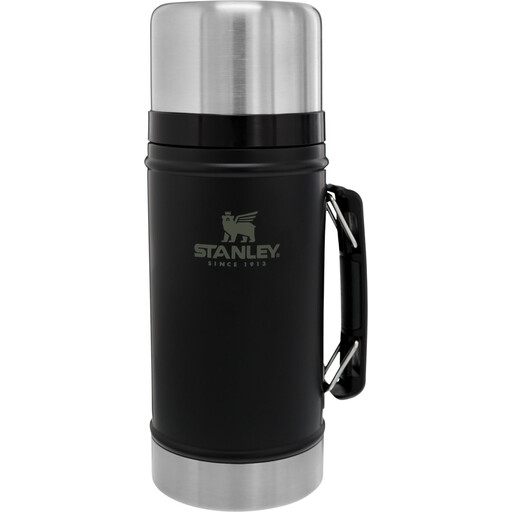
Why it suits this profile: With a capacity of 0.94 litres, it’s made for large meals, long working days, camping or sharing food on the go.
The wide opening makes filling and cleaning easier. According to the product information, the lid can be used as a cup, while the folding handle makes it easier to carry.
0.94-litre capacity, double-wall vacuum insulation, dishwasher-safe according to the product specification and a product weight of 730 grams.
We’ve put together a full, up-to-date list of products that meet these strict selection criteria and the applicable European safety requirements.
Don’t leave the container closed for a long time after use. Rinse it out first, then clean the inside with warm water and washing-up liquid, paying particular attention to the screw thread and sealing ring. Don’t use an abrasive scourer if the manufacturer advises against it. Always follow the specific instructions: not every stainless steel food container is dishwasher-safe.
Its lifespan depends on the material, seal and care. A stainless steel body can last a long time, but a silicone ring may wear out over time. Check it regularly for cracks, distortion or lingering smells. Your statutory consumer rights in the EU still apply if the product doesn’t conform to the contract.
Yes, many models are designed for soup, pasta, porridge and stews. Don’t fill the container to the brim, close the lid securely and open it carefully when the contents are hot. Also check whether the insulated food flask you choose has any restrictions on liquids or hot contents.
