
Same-day & Next-day Delivery

Quality Guaranteed

Unlock Your Welcome Offers: FREE Delivery | Up to 80% OFF | Free 30-day JoyPlus trial
Download the APP
A thermal food container may seem simple: fill it with soup, pasta or a stew and take it with you. Yet some models disappoint in everyday use. The lid may be difficult to clean, a wide pot may not fit in your bag, or the contents may cool down faster than expected.
So don’t just focus on the brand and appearance. For a good choice, capacity, closure, material, opening and maintenance are particularly important. Below, you’ll find out which features to check before buying an insulated food container.
Product pages sometimes list impressive numbers of hours for keeping food hot or cold. These figures depend on factors including the starting temperature, the amount of food, the ambient temperature and how often you open the lid.
Therefore, treat any stated insulation time as a guideline, not a guarantee for every situation. A thermal soup container filled in the morning will perform differently on a cold bike ride than it will in a heated office.
A leakproof food container depends on the lid and sealing ring. Check whether the lid screws on securely, whether the ring can be removed easily and whether the product information clearly explains how it should be transported. Some models advise against carrying the container upside down or tilted.
A silicone ring that is difficult to reach can retain food residue and odours over time. In this respect, a simple screw-top lid often has fewer parts than a complicated closing mechanism.
A 500 ml food thermos is suitable for one standard meal or a generous portion of soup. For two people, a large stew or a family meal, you’ll need more capacity. A 1.5-litre food thermos offers plenty of room, but it also takes up more space and is heavier when full.
Also consider the shape. A wide opening makes filling, eating and cleaning easier. A tall, narrow food jar may be more convenient for a rucksack or work bag.
Use this practical guide as a starting point:
As well as the capacity, check the dimensions and weight. An RVS food container weighing around 700 grams when empty is less suitable for lightweight walking than a model weighing approximately 390 grams. Also check whether the container can stand upright in your bag.
Many models use double-walled RVS with vacuum insulation. RVS 18/8, 18/10, 304 and 316 are designations you’ll encounter in this category. The material name tells you something about the composition, but not automatically about ease of use or insulation time.
An untreated interior can be useful if you want to keep the flavour of soup or stew as neutral as possible. Some models feature additional technology, such as a copper layer or a proprietary insulation system. According to THERMOS’s own information, for example, the THERMOcaf range uses Thermax vacuum insulation. Assess such claims as the brand’s product specifications and also consider the practical features.
A wide opening makes it easier to fill the container with pasta, rice or larger pieces of vegetables. It also makes it easier to eat straight from the pot with a spoon. Check whether the model is dishwasher-safe. This feature can vary between versions, even within the same brand.
Always follow the manufacturer’s care instructions:
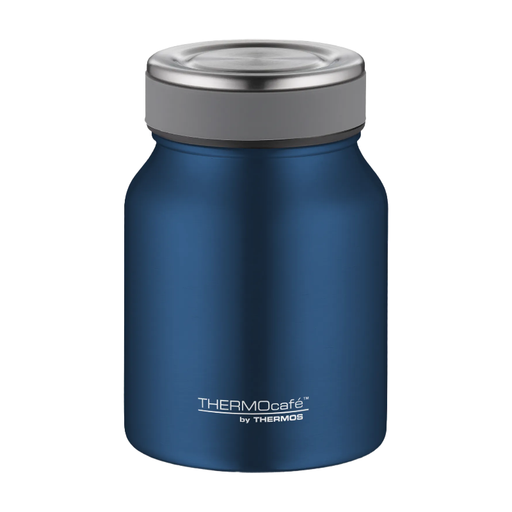
Why it suits this profile: The 500 ml capacity is a practical size for a daily lunch or portion of soup. The 6.5 cm opening makes filling and cleaning easier.
The product description specifies a wide opening, screw-top lid and silicone sealing ring. This clearly identifies the key components for filling and closing the container.
According to the product information: 500 ml capacity, dishwasher-safe and a stated storage time of up to 9 hours hot and 14 hours cold.
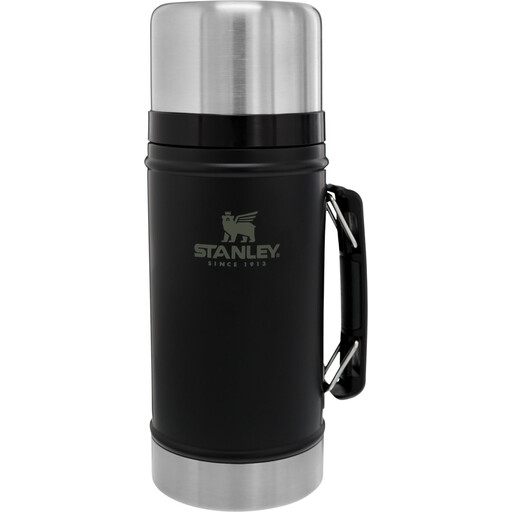
Why it suits this profile: The larger capacity is ideal for long working days, outdoor activities and meals that require more volume than a standard lunch pot.
The product information highlights a leakproof closure and a wide opening. This helps you carry it safely and prevents cleaning from becoming unnecessarily difficult.
According to the product description: double-walled vacuum insulation, a folding handle, a lid that doubles as a cup and dishwasher-safe construction.

Why it suits this profile: The 1.5-litre capacity is designed for multiple portions, camping or sharing a meal. The wide opening makes serving and cleaning easier.
The stated wide opening and screw-top lid make the construction straightforward. The manufacturer recommends carrying it upright and cleaning it by hand, so bear this in mind.
According to the product information: 316 RVS, vacuum insulation, 1.5-litre capacity and a stated heat-retention time of 4 to 6 hours.
We’ve put together a complete, up-to-date list of products that fully meet these strict selection criteria and the applicable European safety regulations.
A thermal lunch box generally works better when you preheat it. Fill the container with hot water for a few minutes before adding a hot meal. For cold dishes, you can use cold water. Pour the water away before adding the food.
Fill the food jar with enough food, but don’t force the lid closed. After closing it, check that the sealing ring is positioned correctly. Keep the container upright during transport, even when the product description states that it is leakproof. Take extra care when opening it if the contents are very hot.
Also bear the following points in mind:
This varies by model and usage. Product descriptions may state 9, 13 or 20 hours, for example, but these are quoted values under specific conditions. For a working day or school day, a well-preheated container with a capacity of 470 to 710 ml is often a practical choice. Always check the information provided by the relevant manufacturer.
For one filling lunch, 500 ml is usually a sensible starting point. If you want to take a large portion, pasta with sauce or an extra side dish with you, 710 or 940 ml may be a better choice. For several people or a meal to share on the go, 1.5 litres is more suitable.
No. Some models are dishwasher-safe, while others should only be cleaned by hand. Pay particular attention to the information about the lid, sealing ring and any cork components. If in doubt, hand-washing with warm water and mild washing-up liquid is the safer option.
