
Same-day & Next-day Delivery

Quality Guaranteed

Unlock Your Welcome Offers: FREE Delivery | Up to 80% OFF | Free 30-day JoyPlus trial
Download the APP
Taking hot soup to the office, keeping pasta for the journey or having something cold to hand during a walk: a thermal food container can be a practical choice. However, some models disappoint in everyday use. The lid may start to leak, the opening may be too narrow for a spoon and the capacity may be smaller than expected.
As a Joybuy Product Recommendation Officer, I filter product information down to concrete specifications. This helps you see more quickly which insulated food container, food flask or thermal lunch box suits your needs in the UK.
A brand may describe a product as leak-proof, but the result depends on the thread, silicone sealing ring and correct closure. Also check whether the product information warns you not to turn the container upside down. With some models, the seal is mainly intended for upright transport.
A valve can also be useful when carrying hot soup. According to the product information, the silicone air valve on Cooker King containers should be opened first to release built-up steam pressure. This reduces the risk of spills when opening the container.
A vacuum-insulated lunch box will generally keep food at the right temperature for longer than a standard stainless steel lunch box, but the actual duration is affected by the starting temperature, amount of food, ambient temperature and how often you open the lid.
According to Maxcook’s own product information, the 1.5-litre food flask can keep hot or cold contents at temperature for approximately 4 to 6 hours. THERMOS states longer periods for certain models. These are manufacturer claims, not a universal guarantee for every situation. For a typical working day in the UK, it is sensible to consider your departure and lunchtime rather than focusing only on the highest figure in the product description.
A capacity of 1.5 litres may sound appealing, but a full container takes up more space and weighs more. For a single lunch, 470 to 710 ml may be more practical. A large thermal food container is better suited to multiple portions, families or a long day without access to a kitchen.
Also consider the shape. A wide opening makes filling, eating and cleaning easier. A tall, narrow food jar takes up less width, but it may be more difficult to clean thoroughly.
304 stainless steel is a commonly used material for food containers. It provides a robust interior and, according to the product information for the models mentioned, is suitable for everyday use. 316 stainless steel is used in some Maxcook models. However, the material number alone does not determine whether a container is right for you; the seal, insulation and ease of cleaning are just as important.
THERMOS specifies 18/10 or 18/8 stainless steel for its food jars. Always check whether this refers to the interior, exterior or both. An interior without an additional coating can be useful because there is no inner layer that can peel away, but follow the manufacturer’s care instructions.
Use this guide:
According to the product specifications, the 710 ml THERMOS SK Food Jar has a diameter of 9.3 cm, a height of 18.5 cm and a weight of 390 grams. The 470 ml models weigh 376 grams according to the stated specifications. Compare these measurements with your rucksack, cycle pannier or lunch bag before ordering.
A stainless steel food container is not automatically fully dishwasher-safe. According to the product information, the containers in the Cooker King set are dishwasher-safe, while the lids and silicone seals should preferably be cleaned on the top rack or by hand. The included lunch bag is not dishwasher-safe.
The Maxcook models are recommended for hand washing according to the product description. Hand washing is also specified for the THERMOS SK Food Jar. Pay particular attention to the following:
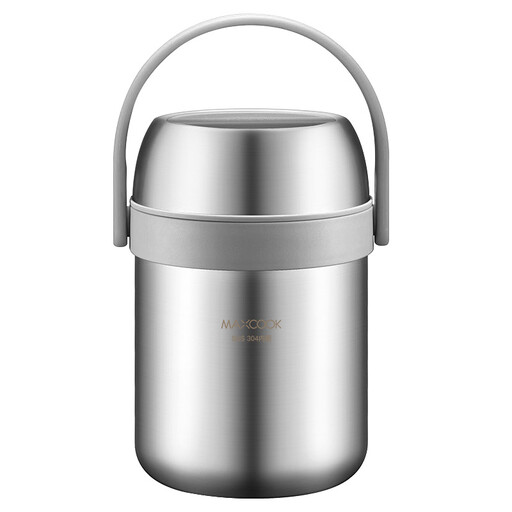
Why it suits this profile: The generous capacity is suitable for multiple portions or a large meal to take with you. The wide opening makes filling and eating easier.
The product description mentions a wide opening and a tightly closing lid. Transport the jar upright, as advised by the manufacturer.
304 stainless steel, 1.5-litre capacity, vacuum insulation and a wide opening. According to its own product information, the stated heat retention is 4–6 hours.
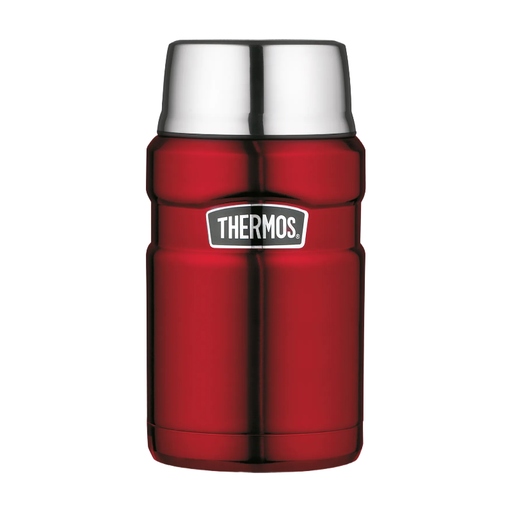
Why it suits this profile: The 710 ml capacity is ideal for a generous single-person lunch at work, school or while camping, without the bulk of a large storage container.
The wide opening makes filling, eating and cleaning easier. According to the product information, the screw-top lid is designed for leak-proof transport; hand washing is still required.
18/10 stainless steel, 710 ml capacity, a weight of 390 grams and a stated height of 18.5 cm. According to THERMOS’s own testing, the model can keep food hot for up to 6–8 hours.

Why it suits this profile: The combination of a 1.5-litre capacity and included insulated lunch bag is well suited to long working days, travelling, camping or meals for several people.
The wide opening makes it easier to fill the container with larger portions. The lunch bag provides an additional carrying solution, but the jar must be transported upright.
316 stainless steel, vacuum insulation, a 1.5-litre capacity and included lunch bag. According to its own product information, Maxcook states 4–6 hours of temperature retention.
We have put together a complete, up-to-date list of products that fully meet these strict selection criteria and the applicable European safety regulations.
It varies by model and usage. Manufacturers often quote several hours, but the starting temperature, filling level and outdoor temperature all have an impact. For a working day, it is best to choose a model whose stated range comfortably covers the time between leaving home and having lunch.
Not always. According to the product information, some Cooker King containers are described as dishwasher-safe. Lids, sealing rings and lunch bags may have different care instructions. Hand washing is recommended for various Maxcook and THERMOS models. Always check the specific care information for your chosen product.
For a small meal or soup, 470 to 500 ml is often sufficient. A capacity of around 710 ml provides more room for pasta, stew or porridge. Choose 1.4 to 1.5 litres when you are taking multiple portions with you or will be away from home for longer.
