
Same-day & Next-day Delivery

Quality Guaranteed

Unlock Your Welcome Offers: FREE Delivery | Up to 80% OFF | Free 30-day JoyPlus trial
Download the APP
A thermal food container seems simple: fill it, seal it and take it with you. In practice, most problems are caused by an opening that is too small, a seal that is not well suited to transport or insulation that does not match your daily routine. If you only look at capacity or an attractive offer, you could find yourself dealing with a leaking thermal lunch box or a soup flask that is difficult to clean after just a few weeks.
These considerations will help you compare products effectively, whether you are looking for a thermal food jar for the office, a thermal food flask for school or a larger insulated food container for camping.
Brands sometimes state how many hours a product keeps food or drinks hot or cold. This is usually based on specific conditions, such as a completely full container and preheating. According to Stanley’s own information, the Artisan Thermal Bottle keeps drinks hot or cold for up to 38 hours. That does not automatically mean that a small amount of soup will remain at the same temperature after a long working day.
So do not focus solely on the highest number of hours. For lunch at school or in the office, four to nine hours is often a more relevant benchmark than a claim covering several days. Also check whether the information applies to food or drinks.
A leak-proof food container depends on the thread, lid and silicone sealing ring. A cap that is difficult to screw on straight can still drip inside a bag. Check whether replacement parts are available and whether the ring can be removed easily for cleaning.
A click-on lid with a straw is practical for cold drinks, but is not always suitable for hot soup. For hot food, a wide screw-top lid is usually easier to use and clean.
18/8 stainless steel, also known as 304 stainless steel, is often used in food containers. 316 stainless steel is also widely used, but a higher material number does not automatically make it the better choice for everyday use. The construction, seal and cleaning routine all influence the product’s lifespan.
Pay particular attention to conflicting information. Some models are described as dishwasher-safe, while the product specifications recommend hand washing. If in doubt, follow the most cautious care instructions.
Choose the capacity based on your meal:
A larger thermal flask for hot and cold drinks is not always more convenient. A 1-litre model can become relatively heavy when full. Also consider the diameter and height: a wide thermal lunch box may not fit in a standard rucksack pocket or cup holder.
A double-walled vacuum construction reduces heat transfer. For better performance, preheat the container for a few minutes with hot water, or pre-cool it with cold water. Then fill it as fully as possible and close the lid carefully.
Always compare the stated values for each product. According to the product information, the 500 ml THERMOS THERMOcaf Food Jar keeps food hot for up to 9 hours and cold for up to 14 hours. According to the product description, the 710 ml THERMOS Stainless King Food Jar keeps food hot for up to 6 to 8 hours. These are the manufacturer’s product specifications and are not a guarantee for every usage situation.
A wide opening makes filling, eating and washing up easier. Check the following:
A stainless steel thermal container with a simple screw-top lid has fewer moving parts than one with a push-button or straw. This can be useful for soup, while a 2-in-1 lid may be better suited to cold drinks during sport or travel.
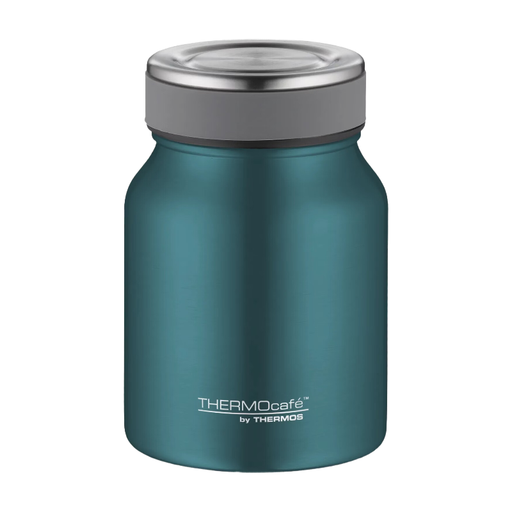
Why it suits this profile: The 500 ml capacity is a practical size for a daily lunch, soup or single meal. According to the product description, the container is compact, leak-proof and suitable for hot and cold food.
The 6.5 cm wide opening makes filling and cleaning easier. Before buying, however, check the latest information on dishwasher use and the sealing ring.
500 ml capacity; according to the product information, keeps food hot for up to 9 hours and cold for up to 14 hours; stainless steel housing.
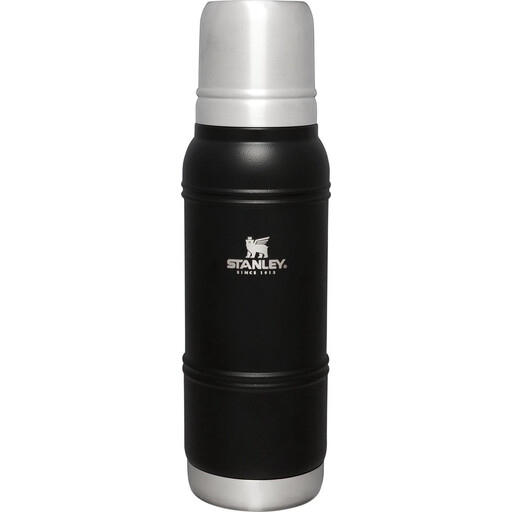
Why it suits this profile: This is a large thermal flask for drinks, designed for commuters, professionals and outdoor use. The flask has a 1-litre capacity, a double-walled stainless steel construction and a stated weight of 843 grams.
The product description states that it has a leak-proof seal and is dishwasher-safe. The flask is intended for drinks, not as a soup flask or food container.
1-litre capacity; 18/8 stainless steel; according to Stanley, keeps contents hot or cold for up to 38 hours; minimum two-year statutory guarantee.

Why it suits this profile: The 1.5-litre capacity is ideal for campers, outdoor sports enthusiasts and anyone who carries several portions. The wide opening is suitable for filling, serving and eating.
The product specifications recommend hand washing and warn against turning the container upside down. This makes it clear that the seal must be positioned correctly during transport.
1.5-litre capacity; 316 stainless steel; wide opening; according to the product information, retains temperature for four to six hours.
We have put together a complete, up-to-date list of products that fully meet these strict selection criteria and the applicable European safety regulations.
To extend the service life of your insulated food container:
A product with a minimum two-year statutory guarantee is covered by European consumer rules. This is separate from any additional rights that may apply under Dutch law.
This depends on the capacity, starting temperature, fill level and preheating. Products in this range state varying figures, from around four to six hours up to a maximum of thirteen hours. Use the manufacturer’s stated figure as a guide and always check whether it applies to food or drinks.
No. For soup, choose a model with a wide opening and a seal that is suitable for hot food. A thermal flask with a straw or drinking spout is mainly intended for drinks. Do not fill it while the contents are too hot, and open it carefully to prevent spills or burns.
Before setting off, check that the sealing ring is clean and undamaged, screw the lid on straight and test the container with water first. Preferably transport it upright, even if the manufacturer states that it has a leak-proof seal. A damaged ring or misaligned thread can compromise the seal.
