
Same-day & Next-day Delivery

Quality Guaranteed

Unlock Your Welcome Offers: FREE Delivery | Up to 80% OFF | Free 30-day JoyPlus trial
Download the APP
A thermal food container is ideal for soup, pasta, porridge or a cold lunch at work, school, while travelling or during outdoor activities. Yet many people buy a model that proves less practical than expected after just a few weeks. The issue usually lies not in its appearance, but in its capacity, seal and cleaning requirements.
A thermal bottle or insulated drinks bottle is designed for liquids. A food container usually has a wider opening, making it easy to eat soup from and clean the inside. A narrow bottle opening is less suitable for thick soup, rice or pasta.
A thermal mug sits somewhere between the two categories. Some models come with a spoon and can be used for a small meal, but always check that the product is officially described as a food container.
Brands sometimes state a heat-retention time under specific conditions. According to the manufacturer's own information, a model may, for example, keep food hot or cold for a certain number of hours. In practice, your experience also depends on:
So treat a claim such as ‘up to 13 hours hot’ as a stated maximum under certain conditions, not as a guarantee for every meal.
An stainless steel food container may have strong vacuum insulation, yet still be inconvenient if the sealing ring comes loose or the thread is difficult to clean. Check whether the product description mentions a silicone sealing ring, screw-top lid or another type of closure.
Also look out for contradictory information. Some products are described as both ‘leakproof’ and ‘not leakproof’ in different specification fields. In that case, it is best to err on the side of caution: test the container at home with cold water before carrying it in a bag.
The right capacity depends on your appetite and when you plan to use it:
A 500 ml food thermos is generally easier to carry in a work bag. A 710 ml food thermos is better suited to long working days, walks or camping trips.
Stainless steel is popular because it is sturdy and resistant to breakage. Food containers often feature:
The material alone does not determine the overall user experience. A wide opening, a reliable seal and a lid that can be easily taken apart are just as important.
Before buying, check whether the container is dishwasher-safe. This varies considerably between models. According to the product information, some Stanley and THERMOS models can go in the dishwasher, while others require hand washing.
For hand washing, use warm water, washing-up liquid and a soft brush. Allow the container and silicone ring to dry completely before closing them. A damp, sealed interior can cause odours. Do not use a food thermos in the microwave, freezer or directly on a hob unless the manufacturer expressly permits it.
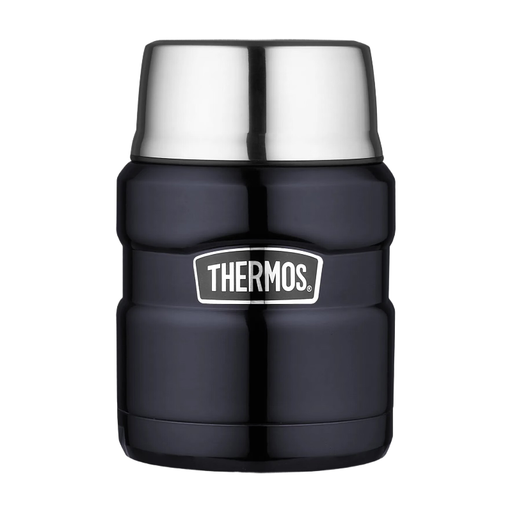
Why it suits this profile: The 470 ml capacity is designed for one person, while its 376-gram weight makes this food jar suitable for commuting or a short lunch break.
Its broad food-jar design and integrated screw closure make it clear that it is intended for food, not just drinks. According to the product information, hand washing is recommended.
18/8 stainless steel, double-wall vacuum insulation and a spoon included. Its compact size takes up very little space.
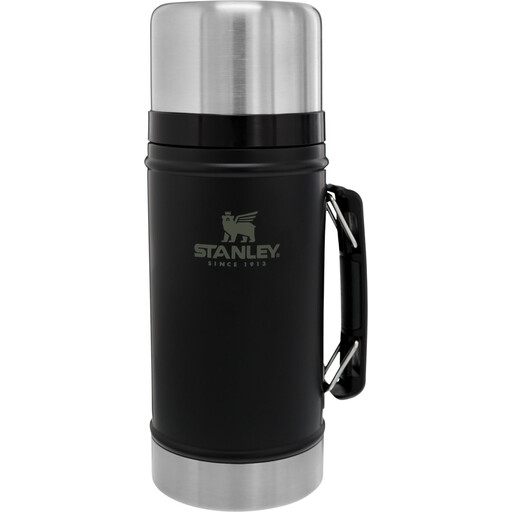
Why it suits this profile: The large capacity and carry handle are practical for long working days, camping or a substantial meal during an outdoor activity.
The wide opening makes filling and cleaning easier than with a narrow thermal bottle. However, check that the 730-gram weight is comfortable for you to carry.
18/8 stainless steel, double-wall vacuum insulation, a folding handle and a lid that can be used as a bowl. According to the product information, this model is dishwasher-safe.
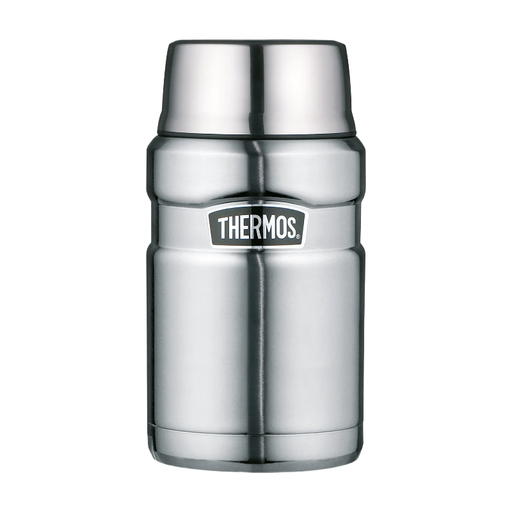
Why it suits this profile: The 710 ml capacity provides room for soup, stew, pasta or porridge during longer working days, travel and camping trips.
The extra-wide opening means you are not limited to liquid meals. The manufacturer states that it has a leak-resistant screw cap; hand washing is recommended.
18/10 stainless steel, an untreated interior, a weight of approximately 390 grams and a cylindrical shape measuring 9.3 cm in diameter.
We have compiled a complete, up-to-date list of products that fully meet these strict selection criteria and the applicable European safety regulations.
First, preheat the container for a few minutes with hot water, then pour the water away. Fill it with thoroughly heated food, leaving a little space beneath the lid. Close the container securely and do not open it until you are ready to eat. Always check the manufacturer's warnings when filling it with very hot food.
Its lifespan depends on how it is used, whether it is dropped, how it is cleaned and the condition of the sealing ring. Stainless steel itself is generally durable, but a damaged lid or worn silicone ring can affect the seal. Replace loose or damaged parts when the manufacturer offers replacements, and store the container dry and open.
For a normal lunch, 500 ml is often practical. If you are taking a large portion of soup, pasta or stew with you, it is better to consider 710 ml or more. If in doubt, measure your usual meal before ordering; this will help you avoid choosing a container that is too small or unnecessarily heavy.
