What should you look for when choosing?
Computer headset for recording
Choose this if: you mainly record on a computer, want to hear another actor or listen back to your own lines.
Bear in mind: a wired computer connection is less suited to moving freely on stage.
Complete wireless stage set
Choose this if: actors move around during scenes and their voices need to be amplified through the venue’s PA system. A complete set includes a headset, transmitter and receiver; Sennheiser and Shure describe sets like these in their product information.
Bear in mind: frequency planning and battery management are part of using wireless equipment.
Standalone stage headset
Choose this if: your group already has a suitable bodypack transmitter and receiver and you only need a microphone for one actor.
Bear in mind: a compatible plug does not prove that the microphone will work electrically with the transmitter; DPA Microphones advises checking the complete setup.
Rehearsing without amplification
Choose this if: actors can be heard clearly enough in a small, acoustically suitable room without recording or PA amplification. Shure notes that voice projection may be sufficient in spaces like these.
Bear in mind: check audibility again in the venue where the performance will take place.
For wireless use, the exact frequency variant matters: the Netherlands Authority for Digital Infrastructure notes that the available frequency space can vary between locations in the Netherlands.
| What to consider |
What should you check? |
Who is this important for? |
| Freedom of movement and stage amplification |
Check whether the headset, bodypack and receiver are supplied together, how the receiver connects to the venue’s PA system and whether the frequency variant can be used at your location. |
When I run through scenes, I want to be able to speak my lines without wearing a computer headset. Around 33% of consumers prioritise moving around on stage. |
| Recording and listening back |
Check the computer connection and recording software, and whether you need to hear the surrounding sounds while practising. |
When I practise my lines and timing, I want to be able to listen back to my recording straight away. Around 25% of consumers prioritise making their own recordings. |
| Several actors at once |
Count the number of microphones being used at the same time and work with the sound technician to plan frequencies for the venue. A manufacturer’s maximum channel count does not guarantee interference-free simultaneous use at that location. |
When several actors need to speak wirelessly at the same time, I want to coordinate their systems. Around 25% of consumers prioritise using multiple actors. |
| Connecting to existing equipment |
Make a note of the exact transmitter model and check the microphone connector, power supply and adapter combinations specified by the manufacturer. |
When the group already has a bodypack transmitter, I want to know whether the standalone headset will work electrically with it. Around 17% of consumers prioritise connecting to existing equipment. |
Headsets for computer-based rehearsals
These Joybuy products are wired or wireless computer headsets for practising speech and listening back; they are not complete wireless stage sets.
 No image available
JBL Quantum 300 Hybrid Wired Over-Ear Gaming Headset, Black
This wired headset is designed for computer use and combines a microphone with headphones.
The product description lists a flip-up microphone, a USB audio adapter and a 3.5 mm connection; stated compatibility includes PC and Mac.
View at Joybuy
 No image available
Jabra Evolve2 75, USB-A MS Teams, Black
This over-ear headset is a computer-focused option with microphones and headphones for practising speech.
The product description lists Bluetooth, connection to two devices and eight microphones.
View at Joybuy
 No image available
Jabra Evolve2 55 Wireless Stereo Headset, Black
This stereo headset is designed for computer use when you want to listen as well as speak.
The product description lists two noise-cancelling microphones, a mute function, a USB Bluetooth adapter supplied in the box and a flexible microphone boom.
View at Joybuy
 No image available
Edifier G2II USB Wired Headset, Black
This wired USB headset combines a microphone with headphone speakers for computer-based rehearsals.
The product description lists a detachable microphone, volume and mute controls, and compatibility with PC, PS4 and Mac.
View at Joybuy
 No image available
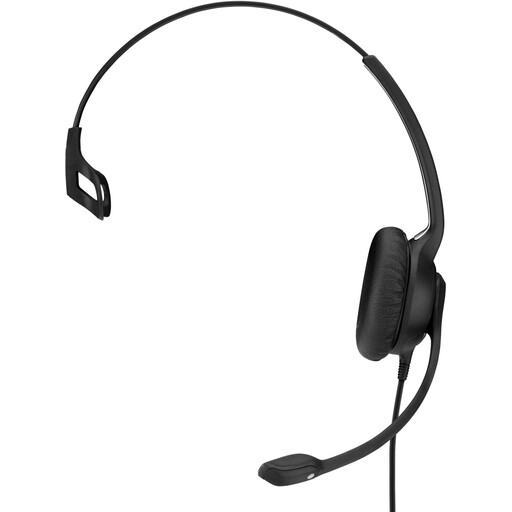
EPOS | SENNHEISER IMPACT SC 230 USB MS II Wired OE Headset, Black
This wired USB headset with a microphone boom is a computer-focused option for practising speech.
The product description mentions USB 2.0 and a flexible, adjustable microphone boom. It has a single-sided design, so check whether listening through one earcup suits your practice.
View at Joybuy
Frequently asked questions
Do I need a licence to use a wireless headset microphone in the Netherlands?
According to the Netherlands Authority for Digital Infrastructure, a licence is usually not required, but this depends on the frequency band and conditions of use. Some bands require an event-specific licence. Check the exact frequency variant and available frequency space at the location where you will use it in the Netherlands.
How do I coordinate several wireless microphones?
First, check which frequencies are available at the venue, then coordinate the systems being used at the same time accordingly. A manufacturer’s maximum number of compatible channels does not replace checking the location.
Can I connect a standalone stage headset directly to my computer?
Not without checking that you have the right connection and power supply. For the BETA53 versions, Shure distinguishes between a wired preamp with phantom power and a TA4F connection for compatible wireless bodypacks; this is different from the connection on a USB computer headset.
What should I check when maintaining my headset after a rehearsal?
Before use, check the windscreen, microphone position and transmitter batteries, and follow the instructions for the exact model. Shure states that the foam windscreens for the BETA53/BETA54 can be cleaned with soap and water; replace any damaged or blocked protective caps and windscreens.
What can I do if a microphone I bought as a consumer in the Netherlands turns out to be faulty?
Contact the seller; according to the Dutch government, they must offer an appropriate solution. There is no fixed statutory warranty period for all products in the Netherlands: what you can expect depends on factors including the product and the information provided. Normal wear and tear or damage caused by your own actions does not automatically entitle you to a free repair.


