Who is a headset microphone for theatre rehearsals suitable for?

Seated online performer

Rehearses dialogue on a computer and wants to hear the other actor while recording or transmitting their own voice. Logitech describes computer headsets with a microphone and headphones; check that the connection on the version you choose is compatible with your computer.

Performer using venue amplification

Rehearses in a fixed position with a mixing desk and speakers. Audio-Technica and Shure describe stage microphones with different connections; check which input is available and consider where the microphone and speakers will be positioned.

Performer rehearsing in different setups

Usually sits down, but sometimes wants to move around without an audio cable. A wireless system could be suitable if you have the required headset, transmitter and receiver, and the specific frequency can be used at the rehearsal venue.

What should you look for in a headset microphone for theatre dialogue?

Wired computer headset

Choose this if: you rehearse, record or talk to another actor on a computer, and want to listen at the same time.

Bear in mind: a USB connection won’t necessarily work with an input on a mixing desk, and the cable limits how far you can move from the computer.

Wired stage microphone

Choose this if: your voice needs to come through a mixing desk and speakers, and a compatible microphone input is available.

Bear in mind: a stage microphone such as the Audio-Technica PRO8HEx doesn’t include headphones for listening back to dialogue.

Wireless stage system

Choose this if: an audio cable would genuinely restrict your movement during rehearsals, and you have a mixing desk for the receiver.

Bear in mind: you’ll also need to check the frequency and venue. The Dutch Authority for Digital Infrastructure provides location information to help with this.

Standalone headset for an existing bodypack

Choose this if: you already have a transmitter with a connection that matches the standalone microphone.

Bear in mind: a standalone microphone isn’t a complete wireless system. For wired use of the Shure PGA31, Shure describes additional equipment you’ll need.

What to consider What should you check? Who is this important for?
Dialogue through the venue sound system Check the mixing desk input and connector, microphone placement and speaker positions. If I rehearse in a fixed position with speakers, I want my voice to be clear without losing sight of the setup. Around 36% of consumers prioritise being heard clearly in the venue.
Rehearsing on a computer Check your computer port and that the headset works as both an input and output device with your rehearsal software. If I rehearse or record dialogue online, I want to hear the other actor and be able to transmit my own voice. Around 29% of consumers make computer-based rehearsals their top priority.
Fit and microphone position Check how the headset can be adjusted and follow the positioning instructions for your chosen model. When I’m practising repeatedly, I want a microphone that stays in place when I turn my head. Around 21% of consumers prioritise wearing comfort and a stable position by the mouth.
Moving around without a cable Check the exact frequency variant, the frequency it’s set to and whether it can be used at the rehearsal venue. If I need to move around during a rehearsal, I don’t want to be tethered by an audio cable. Around 14% of consumers make freedom of movement their top priority.

Common mistakes when buying a headset microphone

  • Choosing a computer headset for an XLR input

    A USB headset such as the Logitech H390 described here connects to a computer, while the Audio-Technica PRO8HEx has a 3-pin XLR output. These connections aren’t directly interchangeable.

    First decide whether the sound needs to go to a computer or the venue sound system, then compare the connections on the headset and your equipment.

    If the connections don’t match, you may need a different microphone or a compatible audio interface.

  • Mistaking a standalone headset for a complete wireless system

    The Shure PGA31 is a standalone microphone for use with a compatible bodypack. For wired use, Shure also describes an inline preamp and phantom power from the mixing desk.

    Before buying, check the connector on your existing transmitter and which components are included with the version you’ve chosen.

  • Assuming an entire wireless frequency band can be used everywhere

    The frequency band listed for a wireless system doesn’t mean that every frequency in it can be used at every venue without checking. The Dutch Authority for Digital Infrastructure provides frequency information and location tools.

    Check the specific frequency the system is set to and the rehearsal venue, rather than relying solely on the band name on the packaging.

Brands to compare for theatre rehearsals

Audio-Technica

The wired PRO8HEx is an option for speaking through a compatible XLR microphone input in a fixed performance space.

  • Audio-Technica specifies a hypercardioid capsule, a reversible microphone boom and a fixed 2.2 m cable with a 3-pin XLR connector.
  • The PRO8HEx doesn’t include headphones or a wireless receiver. Other versions in the PRO8HE family may have a different connection.

Logitech

The H390 family is worth considering for computer-based rehearsals where you also want to hear the dialogue.

  • Logitech describes the H390 as having a microphone, headphones and in-line controls.
  • Check whether your chosen version has USB-A or USB-C. A USB computer headset isn’t a direct replacement for an XLR microphone connected to a mixing desk.

Sennheiser

The XSW 1-ME3-A is a wireless stage option for rehearsals where you need to move around without an audio cable.

  • Sennheiser lists a cardioid headset, bodypack and receiver for this model.
  • The stated frequency band is 548–572 MHz. Check the specific frequency and whether it can be used at your venue in the Netherlands, using information from the Dutch Authority for Digital Infrastructure.

Shure

The PGA31 is a standalone stage microphone for anyone who already has a compatible bodypack or can provide the additional equipment needed for a wired signal chain.

  • Shure specifies a cardioid pickup pattern and a TA4F/TQG connector for compatible Shure bodypacks.
  • The PGA31 isn’t a complete wireless system on its own. For wired use, Shure describes an inline preamp and phantom power.

Jabra

The Evolve2 30 SE is a computer headset for conversations and listening back to dialogue.

  • Jabra describes a system with two microphones and versions for different USB connections.
  • Jabra positions this model for communication; that positioning isn’t an independent assessment of its suitability for amplification during theatre rehearsals.

Joybuy computer headsets for rehearsals

These Joybuy products are wired computer headsets with microphones, suited to seated practice where your voice goes through the computer and you can listen back to dialogue. They aren’t a direct XLR solution for venue amplification.
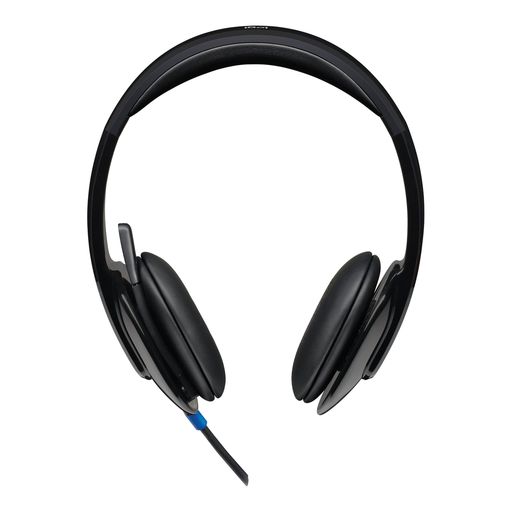
Logitech USB Headset H540 Wired

Logitech H540 USB headset

A wired computer headset for sending your voice through the computer and listening back to dialogue while you practise.

USB Type-A connection, noise-cancelling microphone and stereo sound. The USB connection isn’t a direct XLR connection for a mixing desk.

View at Joybuy

Logitech PC 960 USB Wired Headsets

Logitech PC 960 USB

A computer headset for rehearsals where you speak via USB and listen back to dialogue in stereo.

The product description mentions an adjustable microphone and in-line mute and volume controls. The USB connection isn’t a direct XLR connection for a mixing desk.

View at Joybuy
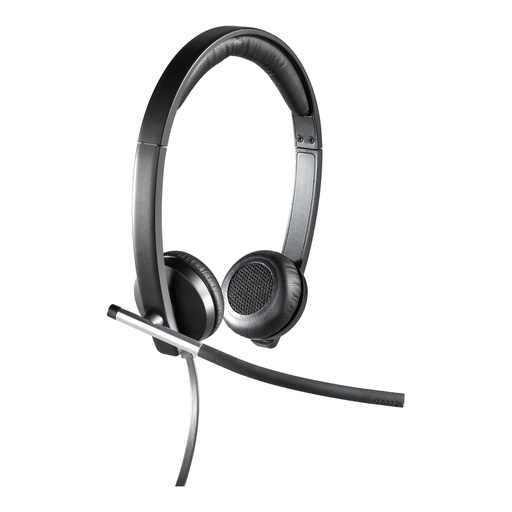
Logitech Headset H650e Stereo Wired

Logitech H650e Stereo Wired

A wired headset for computer-based rehearsals, with a microphone and stereo sound so you can hear the other actor.

The product description mentions a USB connection, echo cancellation and in-line controls. The USB connection isn’t a direct XLR connection for a mixing desk.

View at Joybuy

Logitech H340 USB Headset Black, Wired

Logitech H340 USB headset, black

A wired computer headset for speaking and listening during dialogue rehearsals on a computer.

The product description mentions an adjustable microphone, USB connection, volume and mute controls, and digital stereo sound. The USB connection isn’t a direct XLR connection for a mixing desk.

View at Joybuy
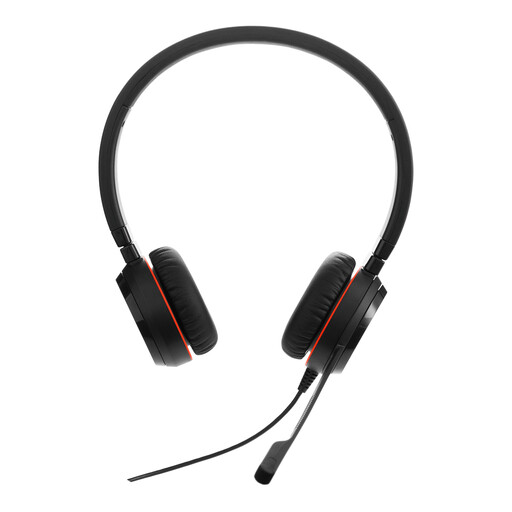
Jabra EVOLVE 30 II MS Stereo

Jabra Evolve 30 II MS Stereo

A wired stereo headset for computer-based rehearsals where you need a microphone and headphones.

The product description mentions a 3.5 mm connection and an included USB controller for connecting to a computer. Neither connection is a direct XLR connection for a mixing desk.

View at Joybuy

Frequently asked questions about headset microphones for rehearsals

Do I need headphones when practising?

If you need to hear another actor or a recording through your computer, choose a headset with headphones. A stage microphone such as the Audio-Technica PRO8HEx is just a microphone, so you’ll need to arrange a separate way to listen back.

How should I position the microphone boom during a rehearsal?

Follow the instructions for your chosen model and test the setup using your speaking voice. For the PGA31, Shure recommends positioning the microphone by the corner of your mouth, rather than directly in front of it, to reduce plosive sounds.

What do I need for a standalone Shure PGA31?

For wireless use, you’ll need a compatible Shure bodypack with a TA4F/TQG connection. For wired use, Shure describes an inline preamp and phantom power from the mixing desk.

Do I need a licence for a wireless headset microphone in the Netherlands?

That depends on the frequency used and the rules that apply. The Dutch Authority for Digital Infrastructure lists frequencies that are licence-exempt and says that some other bands require a licence. Check the frequency the system is set to and the location; the frequency band shown on a product doesn’t by itself prove that every frequency in it can be used.

Does a headset microphone need a CE mark?

Electrical and electronic equipment sold in Europe must meet the applicable European requirements and carry the correct CE marking, according to the Dutch Authority for Digital Infrastructure. Check the marking on the specific product; a model name alone doesn’t show that these requirements have been met.
