If you stay by your laptop mainly to record or discuss your own lines, a wired USB headset with a microphone boom and a compatible connection is a sensible choice. If you move around while rehearsing, consider a wireless headset or a complete wireless stage system. With the latter, you’ll also need to check the audio connection and available frequencies at the rehearsal venue. A headset for one person won’t automatically record everyone in the room.
Who is a headset microphone suitable for?
Rehearsing lines at your laptop
If you mainly record and listen back to your own lines, a personal headset can be useful without having to set up stage equipment. Logitech describes the H390 as a wired computer headset, while Jabra offers the Evolve 20 in several versions.
Moving around while performing
If you rehearse while moving around, look for a set-up that doesn’t tether you to your laptop with a cable. Sennheiser describes the XSW 1-ME3-B as a set with a headmic, bodypack and receiver. Check the connection to your laptop and the frequencies available at the venue too.
Hearing other performers in the room
If you want to hear other voices in the room while performing together, consider whether you need mono or stereo. A personal microphone isn’t designed to record everyone in a group through a single headset either.
What should you look for?
| What to consider |
What to look for |
Who is this most relevant to? |
| Recording your own voice |
Check that the microphone boom is adjustable and test a recording of your own voice. |
If you mainly want to listen back to your own dialogue, you’ll want to be able to position the microphone close to your mouth. Around 36% of consumers prioritise recording their own voice. |
| Freedom of movement |
Consider how much you move while rehearsing. If you’re using a UHF system, check the frequencies available at the rehearsal venue. |
If you rehearse dialogue while moving around, a cable connecting you to your laptop may get in the way. Around 29% of consumers put freedom of movement first. |
| Hearing other performers |
Compare mono and stereo for listening, and consider separately whether you need to record a group. |
If you want to keep hearing the other performers while acting together, look at the listening option as well as the microphone. Around 21% of consumers prioritise this. |
| Connection |
Check whether the exact model has USB-A or USB-C. For a stage receiver, make sure you have a compatible audio input or interface. |
If you want to check first whether the headset will connect to your laptop or existing equipment, it’s worth checking the entire signal chain. Around 14% of consumers start with the connection. |
Common pitfalls
-
Mistaking a standalone stage headmic for a laptop headset
The Shure SM35-TQG has a TA4F connection and isn’t a complete laptop headset on its own. For wired use, Shure specifies an RPM626 preamp.
Before buying, check how the microphone connects to your bodypack, preamp and any laptop interface you may need.
Depending on your existing equipment, you may need a compatible bodypack or preamp, as well as equipment to send the audio to your laptop.
-
Choosing a wireless set based on frequency range alone
The Dutch Authority for Digital Infrastructure (RDI) warns that not every frequency is available at every location in the Netherlands.
Before choosing a UHF model, check the exact frequency band of the set against the RDI’s information for your rehearsal venue.
-
Expecting one headset to record the whole group
A personal headset microphone is designed for the wearer and won’t automatically record everyone in a room.
First decide whether you want to record your own lines or the whole scene. You’ll need a separate recording set-up to capture multiple voices.
Brands to compare
Logitech
The H390 is a wired computer headset for use with a laptop. Logitech lists versions with USB-A and USB-C.
- Logitech lists an adjustable microphone boom and in-line volume and mute controls.
- The cable limits your freedom of movement. Check which connection the version you choose has.
Jabra
The Evolve 20 range includes wired mono and stereo versions for use with a laptop.
- The manufacturer specifies a USB control unit and a unidirectional microphone.
- Mono, stereo and USB options vary by model. The product specifications don’t indicate how well they perform for theatre recordings.
HP Poly
The Voyager 4300 UC series is a Bluetooth office headset for anyone who wants to move further away from their laptop while wearing a headset.
- HP lists a BT700 USB adapter and mono and stereo versions for the series.
- Check whether the adapter is included with the version you choose. The stated wireless range is a manufacturer’s specification, not a measurement taken in your rehearsal space.
Sennheiser
The XSW 1-ME3-B is a wireless stage set with a headmic, bodypack and receiver, designed for performers who move around.
- For this version, Sennheiser specifies the 614–638 MHz frequency band and XLR and jack outputs.
- The receiver isn’t a USB headset that connects directly to a laptop. Check the frequencies available at your rehearsal venue and the audio connection you’ll need.
Shure
The SM35-TQG is a standalone stage headmic for use with a compatible audio set-up.
- Shure specifies a cardioid microphone, adjustable gooseneck and TA4F connection.
- It isn’t a complete wireless set or a USB headset that connects directly to a laptop. For wired use, Shure specifies an RPM626 preamp.
Joybuy products for use with a laptop
These products are wired USB headsets and Bluetooth office headsets for rehearsing, listening or making calls with a laptop. A personal headset isn’t a solution for recording every voice in a theatre group on its own.
 Image unavailable
Jabra Evolve2 30 SE
This headset has a USB-A connection, making it suitable for practising lines and listening back on a nearby laptop.
The product description mentions two integrated microphones, stereo sound, and mute and call controls. Compatibility with Windows and Mac is also listed.
Joybuy
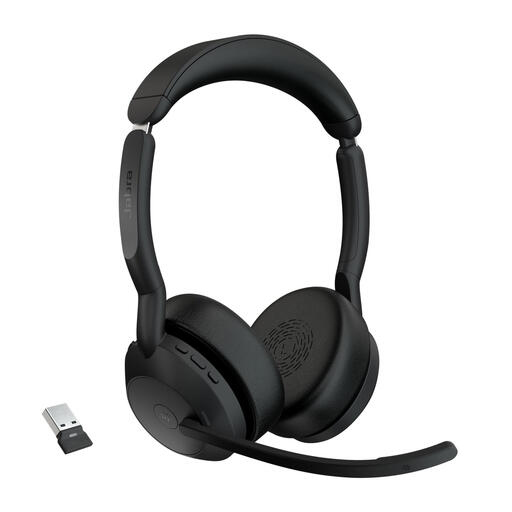 Image unavailable
Jabra Evolve2 55 Link380a MS Stereo
This headset is described as having Bluetooth and a USB adapter, making it suitable for rehearsing or making calls while moving around near your laptop.
The product description mentions a pre-paired USB adapter, a stereo version and mute controls.
Joybuy
 Image unavailable
Jabra Evolve2 75
This wireless headset with microphone is an option if you want to move around your laptop while on a call or rehearsing.
The product description lists Bluetooth and an included 3.5mm audio cable.
Joybuy
 Image unavailable
Logitech PC 960 USB
This wired USB headset has an adjustable microphone boom, making it suitable for recording your own lines on a laptop.
The product description mentions in-line mute and volume controls. The cable limits your freedom of movement compared with a wireless option.
Joybuy
 Image unavailable
Logitech H650e Stereo
This wired headset with a USB connection is designed for calls and listening on a computer.
The product description mentions a stereo version and in-line volume controls.
Joybuy
Frequently asked questions
How do you set up a headset to practise your own lines?
Connect the headset to a compatible port on your laptop, select it as the recording device and make a short test recording first. For the H390, Logitech recommends adjusting the microphone boom to mouth level. Also check that mute is switched off.
Can one headset record everyone in the rehearsal room?
Don’t count on it: the personal headsets and headmics discussed here are designed for the wearer. If you want to record all the dialogue in one take, first work out what separate microphone or multi-channel set-up you’ll need to capture the other voices.
What extra equipment might you need?
A standalone Shure SM35-TQG may need a compatible bodypack; for wired use, Shure specifies the RPM626 preamp. A wireless stage receiver may also need a compatible audio input or interface to work with a laptop.
Can you use any wireless theatre headmic in the Netherlands without a licence?
No. This depends on the frequency band and the conditions that apply. The Dutch Authority for Digital Infrastructure publishes information about licence-exempt bands, and available frequencies can vary by location. Check the band used by your system against the RDI’s information for your rehearsal venue. According to the RDI, some frequency bands require a licence.


