Choose an overhead scanner if you want to scan bound or fragile programmes without laying them flat on glass. A book-focused flatbed is worth considering if the material can safely lie flat and text near the spine matters. Then test a representative page or format to check that the size, gloss, text recognition and storage process work for your shared workspace.
Who should consider this choice?
Keeper of fragile programmes
Wants to digitise bound or older copies without putting unnecessary strain on the spine. Assess how far each programme can safely be opened; Radboud University stresses the importance of preventing damage to historical material.
Creator of a searchable programme archive
Wants to find text and page order later, and assesses OCR using a test scan of representative pages. CZUR, Plustek and IRIS describe scanning and OCR features for their models.
User of a shared desk
Wants a setup that fits the available workspace, with scanning and storage procedures that multiple users can follow. The Dutch Data Protection Authority advises organisations to control access to personal data.
What should you look for?
Overhead scanner
Choose this option if: you want to scan bound or fragile programmes without placing them on a glass platen.
Bear in mind: desk space, positioning and lighting. Curved-page correction does not guarantee a legible scan of every binding or glossy image.
Book-focused flatbed
Choose this option if: the programme can safely lie flat on the glass and small text near the spine matters. Plustek’s European product specifications list a 2 mm book edge and a 216 × 297 mm scan area for the OpticBook 4800.
Bear in mind: you place each page on the glass. A scanning feature is no reason to force a fragile spine further open.
| Consideration |
What should you check? |
Who is this important for? |
| Keeping the original intact |
Establish how far the programmes can safely be opened and compare this with how the scanner supports the original. |
If I work with fragile or old programmes, I want to avoid putting strain on the binding when digitising them. Around 33% of consumers put preserving the original first. |
| Legible text and images |
Test a page with small text near the spine and a glossy spread; assess sharpness, reflections and cropping. The manufacturer says the IRIScan Desk 7 Pro’s lighting helps reduce reflections, but check the results with your own paper. |
When a programme includes both small text and glossy illustrations, I want to assess whether both can be captured clearly enough to use. Around 27% of consumers give capture quality the highest priority. |
| Finding text later |
Use a test scan to check that the OCR language you need, searchable PDF and export options are available, and that names and small print are recognised accurately. |
If I want to find programme details as text later, I need more than just an image file. Around 20% of consumers put findability first. |
| Shared workspace |
Check the available desk space, connections and computer compatibility; agree where scans will be saved after each session. |
When several people use the same workspace, I want a setup and file-handling process that everyone can follow. Around 20% of consumers give shared use the highest priority. |
Common pitfalls
-
Assuming a document camera is suitable for every book
CZUR positions the Shine 800 A3 Pro primarily for loose, flat pages, while describing the ET series as suitable for bound material, with curved-page correction. So the models are not automatically interchangeable for every programme.
Assess the condition and binding of your programmes, and test-scan a representative bound copy before choosing a compact camera for the whole collection.
Curved pages may take extra time to check, correct or scan again.
-
Assuming an OCR feature guarantees error-free searchable text
An export feature tells you what the software can create, not how accurately it will recognise every original. Names, small print and page order may need checking.
Assess a searchable PDF of your own most challenging pages before settling on an archiving process.
Allow time to check and correct recognised text and page order.
-
Confusing permission to copy with permission to publish
The Dutch Government distinguishes between internal copying, personal use and making protected works available to the public. Permission for one type of use does not automatically allow distribution.
Before digitising, establish who will receive the files and what permission is needed for that use.
Brands to consider
CZUR
CZUR describes its ET series as designed for bound material and book correction, while positioning the Shine 800 A3 Pro primarily for loose, flat pages.
- The product ranges offer different scanning approaches for bound material and flat pages.
- Do not assume a Shine model is suitable for a fragile binding based on features listed for the ET series.
Plustek
The European product specifications describe the OpticBook 4800 as a book-focused flatbed for material that can safely lie flat on glass.
- For this model, Plustek lists a 2 mm book edge and a 216 × 297 mm scan area.
- These dimensions do not tell you whether a particular old programme can safely be opened flat.
IRIS
IRIS describes the Desk 7 Pro as a compact overhead document camera with OCR; the manufacturer lists a compact arm and lighting designed to reduce reflections.
- The listed OCR feature may be useful when you need to find text later.
- Claims about design and lighting are not independent measurements of scans of theatre programmes; test your own material.
ScanSnap
The European product page describes the SV600 as a contactless overhead scanner for items including books and fragile documents.
- The manufacturer lists curved-page correction for depths of up to 30 mm.
- Check the specification and support for the model you choose; this feature is not available on every ScanSnap model.
Joybuy products
These product choices are suited to programmes that can safely lie flat: a flatbed with a document feeder and a compact overhead camera for mostly flat sheets. Check that each model is suitable for the binding and paper of your programmes.
 No image available
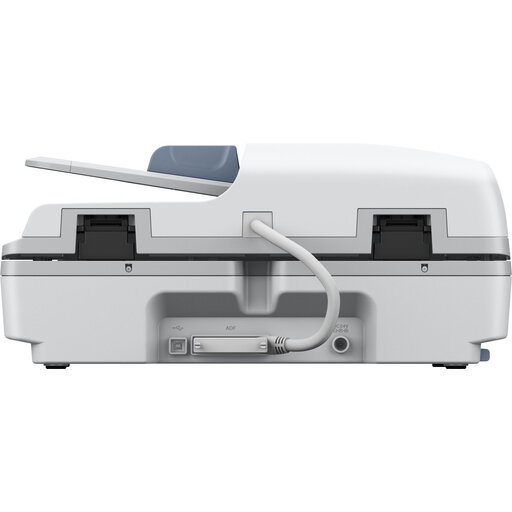
Epson WorkForce DS-6500 Power PDF
The combination of a flatbed and ADF makes this model a useful option if your programmes can safely lie on glass and you also want to process loose pages through the document feeder.
When planning a shared desk, allow for the listed dimensions of 495 × 360 × 217 mm and weight of 9,8 kg.
Joybuy
 No image available
CZUR Shine 800 A3 Pro
This model suits a shared workspace where programmes are mostly flat and the overhead camera needs to be put away after use. CZUR positions it primarily for loose, flat pages.
The product information lists A3 sheets, a 90° foldable design and a weight of 2,3 kg. Scanning high-gloss material is not recommended.
Joybuy
Frequently asked questions
Can our organisation share scanned theatre programmes internally?
That depends on the rights and permissions that apply to the intended copies and internal use. The Dutch Government describes the reprographic rights scheme as an option for businesses and institutions; sharing internally is not the same as publishing publicly.
Can I put scans of theatre programmes online?
Do not assume you can do this simply because you own the paper programme or are allowed to use scans internally. The Dutch Government distinguishes personal use and internal sharing from distributing or making protected works available to the public; check what permission you need to publish them.
What if a programme contains personal data?
If information in a scan can be linked to individuals, capturing or storing it counts as processing personal data. On a shared workspace, restrict access appropriately for the purpose and circumstances; not every theatre programme contains this kind of information.
How do you set up a shared scanning station?
Use a stable setup and agree a consistent process for settings, checking and storage. Before saving, use a test scan to check page order, cropping and OCR; do not leave files containing personal data unattended somewhere unauthorised people can access them.


