Who is this relevant to?

If you want to put your scanner away

Have you got a small desk and want to put your scanner away between scanning sessions? Compare a foldable arm with a flatbed that can stand upright, and measure how much room an open programme takes up while you scan. CZUR describes the Aura Pro as foldable, while Epson lists a stand for the Perfection V39II.

If you want to scan bound programmes

Want to capture pages without pressing the programme firmly against a glass plate each time? Compare overhead scanning with a flatbed that has a book edge. Plustek lists a 6 mm book edge for the European OpticBook 3800L.

If you want to preserve images and text

Want to capture illustrations on potentially glossy pages clearly, or find text later? Check the lighting, output format and OCR performance using a test page. IRIS describes anti-glare lighting for the Desk 7 Pro, but that doesn’t guarantee a usable result with your programme.

What should you look for?

Foldable overhead scanner

Suitable for: anyone who wants to scan bound programmes from above and put the scanner away afterwards.

Trade-off: the open programme still needs to fit under the camera while you scan. CZUR also notes an OCR limitation for MacBook users with an M2 chip; check the software for your computer.

Compact overhead document camera

Suitable for: anyone looking for a short camera arm and room for an open programme. IRIS lists support for sizes up to A3 and anti-glare lighting for the Desk 7 Pro.

Trade-off: the product specifications don’t show how much space your setup will take up or how glossy pages will look, so make a test scan.

A4 flatbed scanner

Suitable for: anyone scanning pages that fit within A4 and able to position them carefully on the glass.

Trade-off: a bound programme needs to be placed on the glass. An upright stand doesn’t prove that a thick programme can be scanned practically in that position.

What to consider What to check before buying Who it matters to
Working and storage space Measure the storage space and the full scanning setup with the programme open. Compare the storage position with the position used for scanning. If I have limited desk space, I want to know how much room the scanner actually takes up when in use. Space is the main reason for buying for around 36% of consumers.
Bound programmes Check that the page is captured clearly or fits on the glass without putting unwanted pressure on the spine. If I want to capture my bound programme carefully, I look at how the page is captured near the spine. Around 29% of consumers prioritise careful scanning above all else.
Images and glare Test-scan a glossy page and a standard page. Compare the lighting on the exact model. If illustrations and potentially glossy pages matter to me, I want to see how my own material looks first. Image quality comes first for around 21% of consumers.
Searchable text Check whether the exact model supports searchable PDFs and whether OCR and the software work on your computer. If I want to find names or performances later, I check OCR on a test page and confirm compatibility with my computer. Around 14% of consumers put searchable text first.

Common pitfalls

  • Assuming ‘foldable’ means it takes up little space while scanning

    A foldable arm makes it easy to put the scanner away after use, but the open programme still needs to fit under the camera while you scan.

    Measure both the storage space and the area needed for the complete scanning setup.

  • Assuming every book scanner captures a full open spread

    An A4 flatbed and an overhead scanner that supports up to A3 have different scan sizes. A page size doesn’t automatically mean that a full open spread will fit in one scan.

    Compare the page and open-spread dimensions with the scan area of the exact model.

  • Assuming OCR or lighting guarantees a usable scan

    Lighting, reflections and software compatibility are separate things to consider. For the Aura Pro, CZUR notes a specific OCR limitation for MacBook users with an M2 chip.

    Before scanning a collection, test a glossy page and small text, and check that the software works on your computer.

    This could mean extra time spent rescanning and correcting text by hand when processing a collection.

Brands to consider

CZUR

The Aura Pro is a foldable overhead book scanner for anyone who wants to scan bound programmes under a camera and put the device away afterwards.

  • CZUR lists curvature correction and searchable PDF output.
  • These are manufacturer claims, not independent results from scanning theatre programmes. CZUR also notes an OCR limitation for MacBook users with an M2 chip.

IRIS

According to IRIS, the Desk 6 Pro and Desk 7 Pro are overhead document cameras that scan up to A3.

  • IRIS lists a short, space-saving arm and anti-glare lighting for the Desk 7 Pro.
  • IRIS’s comparison doesn’t mention this lighting for the Desk 6 Pro. Its effect on a particular glossy programme can’t be guaranteed.

Epson

The Perfection V39II is an A4 flatbed for anyone who wants to scan pages on glass and can use the upright stand within the available space.

  • Epson lists a built-in stand and USB power.
  • Bound programmes need to be placed on the glass. The stand alone doesn’t show that a thick programme can be scanned practically in that position.

Plustek

The European OpticBook 3800L is an A4 flatbed designed for books and other bound material.

  • For this European version, Plustek lists a 6 mm book edge and software for searchable files.
  • The claim about reducing spine shadow comes from Plustek. Check the specifications for the exact version; features of a different regional model aren’t interchangeable.

Joybuy products

These products show two relevant approaches: scanning loose programme sheets up to A3 with a foldable document camera, or placing books and magazines on the glass of a flatbed scanner.

CZUR Shine 800 A3 Pro document camera

CZUR Shine 800 A3 Pro document camera

The product description lists a foldable design and scanning of loose sheets up to A3. It advises against scanning high-gloss material.

The product title lists OCR and compatibility with Windows and macOS.

View at Joybuy
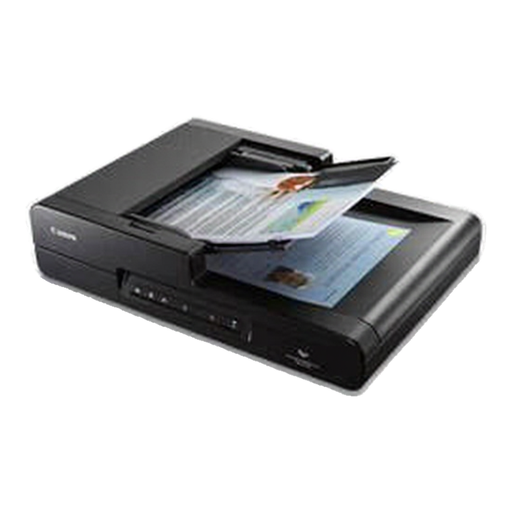
Canon imageFORMULA DR-F120 A4 flatbed scanner with ADF

Canon imageFORMULA DR-F120 flatbed scanner with ADF

The description lists books, magazines and delicate material as suitable originals. Thick or bound originals should be placed face down on the glass.

The listed version is A4 and 600 × 600 DPI, with a flatbed and automatic document feeder. The stated device dimensions are 469 × 335 mm, so make sure you have room for it on your desk.

The description also lists automatic double-sided feeding.

View at Joybuy

Frequently asked questions

How can I tell whether a theatre programme will fit in the scanner?

Measure the page and, for an overhead scanner, the full open spread. Compare those measurements with the scan size and allow for the space available on your desk. IRIS lists support up to A3 for the Desk 6 Pro and Desk 7 Pro; Epson describes the V39II as an A4 scanner.

Can I use the Epson V39II upright for a thick, bound programme?

Don’t assume so without checking. Epson confirms that it has a stand for upright scanning and describes how to place large or thick originals in the manual. Check the model-specific placement instructions and make sure the programme will sit properly against the glass in that position.

What should I check before installing OCR software?

Check the operating system and software version for the exact model. CZUR lists Windows and Mac software for the Aura Pro and notes a specific OCR limitation for MacBook users with an M2 chip.

How do I clean the glass on the Epson V39II?

For a dirty glass plate, Epson’s manual recommends using a soft, dry cloth. Check the further model-specific instructions for stubborn marks and take care to avoid scratches.

Can I share scanned theatre programmes?

For copyrighted work, the Dutch government says you may make a copy for personal use, but you may not distribute it or make it publicly available. Different permissions and reprographic rights conditions apply to digital copying and sharing by a company or institution; assess the intended use separately.
