
Folded programme maker
Wants to test the page order, double-sided printing and paper choice before producing a full print run. Adobe explains how the booklet feature in Acrobat or Reader arranges pages for folding.


If you mainly print text and don't need colour, start with a monochrome laser printer with automatic duplex printing. Choose a colour model if the covers or inside pages need colour, and check the specifications for the exact paper feed and duplex path when using heavier paper. Duplex printing alone won't turn a programme into a folded or stapled booklet; you'll also need finishing equipment or services.
Wants to test the page order, double-sided printing and paper choice before producing a full print run. Adobe explains how the booklet feature in Acrobat or Reader arranges pages for folding.
Needs colour on the cover or inside pages, so compares colour options and the consumables used by each model.
Wants multiple users to be able to print, with jobs and access suited to the studio's way of working. Network and access features vary by model; for example, Brother lists NFC authentication for the HL-L8430CDW.
Choose this when: your programmes are mainly text and don't need colour.
Bear in mind: coloured elements can't be printed, and folding or stapling is still a separate step.
Choose this when: the cover, logos or inside pages need colour.
Bear in mind: paper handling and duplex options vary by model; also check which colour toners the printer uses.
Choose this when: folded and stapled copies or outsourced finishing matter more than printing in the studio.
Bear in mind: files and production are handled outside the studio, so you can't make adjustments on site in the same way.
| Consideration | What to check before buying | Who is this important to? |
|---|---|---|
| Booklets and paper | Check for automatic duplex printing and confirm which paper is suitable for your chosen feed and duplex path. Print and fold a test copy. | When I make a folded programme, I want the pages to be in the right order after folding. Around 33% of consumers in this studio scenario give booklet finishing top priority. |
| Colour in the programme | Work out which pages need colour and check that the model and chosen paper are suitable. | When the cover, logos or inside pages need colour, I want to know which parts I can print myself. Around 25% of consumers focus mainly on colour. |
| Shared use | Check the network connection you need, supported devices and any authentication features on the exact model. | When several people print in the studio, I want everyone to be able to access the printer, with access suited to the way we work. Around 25% of consumers prioritise shared access. |
| Choosing toner for repeat print runs | Check which toners are compatible and what cartridge restrictions apply to the exact model. | For recurring programme print runs, I want to know in advance which replacement toners fit my printer. Around 17% of consumers make toner choice their top priority. |
Duplex printing won't automatically turn sheets into a folded programme booklet. Page layout, folding and any stapling are separate steps.
Start by making one complete test programme and checking the page order and orientation. Compare outsourced finishing if folding and stapling take too much time.
Allow time for test prints, folding and any stapling.
A general statement that a printer can handle paper up to a certain weight doesn't confirm that it can also process that paper automatically on both sides. Canon lists support for paper up to 200 g/m² on the LBP673Cdw II, but this doesn't establish the duplex limit at that weight.
Check the paper weight supported for each feed and duplex path on the exact model before choosing cover stock.
Heavier paper may require a different feed path or manual handling; check before using it for your print run.
For the HP Color LaserJet Pro 3202dw, HP lists dynamic security that may block cartridges without an HP chip or circuitry, now or in the future.
Check which toners are suitable for the exact model and what cartridge restrictions apply.
Brother offers monochrome laser printers for text documents and colour models for studios that want to print colour elements in their programmes. The features listed apply to specific models, not the entire range.
The Canon i-SENSYS LBP673Cdw II is a colour laser printer worth considering if your choice of paper for programmes is important.
The Color LaserJet Pro 3202dw is a colour laser option for a small work team; the details below are model-specific information from HP.
This product selection focuses on monochrome laser printers for text-focused theatre programmes and shared printing in the studio.
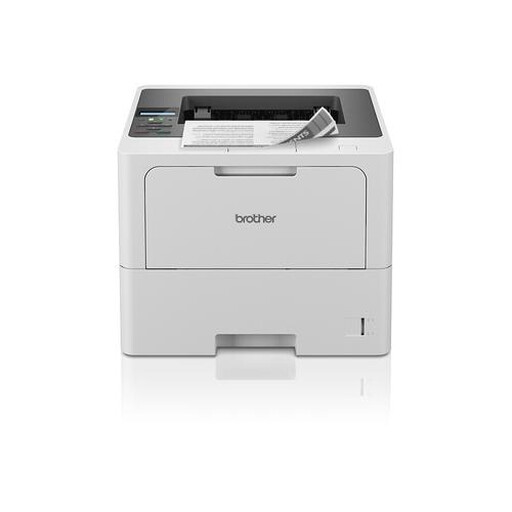 Image unavailable
Well suited to text-focused programmes when you don't need colour and want to print over Wi-Fi.
This monochrome A4 laser model has a resolution of 1200 × 1200 DPI and Wi-Fi. It can't print in colour.
 Image unavailable
A good fit if you want to print a text-focused programme automatically on both sides and share the printer with a workgroup.
This monochrome A4 laser model supports automatic duplex printing and lists Wi-Fi, Ethernet and USB. It can't print in colour.
 Image unavailable
A good fit for text-focused A4 programmes when the studio prints over a wired network and doesn't need colour.
This monochrome laser model lists LAN connectivity and a resolution of 1200 × 1200 DPI. It can't print in colour.
No. The booklet feature in print software can arrange the PDF pages for folding, but folding and stapling are separate finishing steps. Make a test copy first to check the page order and orientation.
You can't tell from the maximum paper weight alone. Canon lists support for paper up to 200 g/m² for the LBP673Cdw II, but that doesn't confirm that automatic duplex printing works with every paper type up to that limit. Check the feed and duplex specifications for the exact model and paper you plan to use.
Make sure there's suitable ventilation and that the printer is well maintained. Arboportaal explains that ventilation is important in the workplace and notes that modern, well-maintained office equipment generally meets government emissions standards. This general information isn't a substitute for assessing the specific workplace.
Distinguish between buying as an individual and buying as a business. The Dutch Government guidance cited here covers consumer rights and doesn't specify a fixed statutory warranty period in the Netherlands. Don't assume it applies to a business purchase; check who the contracting party is and which terms and conditions apply.
If the studio produces waste as a business, the Dutch Government says it must separate its business waste and have it collected separately. Exactly what needs to be separated depends on the circumstances; this isn't a requirement for a printer model.