What should you look for when buying?
For a monologue in an untreated room, placement and a clothing-noise test matter just as much as the recording connection. Shure suggests placing the microphone on the chest or near the hairline. Test it with your costume on, speaking both softly and loudly.
Wired lavalier
Choose this option: if you’ll be performing mostly in one spot and have a compatible microphone input.
Keep in mind: the cable may restrict your movement, and a 3.5mm plug doesn’t guarantee that it will fit the input.
Body-worn recorder
Choose this option: if you want to move around without a cable to the camera or a wireless connection.
Keep in mind: you’ll need to start and save the recording, then sync it with the video afterwards.
Wireless system
Choose this option: if you want to send sound straight to a camera while performing.
Keep in mind: check the connections, what’s included and the frequency requirements for the model and location.
| What to consider |
What should you check? |
Who is this important for? |
| Clarity and clothing noise |
Test the placement with your actual costume. Listen to both quiet and loud lines, checking for reverberation, rustling and cable movement. |
If I want to record clear dialogue in a reverberant room, I need to know how placement and clothing noise affect the result. Around 33% of consumers put clarity first. |
| Freedom of movement |
Compare a cable to the camera with a body-worn recorder or wireless transmitter. Consider whether syncing the recording afterwards will work for you. |
If I move around the room during my monologue, I don’t want to rely on a cable running to a fixed recording position. Around 27% of consumers prioritise freedom of movement. |
| Recording when volume levels vary |
Check which device supports the recording function and how to start, save and export the file. With the RØDE Wireless PRO, 32-bit float recording applies to recordings on the transmitters, not automatically to the camera track. |
If my performance shifts from quiet speech to loud delivery, I want to check which device actually records the sound I need. Around 20% of consumers prioritise recording reliability. |
| Connection to your device |
Compare the exact input type with the microphone connector and check which adapters are included. RØDE specifies TRS for the Lavalier GO; Deity describes the V.Lav as having a TRRS connector. |
If I want to connect my microphone to my own camera or phone, the connector must match the specific input. Around 20% of consumers prioritise device compatibility. |
Joybuy products
This Joybuy selection includes wireless clip-on and lavalier microphones for recording with a Type-C or iOS connection, as well as a wireless system with microphones built into the transmitters. Check that each model’s connection suits your recording device. The RØDE Wireless Micro has built-in microphones, not separate lavalier microphones.
 No image available
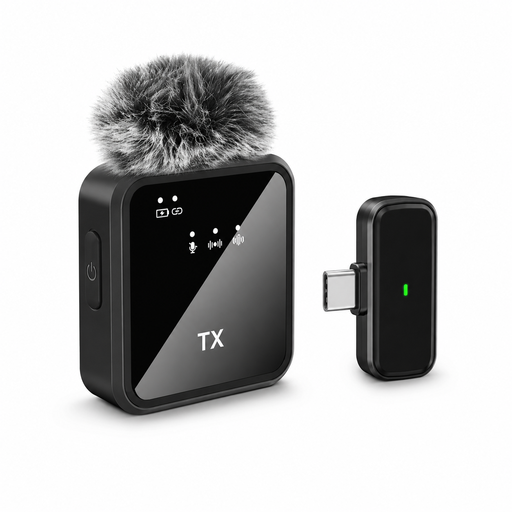
Verbex K9-Black wireless mini microphone with Type-C interface
May suit recording with a device that supports the Type-C interface. Check compatibility with your specific device.
The product title specifies a Type-C interface and wireless operation.
Joybuy
 No image available
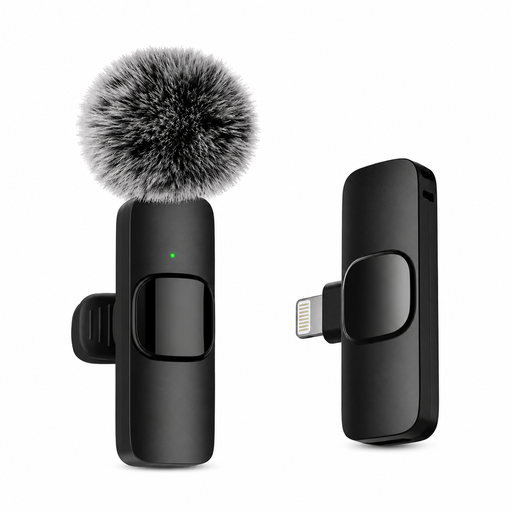
Verbex K9-Black single-microphone wireless mini microphone with iOS interface
May suit recording with a device that supports the iOS interface. Check that this model is compatible with your specific device.
The product title specifies a single-microphone model, an iOS interface and wireless operation.
Joybuy
 No image available
Verbex ST5 single-microphone wireless lapel microphone
May suit recording or stage use if the interface is compatible with your recording device. Check the connection before buying.
The product title specifies a single-microphone model and a wireless lapel-style microphone.
Joybuy
 No image available
RØDE Wireless Micro, USB-C, black
May suit wireless recording with a camera or smartphone if the included receiver is compatible with your device. The microphones are built into the transmitters; they are not separate lavalier microphones.
The product description lists two transmitters, a camera receiver, a USB-C receiver, clips with magnetic mounts and a charging case.
Joybuy
Frequently asked questions
Can a lapel microphone remove the reverberation in my room?
No. A lapel microphone won’t remove existing room reverberation from a recording. Shure says a microphone cannot effectively separate direct speech from reflections, so position it carefully and listen back to a test recording.
Where should I attach the microphone on a theatre costume?
Shure suggests placing it high on the chest or near the hairline, among other options. Test your chosen position while speaking and moving, and listen for fabric rubbing and tension on the cable.
Do I need a licence for a wireless microphone in the Netherlands?
Not if you stay within the frequencies and conditions that the Dutch Authority for Digital Infrastructure (RDI) lists as licence-exempt. Some other frequency bands do require a licence. Check the exact variant and the available frequencies at your location.
What should I check to make sure it complies with Dutch requirements?
The RDI states that equipment must display the required CE marking. Check the marking and documentation for the specific model. A product page from another country alone doesn’t confirm that the item being offered meets the applicable requirements.
What can I do if the microphone breaks quickly during normal use?
According to ACM ConsuWijzer, the seller is responsible for the statutory guarantee. Depending on what you could reasonably expect from the product, you may be entitled to a free repair, replacement or refund. A manufacturer’s guarantee doesn’t automatically cover the full period of your statutory rights.


