Which microphone is right for you?

Performer who moves around the stage

If you move during the monologue, you’ll benefit from freedom of movement and a microphone that’s discreet to wear. For certain theatre placements, such as above the ear or at the hairline, Shure recommends an omnidirectional microphone.

Creator making a one-off recording

If you only have one chance to record a complete take, you can test the placement, clothing and connection during a rehearsal, and check that a separate recording is running. RØDE distinguishes between the internal transmitter recording and the camera track on its Wireless PRO.

Technician with existing recording equipment

If you already use a camera, recorder or wireless bodypack, make sure the microphone connection is compatible with it. With a UHF set, the full frequency variant also matters: the Netherlands Authority for Digital Infrastructure (RDI) says that usable frequencies can vary by location.

What should you look for when buying?

What to consider What to check before buying Who is this important for?
Freedom of movement Check that the cable is long enough for the performance space and that the microphone and transmitter can be secured under the costume. If I’m moving around the stage, I don’t want a cable to restrict me, and the microphone needs to stay securely in place. Around 33% of consumers rank freedom of movement as their top priority.
Clear speech Test the microphone with the actual costume and both quiet and loud passages; listen back to the recording. If my voice needs to remain clear in both quiet and powerful passages, I want to try the placement with the costume beforehand. Around 27% of consumers prioritise clarity and placement.
Keeping a complete take Check whether the set you’ve chosen supports a separate recording and whether it actually starts; play back the recording after a test. If I can’t easily record a monologue again, I want to be able to check that the complete take has been saved. For around 20% of consumers, recording reliability comes first.
Connection and complete set Compare the plug with the input on your recorder or camera, and check which transmitter, receiver and accessories are included with the version you’ve chosen. If I want to use my existing equipment, the microphone needs to connect to it, and I need to know which parts I already have. Around 20% of consumers put compatibility and the required components first.

Common buying mistakes

  • Assuming the maximum wireless range applies in a hall

    A range measurement taken outdoors in an unobstructed area with no interference won’t predict how a connection will perform in a community centre.

    Test the set at the actual venue and, if it supports this, check that a separate internal recording is running.

  • Confusing a standalone lavalier with a complete wireless set

    The Shure WL93 is designed to connect to a compatible wireless bodypack; the microphone alone isn’t a complete recording system.

    Compare the connection and box contents with the transmitter and receiver you already have.

    If you don’t already have a suitable bodypack or receiver, you’ll need to arrange those components too.

  • Choosing a UHF set based only on its series or brand name

    The Sennheiser EW-DP ME-2 is available in different frequency variants, while the available frequency space can vary by location.

    Check the full model number and consult the latest RDI information for the venue. Some bands require a licence.

  • Assuming 32-bit float applies to every recording track

    RØDE states that 32-bit float recording on the Wireless PRO applies to the internal recordings in the transmitters, not automatically to the camera track.

    Check the recording mode you’ve selected and play back both the camera track and the internal file before and after the take.

Brands to consider

Audio-Technica

The wired ATR3350x is an option when the performer doesn’t move much and the recording equipment has a suitable input.

  • Audio-Technica specifies an omnidirectional capsule, a dual-mono 3.5 mm plug and a 3 m cable.
  • The cable may restrict movement; check that the connection is compatible with your recorder.

RØDE

The Wireless PRO is a wireless set with lavaliers and separate recording in the transmitters.

  • According to RØDE, the set includes two Lavalier II microphones and the transmitters can record internally.
  • The 32-bit float specification applies to the internal transmitter recording, not automatically to the camera track, so make a test recording.

Sennheiser

The EW-DP ME-2 is a UHF set with a bodypack, receiver and lavalier for anyone looking for a tuneable system.

  • Sennheiser specifies several frequency variants and a set containing a bodypack, receiver and ME 2 lavalier.
  • Compare the full model number with the frequencies available at the venue; the RDI says availability varies by location.

DJI

The Mic 2 is a compact wireless option, with a version available that includes one transmitter and one receiver.

  • DJI specifies internal recording and a 3.5 mm microphone input on the transmitter.
  • DJI’s stated maximum transmission range is measured outdoors, without obstacles or interference; don’t treat it as the guaranteed range in a hall.

Shure

The WL93 is a standalone lavalier for anyone who already has a suitable wireless bodypack.

  • Shure specifies an omnidirectional capsule and describes the WL93 as a microphone for connecting to a compatible Shure bodypack.
  • The WL93 isn’t a complete wireless set on its own. Test the placement with the performer and costume, as the sound can change depending on the position.

Joybuy products

This selection includes wireless lavalier and lapel microphones for recording with mobile devices or cameras. Before buying, check that the connection and included components are compatible with your recording equipment.
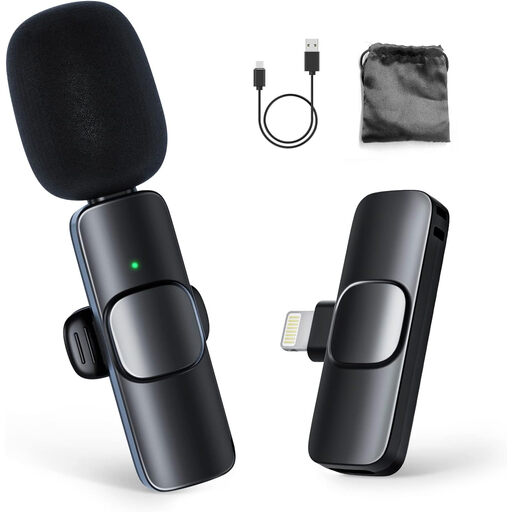
Moman CP1A wireless lavalier microphone for iPhone, set with one transmitter and one receiver

Moman CP1A wireless lavalier microphone for iPhone, 1TX & 1RX

For a performer who moves without a microphone cable and records on an iPhone; check that this version is compatible with your device.

Set with one transmitter and one receiver.

View at Joybuy
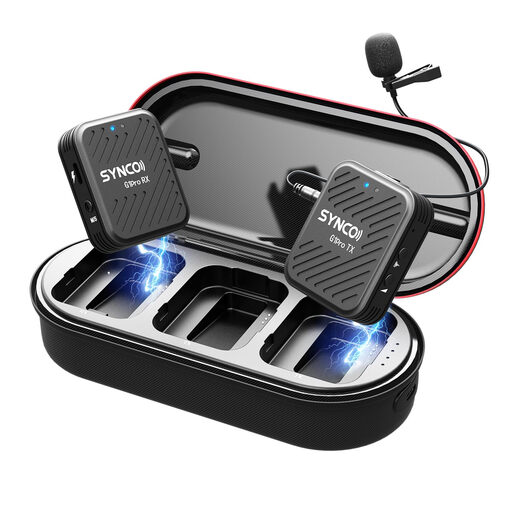
SYNCO G1(A1) Pro 2.4 GHz wireless lavalier system for an SLR camera

SYNCO G1(A1) Pro 2.4 GHz wireless lavalier system for SLR camera

For camera recording where you want to monitor the sound as you record; check that the connections are compatible with your camera and headphones.

The product title specifies 2.4 GHz and audio monitoring.

View at Joybuy
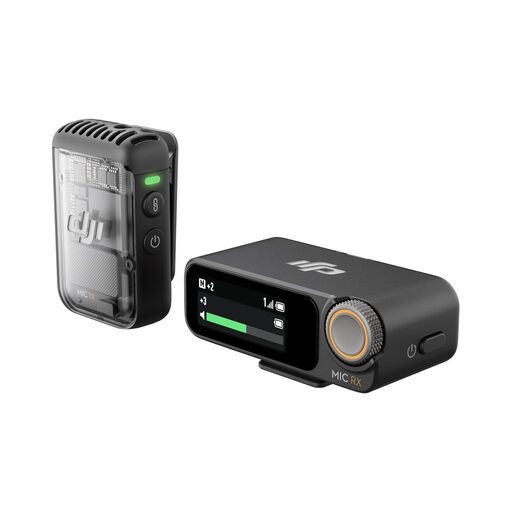
DJI Mic 2 wireless microphone set with one transmitter and one receiver

DJI Mic 2, 1 TX + 1 RX

For a performer on the move when you want to use a separate recording on the transmitter as well as wireless transmission. Test reception in the hall and check which recording is actually running.

The product title specifies internal 32-bit float recording and one transmitter with one receiver. DJI’s stated maximum transmission distance is measured outdoors, without obstacles or interference, and doesn’t guarantee the range in a hall.

View at Joybuy
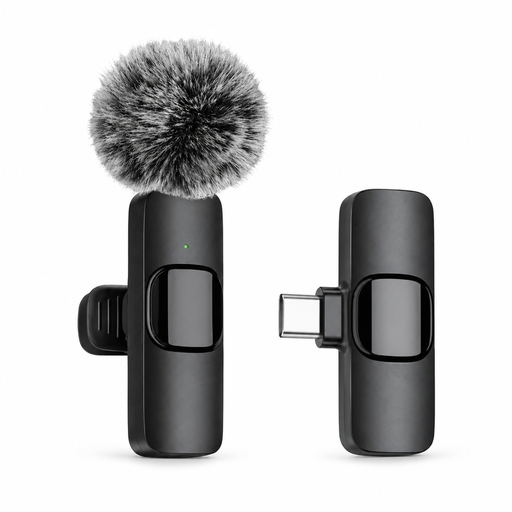
Verbex K9-Black wireless lavalier microphone with Type-C interface

Verbex K9-Black wireless lavalier microphone, Type-C

An option to consider for recording with a Type-C device; check that the connection is suitable for your recorder or phone.

The product title specifies a wireless microphone with a Type-C interface.

View at Joybuy
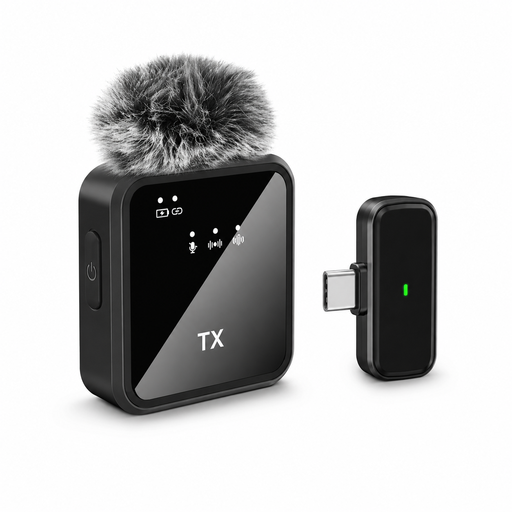
Verbex ST5 wireless lapel microphone with one microphone and a universal interface

Verbex ST5 wireless lapel microphone, single microphone

For anyone considering a wireless microphone for stage use; before buying, check what the stated universal interface means for your recording equipment.

The product name specifies one microphone and a universal interface.

View at Joybuy

Frequently asked questions

What Dutch frequency regulations apply to a wireless lavalier?

It depends on the frequency band used and the location. According to the Netherlands Authority for Digital Infrastructure, some bands require a licence and not every frequency is available at every location. Check the exact band used by the set against the RDI information for the venue.

Can an organisation record a monologue and share it later?

It depends on the recording, the people involved and the text. An identifiable audio recording can be personal data; an organisation needs a lawful basis under the GDPR to process it. The theatre text may also be protected by copyright. Don’t assume that permission to make a private recording also allows you to publish it.

How do you make a useful test recording before the performance?

Attach the microphone in the intended position on the actual costume, then have the performer walk around and deliver both quiet and loud passages. Listen back to the recording and, if you’re using a wireless set, check that any internal transmitter recording has actually started.

If something goes wrong, should you contact the manufacturer or the seller?

For your statutory guarantee rights, contact the seller. According to the Dutch government, there’s no fixed statutory guarantee period for all products in the Netherlands; any manufacturer’s warranty is in addition to your statutory rights. Keep your proof of purchase and check who the seller is.
