What should you look for?
Domestic bean-to-cup machine
A good fit if: you can stagger orders and guests can choose an espresso, coffee or milk-based drink, one cup at a time.
The trade-off: Fresh coffee and a wider choice of drinks take time to prepare one after another, and require regular cleaning.
Professional bean-to-cup machine
A good fit if: the expected rush could overwhelm a domestic machine, and a supplier can provide evidence that it will handle your interval and choice of drinks.
The trade-off: JURA gives the W8 a maximum capacity of 50 preparations per day; that doesn’t show how it will perform during a single interval. You’ll also need to consider installation, servicing and milk-system maintenance.
Filter coffee in pots
A good fit if: most guests want regular black coffee at the same time, and individual recipes are less important.
The trade-off: you can brew coffee in pots in advance, but that won’t give you the individually prepared espressos and milk-based drinks you’d get from a bean-to-cup machine.
Start with the number of orders and the time available during the interval. Then consider the drinks you want to serve, the cleaning involved and how much the machine is likely to be used after the community meal.
| Consideration |
What to look for |
Who will find this important? |
| Serving during the interval |
Set out the expected number of orders and the time available. Ask for the total preparation time, including milk, refilling and emptying. |
If I want to handle every order during the same short interval, I’ll look at the full turnaround time, not just the speed per cup. Around 38% of consumers rank serving during the interval as their top priority. |
| Black coffee and milk-based drinks |
For the exact model code, check which recipes and two-cup combinations can be prepared at the same time. |
If my guests want different drinks, I want to know whether the milk-based drinks they prefer can genuinely be prepared at the same time. Around 23% of consumers prioritise this variety. |
| Cleaning and milk |
Read the model-specific instructions for the milk system, brewing unit and descaling. Also check the storage instructions on the milk packaging. |
If I have to clean the machine afterwards, I want to be sure the required steps are manageable and that milk is stored as directed on the packaging. Around 23% of consumers prioritise maintenance and milk handling. |
| Overall cost and future use |
Compare buying or hiring, consumables and maintenance for the same expected number of uses. |
If the machine is mainly for one community meal, I want to weigh up the cost against how often we’ll use it afterwards. Around 16% of consumers prioritise overall cost. |
Joybuy products
These domestic bean-to-cup machines are for hosts who want to serve guests a variety of coffees and, depending on the model, milk-based drinks.
 No image available
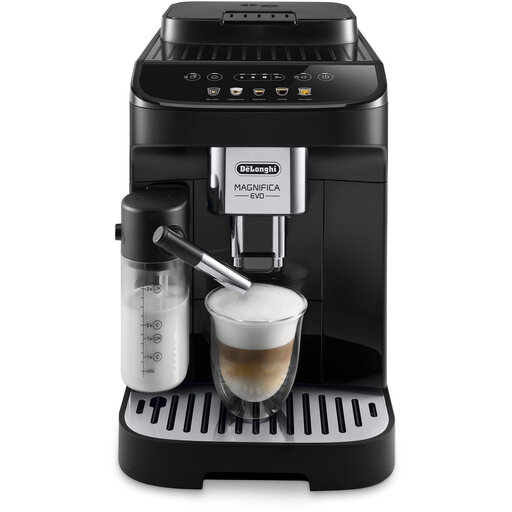
De'Longhi ECAM290.61.B Magnifica Evo
A domestic bean-to-cup machine to consider if you want to serve milk-based drinks as well as espresso.
The product information lists a 1,8 l water reservoir, a 250 g bean container and a dual spout. Cappuccino and latte macchiato are listed as milk-based drinks.
The stated spout function alone doesn’t tell you how long it will take to prepare drinks for a whole interval.
View at Joybuy
 No image available
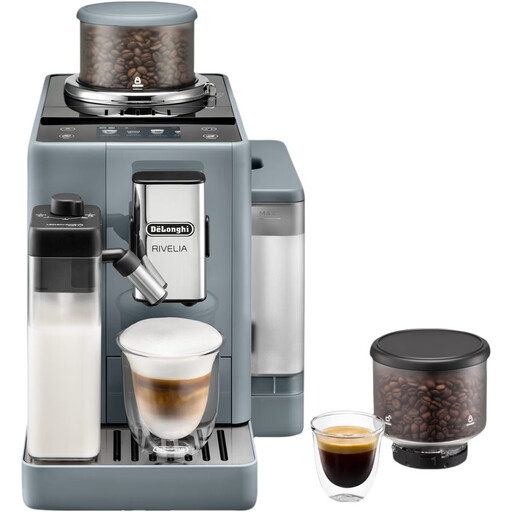
De'Longhi Rivelia EXAM440.55.G
This domestic machine could be a good fit if you want to cater for different coffee preferences and serve milk-based drinks.
The product information lists two interchangeable bean containers and the ability to prepare two milk-based drinks at once.
The product description states that the machine is for domestic use and excludes commercial use. Check that this suits the way the community meal is organised.
View at Joybuy
 No image available
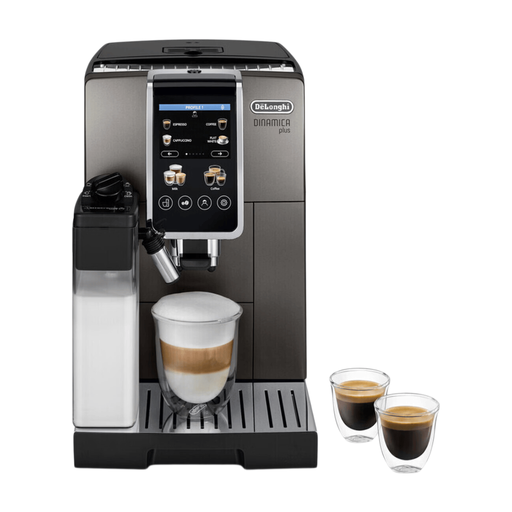
De'Longhi Dinamica Plus ECAM380.95.TB
A domestic option to consider if you want to serve black coffee and milk-based drinks, with a coffee pot function.
The product information lists a 1,8 l water reservoir, a 300 g bean container and automatic milk preparation. The manufacturer also mentions a coffee pot function.
Check the setting you want and the preparation time. The coffee pot function alone doesn’t confirm how many portions will be ready during the interval.
View at Joybuy
 No image available
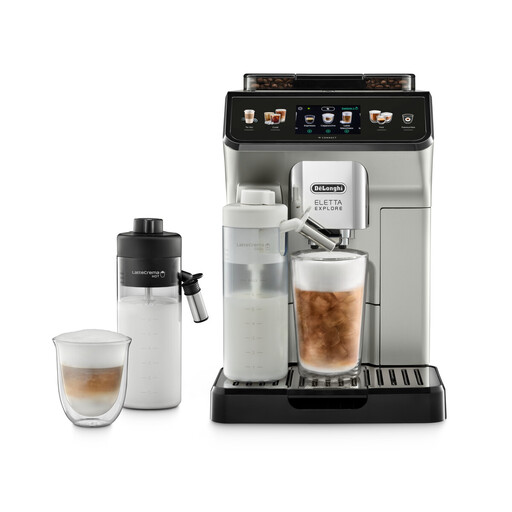
De'Longhi Eletta Explore ECAM450.65
This domestic machine is an option if you want to serve a variety of coffees and milk-based drinks.
The product information lists 13 drinks, a 1,8 l water reservoir, a 0,3 kg bean container and a touchscreen. Automatic milk preparation is also mentioned.
The listed drinks and reservoir capacity don’t measure how quickly the machine can serve during a short interval.
View at Joybuy
Frequently asked questions
How can you tell whether a machine can handle the theatre interval?
Check the full preparation and operating process for the expected number of guests, the length of the interval and the drinks you want to serve. Don’t simply divide the number of orders by a stated daily capacity: JURA gives the W8 a maximum capacity of 50 preparations per day, not a measure of its performance during a single interval.
Where should you put the machine, and what should you arrange in advance?
For your chosen model, check its dimensions, power supply and how easy it is to access the water and bean containers and drip tray. Make sure you have fresh water and somewhere to clean parts in line with the instructions. Don’t assume there’s a water connection or serving speed that you haven’t checked.
How should you handle milk and clean the machine afterwards?
Follow the storage instructions on the milk packaging and the cleaning instructions for the exact machine model. For pre-packaged food covered by NVWA rules, you must follow the storage instructions on the label. If no temperature is given, the NVWA recommends 7 °C or below. An automatic rinsing or cleaning function doesn’t necessarily replace other required cleaning steps.
What if the coffee machine breaks down soon after you buy it?
For a consumer purchase, your statutory guarantee applies alongside any manufacturer’s warranty. If a product doesn’t meet the standards you could reasonably expect under normal use, ACM ConsuWijzer says the seller is responsible for providing an appropriate solution at no cost. A stated manufacturer’s warranty period doesn’t automatically limit this right.
What food safety rules apply to a community meal?
This depends on how the food and drink is offered. The NVWA says anyone selling food or drink at markets and events, including private individuals, must work safely and hygienically. Sellers of unpackaged products must provide allergen information. Check whether these circumstances apply to your community meal before concluding that the organiser has a legal obligation.


