
At-home rehearsals with a laptop
You want to record your own Dutch lines and listen back without putting a microphone stand on your small desk. The connection and microphone controls can help you decide which computer headset suits your set-up.


For practising and listening back on a computer, a personal headset with a boom microphone and a suitable connection is usually the most straightforward choice. You won’t need a separate microphone stand on your small desk. If you want to move around during rehearsals or amplify your voice through a sound system, look for a headset system designed for that purpose, with a receiver. For wireless models, check the frequency requirements for your location. Test how clearly you can be heard and how comfortable the headset feels in your own set-up; manufacturers’ specifications are not an independent test of Dutch theatre dialogue.
You want to record your own Dutch lines and listen back without putting a microphone stand on your small desk. The connection and microphone controls can help you decide which computer headset suits your set-up.
You rehearse while moving and need to decide whether your voice should be amplified through a sound system. If so, a headset microphone system with a suitable receiver requires a different connection from a computer headset. Shure describes the BLX14/PGA31 as a set comprising a headset, bodypack transmitter and receiver.
You want to practise your lines while still being able to hear directions or cues. According to HP Poly, a mono version leaves one ear free.
First, decide whether you only want to record and listen back on a computer, or whether you also need freedom to move around and amplification through a sound system.
| What to consider | What should you look for? | Who is this important for? |
|---|---|---|
| Listening back to your own voice | Check the position of the microphone boom, the mute control and whether your recording software works with the headset. | I want to record my Dutch lines and listen back without a separate microphone on my small desk. Around 36% of consumers put this need first. |
| Connection and desk space | Compare the connection on the exact version with your computer, and check that the cable is long enough for your desk. | I want to connect my headset directly to my recording equipment and keep my desk clear of a microphone stand. Around 29% of consumers give this combination of connection and space top priority. |
| Freedom to move around and amplification | Decide whether you need to record on a computer or connect to a sound system. For a wireless system, check the receiver and the frequency requirements for your location. | I want to move around the rehearsal space while speaking and possibly be heard through the sound system. Around 21% of consumers prioritise freedom of movement. |
| Hearing the other actors | Compare mono headsets with closed-back earcups, and decide whether you want to keep hearing the room during rehearsals or prefer to listen back in isolation. | I want to be able to follow directions and other actors’ lines as I practise. Around 14% of consumers prioritise being able to hear the other actors. |
A computer headset and a wireless system for a sound system use different connection paths. A USB headset is not, by itself, a microphone for amplifying your voice in a venue.
Before buying, work out how the microphone signal will get to your recording device or sound system, and which components you already have.
A suitable receiver or additional audio equipment may be needed for a sound system.
Headsets can vary between versions. The Logitech H390 is available with different USB platform options, while the Audio-Technica BPHS1 has separate professional audio connections.
Check the connection on the exact version and on the device you want to record with. If the connections don’t match, you may need additional equipment.
The Dutch rules for using wireless microphones depend, among other things, on the frequency band and transmission power. Licence-exempt use does not mean interference-free use.
Check the frequency variant and the current requirements set by the Dutch Authority for Digital Infrastructure for your rehearsal location.
Microphone features don’t automatically determine how much you can hear of the other actors. The way the headset fits also plays a part.
Make a test recording and compare a mono headset with closed-back earcups if you want to keep following directions as you practise.
The H390 is a wired computer headset for use with a compatible USB computer.
The wired Blackwire 3200 series includes mono and stereo styles for computer calls or rehearsals.
The wired INZONE H3 is designed for anyone looking for closed-back earcups and a flip-up microphone, provided the connection is compatible.
The BPHS1 is a broadcast headset for an existing, compatible professional audio set-up.
The BLX14/PGA31 is a wireless headset microphone system for use with a compatible receiver and sound system.
These are wired computer headsets for anyone who wants to record their own lines on a computer and listen back without a separate desk microphone. Before buying, check that the connection is compatible with your device and recording set-up.
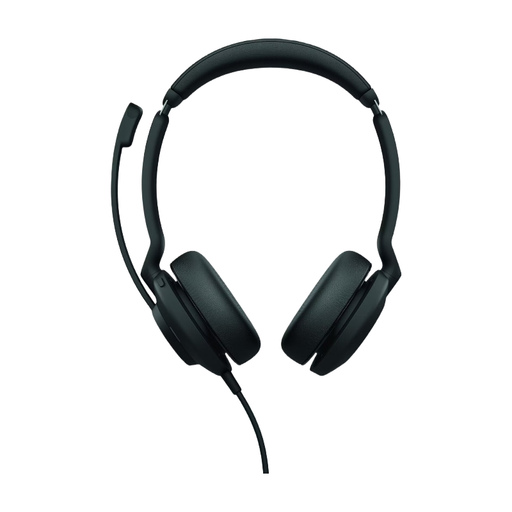 No image available
An option for computer use if you’re looking for a headset with integrated microphones and in-line controls.
The description lists USB-A, stereo sound, two integrated microphones, and volume and mute controls.
 No image available
An option if you want to practise on a computer and adjust the microphone boom while recording.
The description lists a USB connection, an adjustable microphone boom, stereo sound, and in-line volume and mute controls.
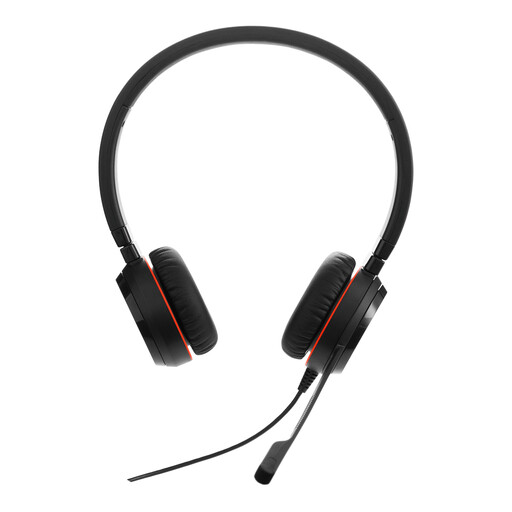 No image available
An option for a computer set-up if you’re looking for a wired headset with a short cable run.
The description lists stereo sound, a 0,95 m cable, a 3,5 mm connection and an included USB controller.
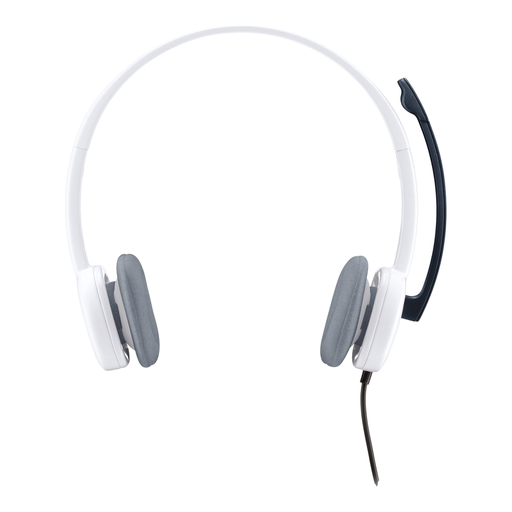 No image available
An option if you want to use an adjustable headset microphone with a device that has a compatible 3,5 mm connection.
The description lists a 1,8 m cable and volume and mute controls. Devices with separate audio and microphone ports may need a splitter; according to the description, this is not included.
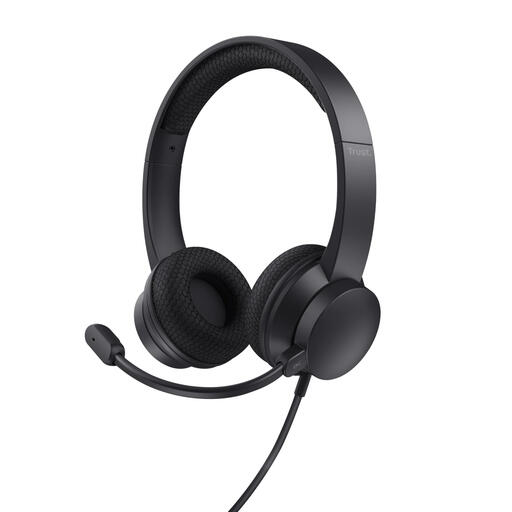 No image available
An option if you want to practise on a laptop or PC and be able to mute the microphone while using it.
The description lists USB-A, an included USB-C adapter cable, a flip-up microphone with mute function and an adjustable headband.
Not with the USB connection alone. Check which input the sound system has and what equipment you’ll need in between. The Logitech H390 is designed to connect to a computer; the Shure BLX14/PGA31 is described as a system with a separate receiver.
Select the headset as the recording and playback device in your software, position the microphone according to the instructions, then listen back to a short recording. Audio-Technica recommends positioning the BPHS1 by the corner of your mouth; the right setting and sound depend on your own set-up.
No. The Dutch Authority for Digital Infrastructure sets out frequency bands and power requirements for licence-exempt microphone use, and states that a licence is required for some other bands. Check the frequency variant and the requirements for your rehearsal location; licence-exempt use does not guarantee an interference-free connection.
A manufacturer’s or seller’s warranty is separate from your statutory consumer rights. According to ACM ConsuWijzer, the seller must resolve the issue under the applicable statutory guarantee if a product breaks too soon during normal use. There is no single fixed statutory warranty period for all headsets in the Netherlands.
Online consumer purchases generally come with a statutory cooling-off period of up to 14 days after delivery, but there are exceptions, including certain unsealed hygiene products. Before buying, check which exceptions and returns conditions apply to the specific headset.