
Rehearsing dialogue beside a fan
You want consonants and quiet lines to remain intelligible. Look for an adjustable microphone boom, positioning close to your mouth and the direction in which the capsule picks up sound.


For theatre dialogue with audible fan noise, a microphone close to your mouth with a cardioid pickup pattern is a sensible choice, but it won’t make the fan inaudible by itself. Choose a wired option if you mainly rehearse in one place and have a suitable input; go wireless if you need room to move, and check the entire signal chain and usable frequencies at your venue.
You want consonants and quiet lines to remain intelligible. Look for an adjustable microphone boom, positioning close to your mouth and the direction in which the capsule picks up sound.
You need your hands free during scenes with movement. As well as the headset, check the bodypack transmitter, receiver and frequency variant; the Netherlands Authority for Digital Infrastructure (RDI) notes that frequency availability can vary by location.
You want to connect to a mixer or recorder. Check that the plug matches the input and that your equipment provides enough gain; a headset is not automatically a complete recording setup.
Suitable if: you usually rehearse in one place and have a suitable microphone input.
Bear in mind: the cable limits your freedom of movement; check the available gain too.
Suitable if: you need to move around during scenes and have a compatible transmitter and receiver.
Bear in mind: the headset alone is not a complete system; check the frequency variant and your location.
Suitable if: a discreet, adjustable headset is important and you can assess the recording environment.
Bear in mind: an omnidirectional pickup pattern won’t, by itself, solve disruptive fan noise; compare a recording made in your rehearsal space.
With an audible fan, positioning and connection are two separate decisions: a suitable connection makes recording possible, but it doesn’t tell you how intelligible the result will be in your room.
| What to consider | What should you check? | Who should pay extra attention? |
|---|---|---|
| Speech with fan noise | Check the pickup pattern and whether you can position the boom close to your mouth; if possible, make a test recording with the fan on. | If I’m rehearsing quiet lines, I want to be able to position my voice well in relation to the fan. Around 40% of consumers give speech intelligibility with fan noise their highest priority. |
| Freedom of movement | Check that you have a complete wireless chain, including a compatible bodypack and receiver, and that the frequency variant can be used at your location. | If you need to move freely around the room during scenes, you won’t want a cable running to the recording position. Around 30% of consumers prioritise freedom of movement. |
| Connection and gain | Compare the exact connector variant with the input or bodypack; if you’re using a dynamic microphone, check the available gain too. | If I want to use my existing mixer or recorder, the headset needs to connect to it. Around 20% of consumers are most concerned about having a suitable connection. |
| Fit and maintenance | Check adjustability, replaceable parts and the care instructions for the variant you choose. | For repeated rehearsals, I want a headset I can adjust properly and maintain. Around 10% of consumers name comfort and maintenance as their main concern. |
The percentages give an indication of consumers considering a headset microphone for this type of rehearsal; they are not measured market shares. Manufacturer Shure describes the WH20 as having a cardioid pattern and isolating background noise, including air conditioning. This is not a measurement of fan-noise reduction in your room: the microphone’s direction and distance still matter.
A pickup pattern or product specification doesn’t guarantee how a recording will sound in your rehearsal space.
Check the microphone’s direction and position and, if possible, compare a recording made with the fan on.
A headset needs a compatible system to work wirelessly with your recording equipment.
Check what’s included and compare the connector with the bodypack transmitter and receiver you plan to use.
The RDI notes that frequency availability can vary by location.
Compare your system’s frequency variant with the latest RDI information for your rehearsal venue.
Shure states that, when positioned correctly, the WH20 needs more mixer gain than the SM58.
Check that your recording equipment’s connection and available gain are suitable for the WH20XLR.
The WH20 series includes an adjustable dynamic headset for stage use. The WH20XLR has an XLR connection; the WH20TQG is designed for use with a compatible bodypack transmitter.
The HSP 4 is a cardioid headset for speech. The HSP Essential Omni is an adjustable omnidirectional model.
The C544 L is a cardioid headset with a three-pin mini XLR connection, including for compatible AKG WMS bodypacks.
DPA offers the cardioid 4488 and omnidirectional 4066 as headset options for uses including theatre.
This Joybuy selection includes headsets with microphones for voice communication, with wired and wireless connection options. Check whether each model’s connection and microphone pickup pattern suit your rehearsal; the product information doesn’t include test results for fan noise in a theatre.
 Image unavailable
Could suit you if you’re looking for a wired headset for voice communication and want to be able to move the microphone out of the way.
The product description mentions a directional microphone boom that flips up, a 3.5mm connection and a USB audio adapter.
 Image unavailable
Could be worth considering if you want to rehearse wirelessly and are looking for a headset with a detachable microphone boom.
The product information lists a 10 mm microphone boom and 2.4 GHz and Bluetooth connectivity. Check which connection suits your recording setup.
 Image unavailable
Could suit you if you’re looking for a wired headset for calls with more than one stated connection option.
The product information lists a 3.5mm connection and a USB controller. Check which connection your recorder or computer needs.
 Image unavailable
Could be worth considering if you’re looking for a USB headset with an adjustable microphone boom.
The product description mentions a USB cable and a microphone boom that rotates through 270 degrees.
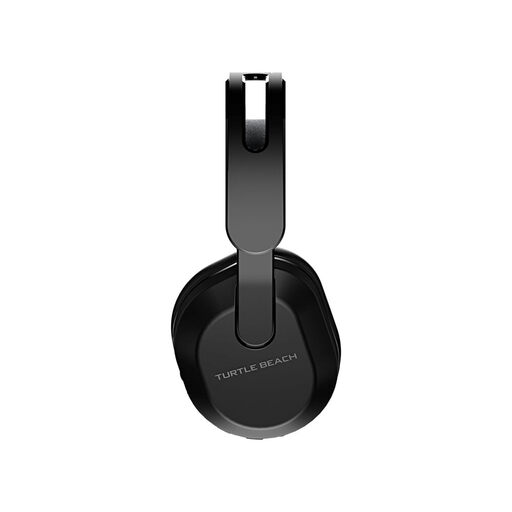 Image unavailable
Could suit you if you want to communicate wirelessly, but bear in mind the stated microphone pickup pattern when there’s fan noise.
The product information lists an omnidirectional flip-up microphone and connection via a USB receiver or Bluetooth.
No, that can’t be concluded from the specifications. Position the microphone close to your mouth and point it correctly; assess the result with the fan on. Shure describes the WH20 as isolating background noise, but that’s no guarantee for your rehearsal space.
Not without checking the connector and input. The Shure WH20XLR has a three-pin XLR connection, while the WH20TQG has a connector for a compatible bodypack transmitter. Check that your recording equipment also provides enough gain.
Follow the instructions for the exact model. For the HSP Essential Omni, Sennheiser specifies a distance of 2 to 3 cm from the corner of your mouth and warns against bending the microphone boom; don’t automatically use this distance for another headset.
That depends on the frequency band and your location. The RDI publishes the frequencies on which wireless microphones can be used without a licence and notes that some UHF frequencies aren’t available everywhere. A licence is required for certain other bands, so check the frequency variant and the conditions that apply at your rehearsal venue.
For online consumer purchases, you generally have a statutory cooling-off period of up to 14 days after delivery, with some exceptions. This is separate from your statutory rights if, under normal use, the product doesn’t do what you could reasonably expect. ACM ConsuWijzer explains that the seller must then resolve the issue, for example by repairing or replacing the product or giving you a refund.