
Vandaag of morgen in huis

Kwaliteit gegarandeerd

Welkomstaanbiedingen ontgrendelen: GRATIS bezorging | Tot 80% korting | Gratis 30 dagen JoyPlus-proefperiode
Download de app
A The North Face jacket can be suitable for hiking, cycling, camping, skiing or everyday wear. However, not every jacket is designed for the same conditions. A fleece jacket keeps you warm, but does not provide independent protection against prolonged rain. A waterproof jacket keeps precipitation out, but usually offers little insulation. If you focus only on the brand name, colour or an attractive discount, you could end up buying a jacket that is not suitable for how you intend to use it.
This guide helps you compare a The North Face women's jacket, The North Face men's jacket or technical outdoor jacket based on verifiable features.
A Durable Water-Repellent finish, often abbreviated to DWR, helps water droplets run off the outer fabric. This does not automatically mean that the jacket will keep out prolonged rain completely. Check whether the product information refers to a waterproof membrane, taped seams and an adjustable hood.
DryVent is listed for the Quest Jacket and the technical women's jacket NF0A8EGV. The description states that they feature a waterproof, windproof and breathable construction. Always check the current product page and care label, as final performance also depends on maintenance and use.
A The North Face fleece jacket is primarily an insulating mid-layer. Fleece made from 100% polyester can provide warmth without adding much bulk, but on its own it is not a substitute for a waterproof outer layer. In windy or rainy conditions, it is best to combine fleece with a breathable shell.
According to the product information, the NF0A8DZY is designed as a mid-layer and can be combined with compatible Triclimate jackets. This makes it practical for a modular layering system, but does not turn it into a standalone waterproof jacket.
When hiking or training outdoors, a jacket should provide enough room to wear a shirt, fleece or insulated jacket underneath. However, an oversized fit can allow draughts in around the hem and sleeves. A jacket that is too small restricts movement and makes layering difficult.
Measure your chest, waist, hips and arm length, then compare these measurements with the size chart for the specific model. A standard fit is not exactly the same for every jacket. Also check the unit of measurement: some charts use inches, while others use centimetres or EU sizes.
For a The North Face waterproof jacket or hiking jacket, the following details are relevant:
The The North Face women's jacket NF00A8BA is described as a 2L DryVent shell with mesh lining, sealed seams, an adjustable hood and a DWR finish. According to the product information, the The North Face men's jacket NF0A8DY2 also features DryVent, a hood and zipped pockets. Proper care remains important for both models.
For cold walks, camping or everyday wear, you can choose from several layers:
The NF0A8DW6 is a women's insulated jacket with synthetic filling. According to the description, it can be packed away into its own pocket. The product information also mentions compatibility with a zip-in layering system. The men's Triclimate NF0A84FC consists of an outer layer and an insulated inner jacket. The description mentions 550-fill-power down; when buying, check that the version and composition you want match the product page.
A breathable jacket allows water vapour to escape more effectively than a completely enclosed, non-breathable outer layer. This is particularly useful for hiking, running and climbing. Breathability does not prevent you from getting warm during intense exercise; ventilation zips, a mesh lining and an effective layering system remain important.
For skiing or high-intensity activities, ventilation openings, articulated sleeves and adjustable cuffs are practical features to look for. A jacket used only for commuting may need fewer technical details than an outdoor jacket for long hikes.
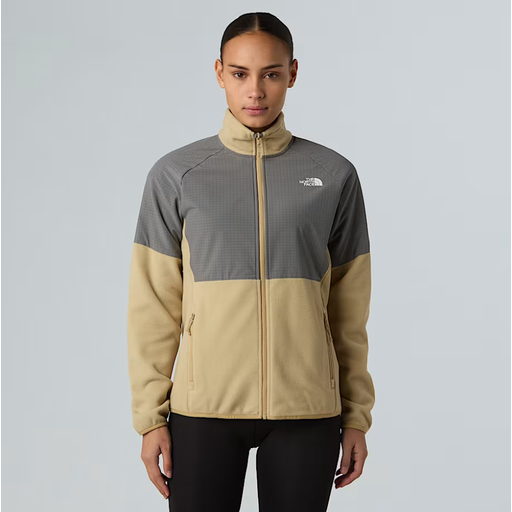
Why it suits this profile: A simple fleece jacket for hiking, camping and everyday wear. Suitable as a warm mid-layer without the complexity of a technical 3-in-1 system.
The product information clearly positions this model as a fleece and mid-layer, not as a standalone waterproof jacket.
100% polyester fleece, standard fit, full-length zip and a zipped pocket for small items.

Why it suits this profile: For anyone who wants to use one flexible system during changeable hiking days and outdoor activities.
According to the product description, the two layers can be worn separately or together, so you are not buying just a standalone shell.
Triclimate construction, adjustable cuffs and hem, taped seams and 550-fill-power down according to the product information.

Why it suits this profile: For hikers looking for a standalone shell for rainy and windy conditions.
The description explicitly mentions DryVent, sealed seams and a breathable mesh lining rather than just a DWR coating.
Waterproof and windproof DryVent shell according to the product information, with adjustable hood, cuffs and hem.
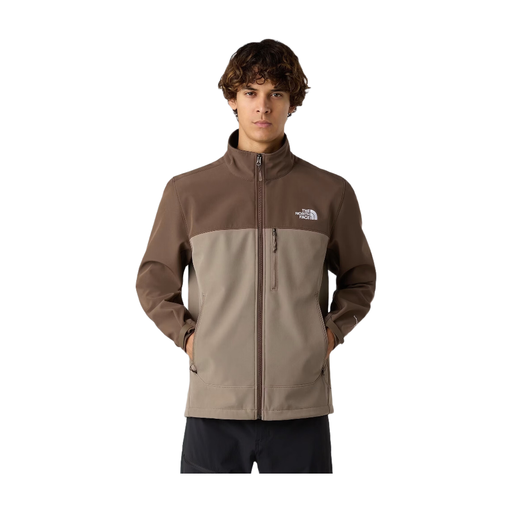
Why it suits this profile: A windbreaker for commuting, urban use and light outdoor activities in spring.
The product description identifies this model as a windbreaker with a fleece back, not as a fully waterproof rain jacket.
93% polyester and 7% elastane, fleece back, zipped pockets and adjustable hem according to the product information.
Wash a jacket according to the sewn-in label. Several models specify washing at a maximum of 40°C with similar colours. Close zips and hook-and-loop fastenings, and turn the jacket inside out if stated on the label. Do not use bleach.
Fleece should generally be air-dried, while a technical shell should be treated with care. A DWR finish may become less effective through use and washing. Only reproof the jacket if the care label allows it, and use a product suitable for the material. Store the jacket completely dry and avoid keeping it compressed for long periods, especially when it contains down or synthetic insulation.
We have put together a complete, up-to-date list of products that fully meet these strict selection criteria and the applicable European safety regulations.
Usually not as a standalone outer layer. Fleece is designed to provide warmth and can be worn as a mid-layer. In rainy weather, combine a The North Face fleece jacket with a waterproof shell, such as a DryVent model when this is stated in the product information.
A layering system is often practical: a breathable base layer, fleece or insulated jacket, and a windproof and waterproof outer layer. For light activities, a windbreaker may be sufficient, while longer walks benefit more from a shell with an adjustable hood, sealed seams and ventilation options.
Measure your chest, waist, hips and arm length, then compare these measurements with the size chart for the model you have chosen. Allow for layers underneath the jacket, but do not automatically choose a larger size. Also check whether the chart uses centimetres, inches, UK sizes or EU sizes.
