
Vandaag of morgen in huis

Kwaliteit gegarandeerd

Welkomstaanbiedingen ontgrendelen: GRATIS bezorging | Tot 80% korting | Gratis 30 dagen JoyPlus-proefperiode
Download de app
Fancy making a bowl of Tom Yum soup without having to track down lemongrass, galangal and kaffir lime leaves yourself? With Thai Tom Yum paste, it’s much quicker. However, not all jars are the same. Some products are concentrated spice pastes, others are ready-to-use sauces or complete cooking kits. They also differ in heat level, allergens, size and storage method.
So look beyond words like “authentic” or “hot & sour” on the label. Below, you’ll discover which features really matter and which Thai spice paste suits your cooking style.
A 900 g or 1 kg jar can be ideal for families, meal prepping or professional use. For someone who only makes Tom Yum occasionally, a smaller pack may be more practical. Once opened, the paste usually needs to be refrigerated and used within the recommended period according to the product information.
So don’t just compare the price of the jar, but also:
The distinctive combination of sour, spicy, aromatic and savoury is built differently by each brand. Aroy-D lists lemongrass, chilli, kaffir lime leaf, galangal, garlic, shallot and tamarind among its ingredients. Cock Brand mentions lemongrass, lemon juice and cayenne pepper, among others.
You’ll notice that difference in the pan. A paste with more oil can feel richer, while a variant with lemon juice or tamarind may give a more distinct sour note. So check the ingredients list rather than relying solely on the front of the pack.
Many Thai pastes contain no gluten or dairy, but that doesn’t automatically apply to every product. Some variants contain soya, shrimp paste or other shellfish. A product may also contain traces of nuts.
If you cook vegetarian, vegan or allergen-free, it’s wise to check the current packaging. Product information can change; the information on the label is what counts.
For a recognisable Thai soup flavour, you’ll often see ingredients such as:
According to the product description, Aroy-D Authentic Thai Tom Yum Paste 400 g is based on a traditional Thai recipe. That’s a claim from the brand’s product information, not an independently verified quality mark. However, the listed ingredients do give a verifiable picture of the intended flavour.
A good Thai Tom Yum paste should be easy to dose. The product description for Aroy-D recommends 1 to 2 tablespoons in water or stock. Then add prawns, chicken, tofu, mushrooms or other ingredients. You can further season the soup with fish sauce and lime juice if you like.
Start with a smaller amount. Heat and saltiness are hard to reverse. You can always add more paste, lime juice or stock later.
A 227 g jar is suitable when you want to try various Thai dishes without building up a large stock. A 400 g pack offers more scope for soups, stir-fries and marinades. A 900 g size makes sense mainly for regular use.
Also look out for specific information:
For a simple Tom Yum Goong:
The paste can also be used as a base for a spicy-sour Thai soup, as a flavour booster in noodles, or as a Thai stir-fry and marinade sauce. For a vegetarian version, you can use tofu, mushrooms and vegetable stock. Just check that the paste you choose is free from shrimp or fish sauce.
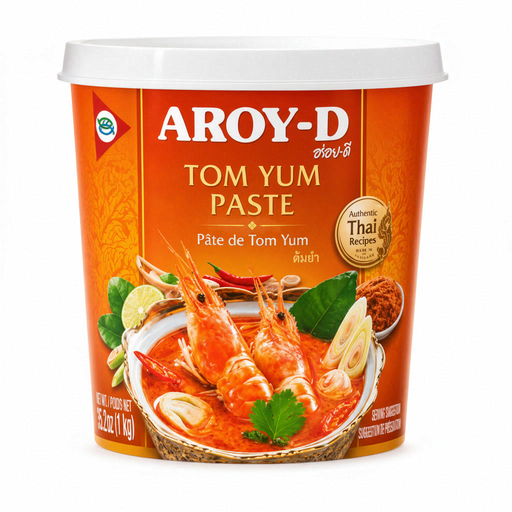
Why it fits this profile: The 400 g jar is large enough for several soups and stir-fries, without being a bulk pack. According to the product description, the paste contains lemongrass, chilli, galangal and kaffir lime leaf, among other ingredients.
The ingredients and suggested dosage are clearly described, so you don’t have to rely solely on marketing terms.
400 g contents; suitable for Tom Yum soup, stir-fries, noodles and marinades; according to the product information, gluten- and lactose-free.
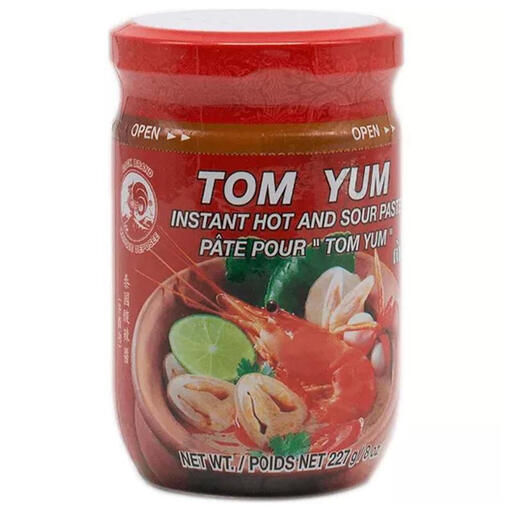
Why it fits this profile: This compact jar is designed for those who want a clear hot-and-sour base and prefer to decide the amount of soup, noodles, seafood or vegetables themselves.
The product information lists specific ingredients such as lemongrass, lemon juice and cayenne pepper. The allergen overview mentions soya.
227 g pack; suitable for soup, noodles, seafood and vegetables; shelf life according to the product information is 360 days.
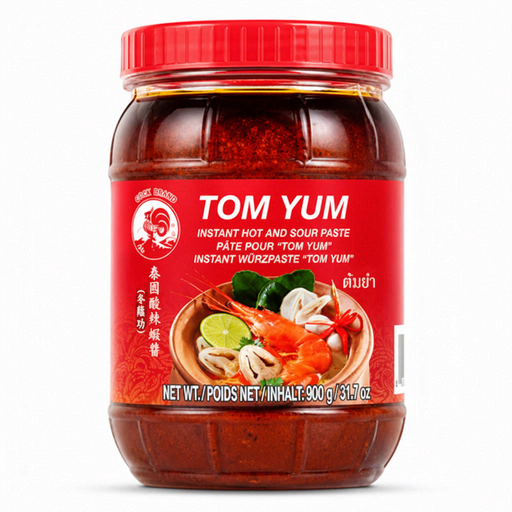
Why it fits this profile: The bulk pack suits households, cooking enthusiasts and kitchens where soup, marinades or Thai stir-fries are regularly on the menu.
You’re not buying a small jar for heavy use. Just check beforehand whether you can store the paste in the fridge and use it in time after opening.
900 g contents; suitable for larger quantities; intended as a base for Tom Yum and other hot dishes.
If you mainly want to prepare one meal quickly, a cooking kit can be more practical than a jar of paste. The Lobo Tom Yum Soup cooking kit 260 g contains coconut milk, a Tom Yum spice paste and dried herbs according to the product information. The kit is therefore less flexible than a jar of paste, but it also requires fewer additional ingredients.
Please note: this kit lists soya and milk as allergens. That makes it unsuitable for every dietary preference. For maximum control over stock, coconut milk, proteins and vegetables, a standalone Thai Tom Yum paste remains the more flexible choice.
We’ve put together a full, up-to-date list of products that fully meet these strict selection criteria and comply with current European safety regulations.
Start with 1 tablespoon in water or stock and taste afterwards. Some product descriptions recommend 1 to 2 tablespoons. The amount needed depends on the desired heat level, the volume of liquid and the quantity of other ingredients.
Yes. The paste can be diluted with water, stock, lime juice or coconut milk and used as a Thai stir-fry and marinade sauce. Add the paste gradually, as salt and chilli can quickly become overpowering.
That varies by brand and packaging. Store the jar according to the label; this often means refrigerating after opening and using within the recommended period. Always check the smell, colour, packaging and best-before date before using the paste.
