
Vandaag of morgen in huis

Kwaliteit gegarandeerd

Welkomstaanbiedingen ontgrendelen: GRATIS bezorging | Tot 80% korting | Gratis 30 dagen JoyPlus-proefperiode
Download de app
Thai jasmine rice is a firm favourite among lovers of curry, stir-fries and other Asian dishes. Yet many bags look remarkably similar. Words like “premium”, “fragrant” and “Hom Mali” don’t always tell you enough about what’s inside, where it comes from, or which pack size is right for your household.
If you only glance at the front of the bag, you could end up paying too much, picking the wrong type of rice, or buying a bulk pack that you can’t store properly. With these checks, you can compare Thai jasmine rice using the information that should be on the label and in the product description.
Thai jasmine rice is a fragrant long-grain rice that becomes soft and fluffy after cooking. It has a slight stickiness, but the grains generally remain separate. Glutinous rice, also known as sticky rice, has a much firmer, claggier texture.
Sticky rice is ideal for Thai desserts, snacks and dishes where you eat the rice by hand. For rice to serve with curry, fried rice or everyday meals, white jasmine rice is usually the better choice.
Thai Hom Mali rice refers to a well-known category of Thai jasmine rice. When buying, always check the listed ingredients, the country of origin and the net weight. A product description may use marketing language, whereas the label gives you the relevant details.
Some products clearly state “100% Thai Hom Mali Jasmine Rice”. Others simply say “jasmine rice” or “fragrant long-grain rice”. That difference matters if you’re specifically looking for jasmine rice from Thailand.
A 10 kg, 18 kg or 20 kg bag of jasmine rice is practical for a large family, meal preppers, restaurants or catering. For a small household, however, such a bag can be awkward if you use the rice slowly.
Store opened rice in a cool, dry place away from direct sunlight. Seal the bag tightly or use a clean, airtight container. Check the bag for damage before you buy, and always follow the best-before information on the packaging.
First, choose between:
A simple ingredients list such as “100% Thai Hom Mali Jasmine Rice” makes comparison easy. Products with only rice as an ingredient contain no added herbs or sauces.
For a soft, fragrant base to serve with curry or an Asian meal, look for terms like long-grain, aromatic, soft and fluffy after cooking. These descriptions appear on several Thai rice products, but the final result also depends on washing, water ratio and cooking method.
Do not use sticky rice as a direct substitute for ordinary jasmine rice. Royal Thai Glutinous Rice, for example, is designed for a firm, sticky texture. That makes it suitable for desserts and specific Asian preparations, but not for every curry or stir-fry.
The right quantity depends on how often you eat rice:
Compare not only the price of the bag, but also the price per kilo, the storage space you have available, and how quickly you’ll use the rice.
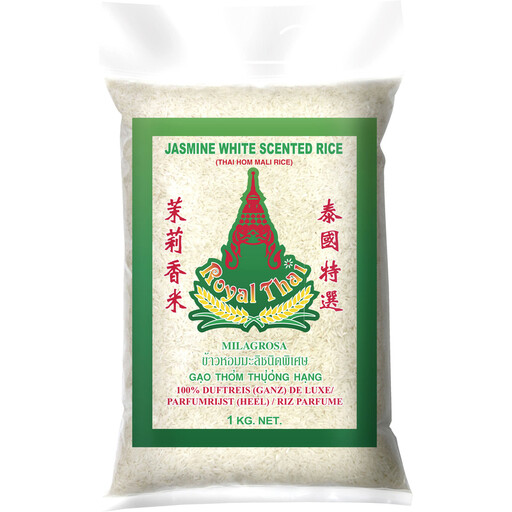
Why this fits the profile: The 1 kg pack is manageable for anyone who wants to try Thai jasmine rice first or doesn’t use large quantities often. The product information lists Thailand as the country of origin and describes a long grain with natural aroma.
You don’t have to buy a bulk pack straight away. Do check the label and current best-before information before use.
1 kg, long grains, natural fragrance and, according to the product information, free from the 14 major EU allergens.
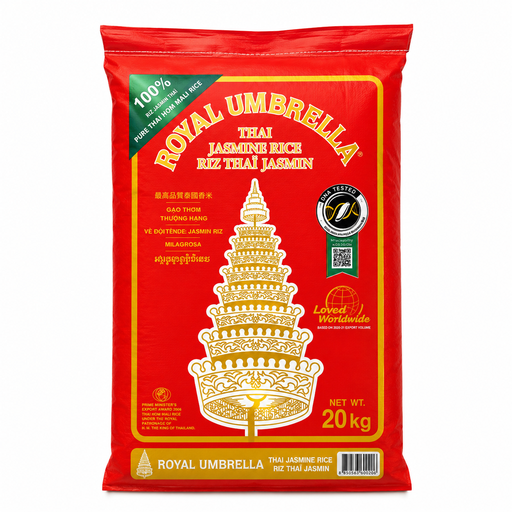
Why this fits the profile: This bulk pack states 100% Thai Hom Mali Jasmine Rice and Thailand as the country of origin. That appeals to shoppers who place great importance on origin and a specific rice category.
The product information names both the rice category and the origin. Plan a dry storage space for 20 kg in advance.
20 kg, 100% Thai Hom Mali according to the product information, and suitable for large households or professional use.
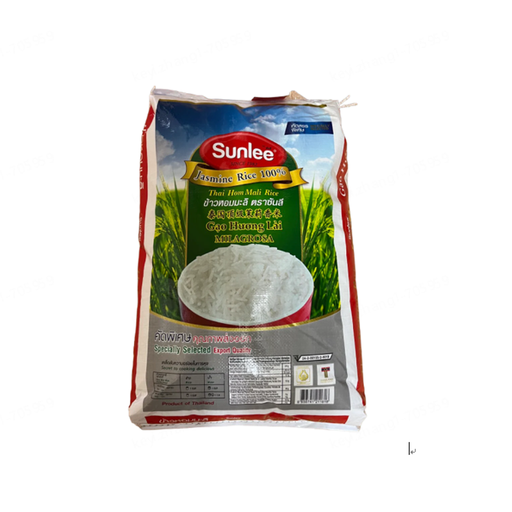
Why this fits the profile: The 18 kg bag is aimed at restaurants, catering and large families. According to the product description, the rice is suitable for steamed rice, fried rice and other Asian dishes.
The quantity suits heavy use, so you need to buy smaller bags less often. Keep the rice well sealed after opening.
18 kg, long grain, fragrant rice and, according to the product information, suitable for vegetarians and vegans.
We’ve put together a full, up-to-date list of products that fully meet these strict selection criteria and comply with current European safety regulations.
Always follow the instructions on the packet, as water ratios can vary between products. In general, this method works:
A rice cooker can be handy for daily use or meal prepping. For fried rice, cooled, pre-cooked rice often works better because the grains are less likely to clump together.
Rice is naturally gluten-free. The product information for several of the items mentioned states that they contain none of the 14 major EU allergens. If you have an allergy or intolerance, always check the current packaging and warnings, as production and packaging information can change.
For occasional cooking, a 1 kg bag of jasmine rice is practical. A 4.5 or 5 kg bag suits a family that eats rice regularly. For restaurants, catering and large families, 10 kg, 18 kg or 20 kg are sensible sizes, provided you have enough dry storage space.
Jasmine rice is a fragrant long-grain rice with a soft, usually fluffy texture. Sticky rice becomes much claggier and firmer after cooking. Choose jasmine rice for curry and everyday Asian dishes; choose sticky rice when a recipe specifically calls for sticky rice.
