
Livraison le jour même et le lendemain

Qualité garantie

Débloquez vos offres de bienvenue: Livraison GRATUITE | Jusqu'à -80 % | 30 jours d'essai gratuits à JoyPlus
Téléchargez l'application
Thai jasmine rice is popular with households, restaurants and fans of Asian food. It usually has a distinctive aroma, long grains and a soft texture when cooked. However, not every bag labelled “jasmine rice” is the same. With larger packs in particular, unclear origins, the wrong type of grain or poor storage can lead to unnecessary costs.
A 10 kg, 18 kg or 20 kg bag of jasmine rice may seem like good value if you only look at the total price. Check the price per kilogram too, and estimate how much rice you actually use. A large bag may not be practical if it stays open for months and loses its aroma or quality.
Thai Hom Mali rice is a well-known variety of Thai jasmine rice. Check the label for a clear ingredients statement, such as 100% Thai Hom Mali, 100% Thai rice or other specific details. Marketing terms such as “authentic”, “premium” or “AAA” don’t tell you enough on their own without information about origin, ingredients and net weight.
If a brand promises a particular flavour, softness or aroma, treat this as a claim made by the brand. For example, according to the brand’s own information or the product listing, the rice has a floral aroma or soft texture. These can vary depending on the product and how it is prepared.
A bulk bag of jasmine rice takes up space and needs to be kept dry. Moisture, heat and direct sunlight can affect its shelf life and aroma. Check the packaging for damage on delivery. Once opened, it’s best to keep the rice in a tightly sealed container, such as a food-safe storage tub.
If you’re looking specifically for Thai jasmine rice, Thailand as the country of origin and a clear ingredients list are important things to check. Products such as Royal Umbrella Thai Hom Mali Rice are listed as 100% Thai Hom Mali jasmine rice, according to the product information. Sunlee Thai Hom Mali Jasmine Rice is also listed as 100% Thai Hom Mali Jasmine Rice.
Be aware of the difference between this rice and Vietnamese ST25 rice, Cambodian jasmine rice, basmati and Japanese short-grain rice. These varieties can also be aromatic, but they have different countries of origin, grain types and cooking results.
Thai jasmine rice is usually a long-grain rice. The grains become soft and slightly sticky when cooked, but it isn’t the same as Japanese sushi rice. White jasmine rice goes well with curries, stir-fries, grilled dishes and everyday meals.
For fried rice, cooked rice that has been cooled first can work well, as the grains are less likely to clump together. Always follow the cooking instructions on the pack, as the recommended rice-to-water ratio varies by product.
Use this guide when choosing a pack size:
Compare not only the price per kilogram, but also the storage space you have and how long you expect the rice to last. A large pack is only efficient if it can be stored in good conditions.
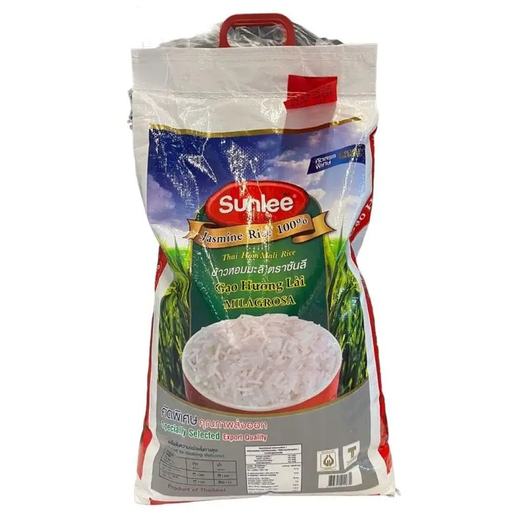
Why it suits this profile: A manageable pack size for households that eat rice regularly but don’t need an 18 kg or 20 kg bag.
The product information states that the product is of Thai origin, is white jasmine rice and has a shelf life of 24 months. This lets you assess your choice using more than just the packaging description.
10 kg, listed as 100% white jasmine rice and suitable for everyday meals and Asian dishes.
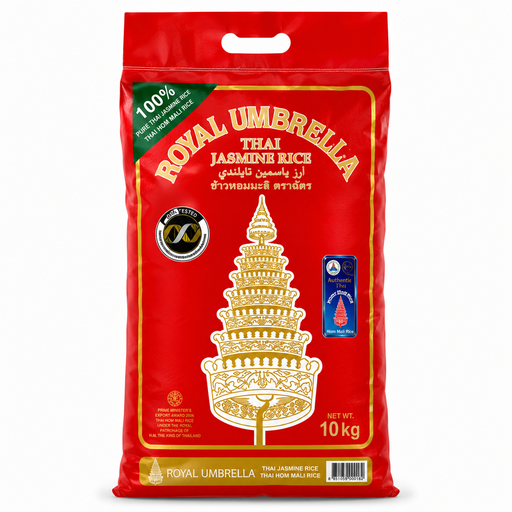
Why it suits this profile: A good choice if you’re specifically looking for Thai Hom Mali rice with clear origin information, to serve with curries, stews and grilled dishes.
The ingredients are listed as 100% Thai Hom Mali jasmine rice. This makes it easier to check the variety and origin.
10 kg, long-grain rice, with product information describing its aroma and soft texture when cooked.
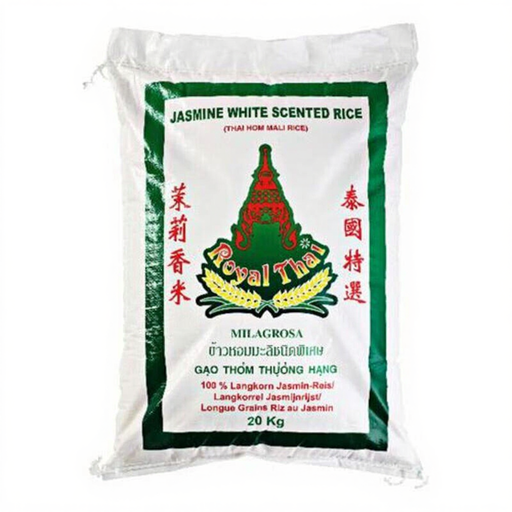
Why it suits this profile: A large supply for restaurants, caterers, large families and kitchens that prepare a lot of rice every day.
The product information clearly states the 20 kg net weight and identifies the rice as aromatic Thai long-grain rice. This makes it a suitable pack size for high-volume use.
20 kg, suitable for catering and everyday meals; the product listing describes a soft, fluffy texture when cooked.
We’ve put together a full, up-to-date list of products that meet these strict selection criteria and the applicable European safety regulations.
Rinse the rice according to the instructions on the pack. Some varieties should be rinsed until the water runs clear, while other packs specify a particular cooking method. When trying a new variety, start with the recommended amount of water and only adjust it later to suit your rice cooker or pan.
Store unopened bags in a cool, dry place away from direct sunlight. Once opened, a tightly sealed storage container helps keep out moisture and contaminants. Always check the best-before information on the pack.
Thai jasmine rice is usually softer and slightly sticky when cooked. Basmati is generally longer and drier, with grains that stay more separate. Jasmine rice is often a good match for the texture you want with Thai curries and many Asian dishes served with rice.
Unopened rice can keep for a long time if you follow the date on the pack and store it somewhere dry. Once opened, keep an eye out for moisture, heat and pests. Seal the pack tightly and check the smell, appearance and packaging before cooking.
It depends on the price per kilogram, how much you use and your storage space. Bulk jasmine rice can be practical for restaurants, caterers and large families. For smaller households, 5 kg or 10 kg may be more convenient, as you’ll use the rice sooner and the pack won’t stay open for as long.
